This piece looks at the rising socialist pressure inside the Democratic Party and how one vulnerable incumbent, Rep. Shri Thanedar of Michigan, has become a low-priority battle for party leaders despite a well-funded insurgent challenge.
The leftward push in the Democratic coalition is no longer a coastal or city-only story; it has moved into districts across the country and forced party resources to be stretched thin. Establishment Democrats are scrambling to figure out where to spend money to protect incumbents, while progressive groups keep testing the waters with targeted primary campaigns. That nationwide energy is reshaping contests in ways the party did not expect when the cycle began.
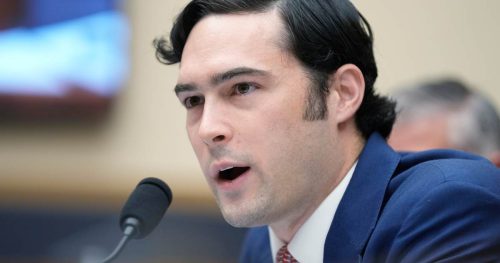
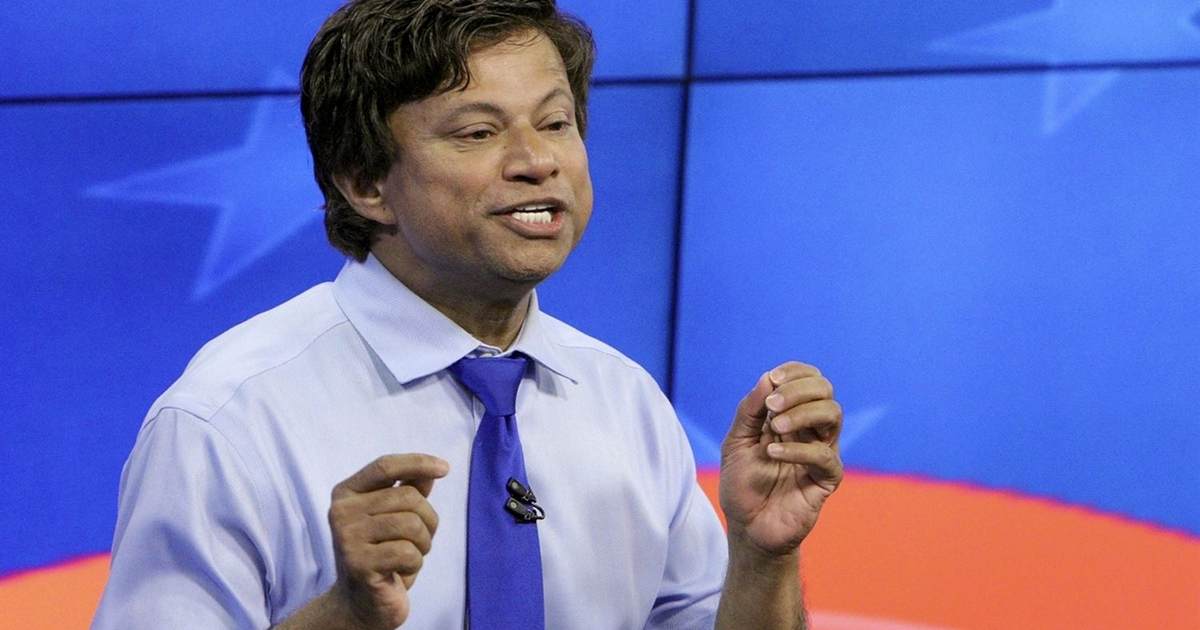
Still, not every fight is deemed equal inside the caucus. One race in Michigan has drawn a shrug from many House Democrats, even as national progressive groups pour attention into other hotspots. That contest centers on Rep. Shri Thanedar (D-MI) and a DSA-backed challenger, Donavan McKinney, and insiders say it won’t set the same kind of precedent as other recent DSA upsets.
Don’t expect a lot of public lamentations from House Democrats next month if Rep. Shri Thanedar (D-Mich.) loses to his Democratic Socialists of America (DSA)-backed primary opponent.
Why it matters: That would be a drastic deviation from recent DSA primary wins, which set off alarm bells among the Democratic establishment.
In the telling of both progressive and moderate House Democrats, Thanedar’s anomalous political profile and the makeup of his district will make it difficult to extrapolate from the results of his race.
“It’s somewhat of a unique circumstance,” Rep. Greg Meeks (D-N.Y.), a top ally of House Minority Leader Hakeem Jeffries (D-N.Y.), told Axios.
Another House Democrat, granted anonymity to offer a blunter assessment of how members are viewing the race, told Axios: “No one cares.”
[…]
Progressives are also putting their backs into unseating Thanedar this cycle, with Sen. Bernie Sanders (I-Vt.), DSA, Indivisible, the Working Families Party and Justice Democrats all endorsing McKinney.
Thanedar, a wealthy businessman who largely self-funds his campaigns, is backed by AIPAC, House Democratic leadership and both the Congressional Progressive Caucus and center-left New Democrat Coalition.
Between the lines: Unlike in New York, Colorado and elsewhere, House Democrats aren’t looking at this race as a watershed fight between the DSA and Democratic establishment with national implications.
That blunt assessment—“No one cares”—has circulated among rank-and-file Democrats and offers a peek at how the caucus triages its problems. The calculus is political: which races threaten to flip the House or signal a structural shift, and which are treated as outliers. For conservatives watching from outside, the shrug is telling: sometimes the party protects incumbents, and sometimes it quietly accepts losses that don’t fit a neat national narrative.
There’s a logic to that approach. Thanedar’s background and his district’s idiosyncrasies make it harder for leaders to treat his primary as a bellwether. When the establishment believes a defeat won’t be a template for other races, they often conserve funds and political capital for fights they see as decisive. That leaves insurgents free to sharpen their messaging and lean on activist groups to fill gaps the party won’t.
From a Republican point of view, this split is an opportunity and an indictment at once: Democrats struggle to define a cohesive brand while factions on the left push for bold change that the center can neither fully embrace nor easily suppress. When activists like Justice Democrats, the DSA, and allied groups pile into primaries, they’re testing whether local dynamics can override leadership calculations—and sometimes they can.
Thanedar’s personal profile complicates the optics. A businessman who can inject his own resources into a campaign looks different to voters than a career politician dependent on national donors, and that can produce odd alliances. For those who track how money and endorsements line up, the mix of AIPAC support, leadership backing, and progressive ire reads like a recipe for an internal shakeup rather than a unified front.
Primary day will settle the matter in concrete terms. Another Democrat told Axios that no one is losing sleep worrying about Shri. He’ll know his fate on August 4. Until then, the race is a small but revealing skirmish in a larger internal battle over the Democratic Party’s future direction, and it underscores how tactical choices in Washington can look very different from the ground-level fights activists and voters are running.