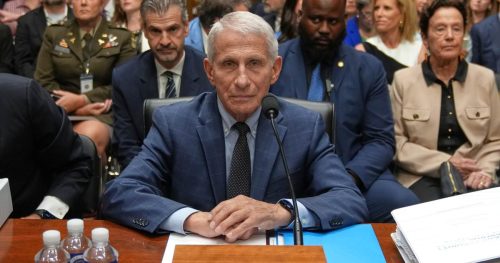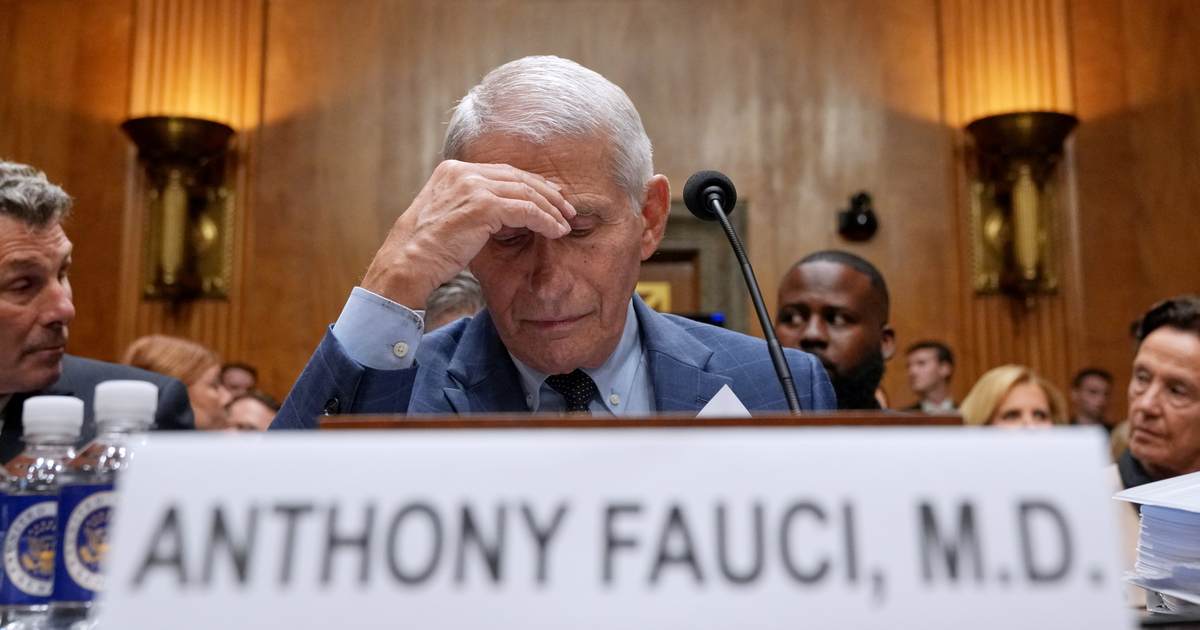
Senators grilled Dr. Anthony Fauci in a heated Capitol Hill hearing where diary entries, accusations about gain-of-function funding, and repeated refusals to answer under the Fifth Amendment dominated the day.
Anthony Fauci appeared before a Senate committee to face questions about his conduct during the COVID pandemic after the release of his diary entries. The records raised alarms that some public statements did not match his private notes, and Republicans pushed hard on potential conflicts related to Wuhan lab funding and gain-of-function research.
The diary suggested Fauci privately questioned the wet market origin story and considered a lab link as plausible, which undercut the narrative many accepted early in the pandemic. That gap between public assurances and private doubts fed a broader sense that oversight and accountability were overdue.
The hearing spotlighted alleged coordination between parts of the media and public health officials, including references to repeated dinners with prominent journalists. “The diary also proved the media was in bed with Fauci on this, including Jake Tapper, who had dinner with Fauci on at least two occasions,” the record noted and critics repeated.
Former CDC Director Dr. Robert Redfield offered a blunt take on the fallout, saying, “I really do think he intentionally misled, obviously, the Congress and the media … and the American public.” He added, “I argue that Tony, at the end of the day, hurt science more than anybody,” tying the controversy to damage to public trust.
Senator Rand Paul led the opening salvo, laying out years of oversight and highlighting Fauci’s long ties to gain-of-function research and federal funding that touched the Wuhan lab. “You could not hide that your agency had funded the Wuhan research or your long history of defending gain-of-function research,” Paul said. “The only alternative left was to argue that COVID-19 did not originate in the Wuhan lab. You were not a detached observer; you had an institutional interest in the public believing that federally funded research had nothing to do with the pandemic. It was a conflict of interest from the very beginning.”
Paul emphasized specific historical decisions that matter, pointing to experiments that made avian flu transmissible among mammals and the reasoning that defended that work. “You defended these avian flu transmissibility experiments as critical research. You wrote that even if a scientist became infected and triggered a pandemic, the benefits of the gain-of-function experiments outweigh the risks,” Paul said, forcing the committee to face the tradeoffs some researchers accepted.
Paul warned that institutional self-interest can shape public messaging when accountability is at stake. “The only logical answer is your primary concern was avoiding culpability,” Paul continued. “Your support of gain-of-function research is extensive and longstanding.”
https://x.com/townhallcom/status/2082446681111433542
Democratic Senator Gary Peters pushed back, urging the panel to look forward at strengthening federal bio defenses rather than fixating on one individual. He argued the committee should focus on resources, personnel, and prevention measures to prepare the country for future threats.
When sworn in, Fauci opened with a long defense of his decades of service and cooperation with Congress, then invoked the Fifth Amendment in response to questions he said were aimed at criminalizing him. “I served at the NIH for over 54 years, 38 of those at the National Institute of Allergy and Infectious Diseases. Over that period, I proved that I believe in and respect the value of legitimate Congressional oversight. In fact, I testified before and/or briefed Senate and House committees well over 200 times over those 38 years. During and after the COVID pandemic, I have appeared multiple times for hearing in the Senate and the House, usually under oath, and sat for several days-long transcribed sworn interviews answering questions about the very issues that are now the subject of this hearing,” Fauci said. “However, given Senator Paul’s obvious obsession with calling for my prosecution, his repeated slanderous comments about me, and recently his publicly releasing my undredacted personal diary aimed at embarassinga nd intimidating me the only conclusion that I can reach is that the sole reason he is calling me before this committee is to get me to say somthing, anything, that could vindicate his repeated public pledges that I end up in his words ‘behind bars.’ Any reasonable person who has followed his unhinged obsession with me would readily come to the same conclusion; therefore, although it pains me to do so, because of the respect I have for the legislative branch of the government and my decades long record of cooperating with congress, under the advice of my attorneys I will invoke my right under the Fifth Amendment of the constitution to refrain from answering your questions.”
After Fauci began invoking his rights, Senators continued to press. Paul read statutory language about witness obligations and criminal penalties for refusing to answer questions under subpoena, demanding a simple confirmation of whether Fauci had a folder in front of him containing Section 192 of Title 2.
Fauci repeatedly declined to engage, responding each time, “Under advice of counsel, I respectfully decline to answer based upon my rights under the Fifth Amendment to the Constitution.” That refusal left Republicans arguing the Fifth was being used to avoid accountability, not just legal peril.
The hearing reinforced partisan divides over pandemic oversight, with Republicans calling for tougher scrutiny of public health officials and Democrats urging attention to systemic readiness. The standoff made clear that the debate over origins, funding, and transparency is far from finished and will shape future policy and investigations.