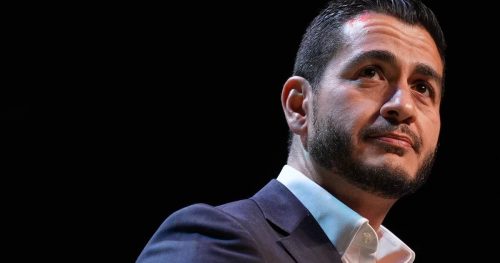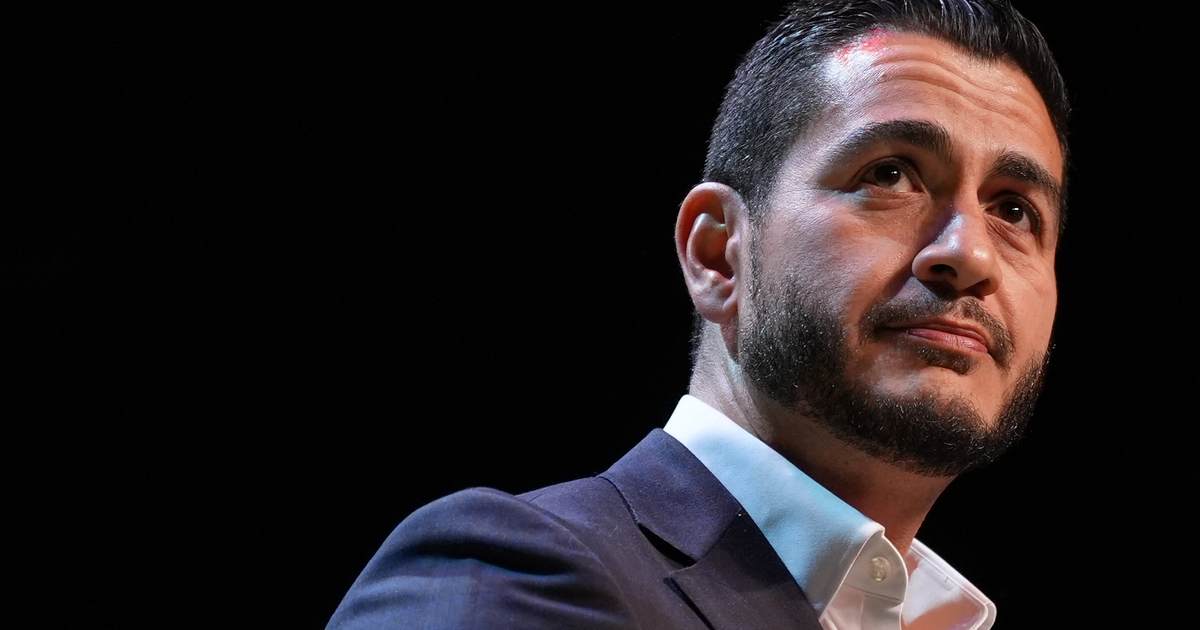
CNN analyst Harry Enten says Abdul El-Sayed’s nomination has shifted the Michigan Senate race odds, sparking concern that the Democratic pick could weaken the party’s appeal with working-class voters and in key suburban areas.
CNN analyst Harry Enten warned that Michigan’s Senate contest looks very different now that Abdul El-Sayed is the Democratic nominee, and those numbers matter when turnout and crossover votes decide tight races. Enten’s analysis tracked a notable drop in Democratic odds and a near doubling of the Republican candidate’s chances, which is the kind of shift campaigns cannot ignore. That change in probability has Republicans sensing opportunity and Democrats facing internal questions about strategy and messaging.
“You know, once El-Sayed became the favorite for that nomination and now that he’s actually become the nominee, Democratic chances have fallen dramatically,” Enten said, bluntly summarizing the polling impact. He pointed to concrete shifts in modeled probabilities rather than vague warnings, which makes the claim harder for Democrats to dismiss. Those model adjustments reflect both voter views and expectations about who can mobilize a winning coalition in a purple state.
Enten detailed the swing in numbers, noting that in April Democrats had about a 79 percent chance of holding the seat, while Republicans were listed at roughly 21 percent. Since the nomination, he says Democratic odds have dropped to about 59 percent, and Mike Rogers’s chances have climbed to roughly 41 percent. Those figures are striking because they show the race moving from a probable Democratic hold to a near toss-up in statistical terms.
So the people are putting their money where their mouths are, quite skeptical at this point, or at least significantly more skeptical that Democrats will be able to hold on to the Michigan Senate seat with El-Sayed as the nominee, though I still should note he is the slight favorite here. But given Michigan being a purple state and given where Trump’s approval rating is, I think it’s quite surprising that his numbers are not significantly higher.
Enten also made the point that “Democrats have been hemorrhaging working-class voters, voters without a college education.” He stressed that losing sizable chunks of that demographic in places that delivered wins before is a structural problem for the party. That trend matters most in states like Michigan where margins are thin and swing voters decide the result.
He pointed out that El-Sayed drew strong support in affluent neighborhoods and college towns rather than in traditional working-class communities, raising doubts about whether the same coalition that won the primary can carry the general election. Observers worry that the enthusiasm from the left flank and campus enclaves may not translate into the broad-based turnout needed in November. Those doubts are especially sharp in suburban and exurban areas that swung toward Republicans in recent cycles.
El-Sayed’s policy platform — including Medicare for All, abolishing ICE, and sharp criticism of Israel — has cemented his standing with the party’s left wing, but those positions may alienate moderate and independent voters skeptical of sweeping changes. Those policy stances tend to energize core progressive activists while making persuadable voters uneasy, which is the strategic trade-off critics highlight. In a state won by Trump in 2016 and closely contested since, messaging that skews far left can be a liability rather than an asset.
Primary results already showed weak showings for El-Sayed in metro Detroit and other traditional Democratic strongholds, where his more moderate primary opponents performed better and drew wider cross-sections of voters. That pattern suggests problems producing the high turnout and crossover appeal Democrats will need to win in November. If the base can’t expand beyond left-leaning enclaves, the general election math will get tougher fast.
From a Republican perspective, this is encouraging because it suggests a path to flip a seat that looked safer a few months ago. The GOP playbook in this scenario will be straightforward: highlight policy extremes, underline vulnerabilities with working-class and Black voters, and push for turnout in competitive suburban districts. Democrats, meanwhile, face a choice between doubling down on the current nominee or shifting tactics to blunt the fallout.
It is still possible for El-Sayed to win the general election, and the models that show him as a slight favorite remind everyone that campaigns can change dynamics over months. But the current trajectory is not what Democrats expected when they had a stronger, more moderate alternative in contention, and the party will need to work harder to rebuild bridges with the voters who moved away. For now, Republicans see an opening and are positioning to make the most of it in a critical Senate matchup.
https://x.com/TVNewsNow/status/2085401387404296322