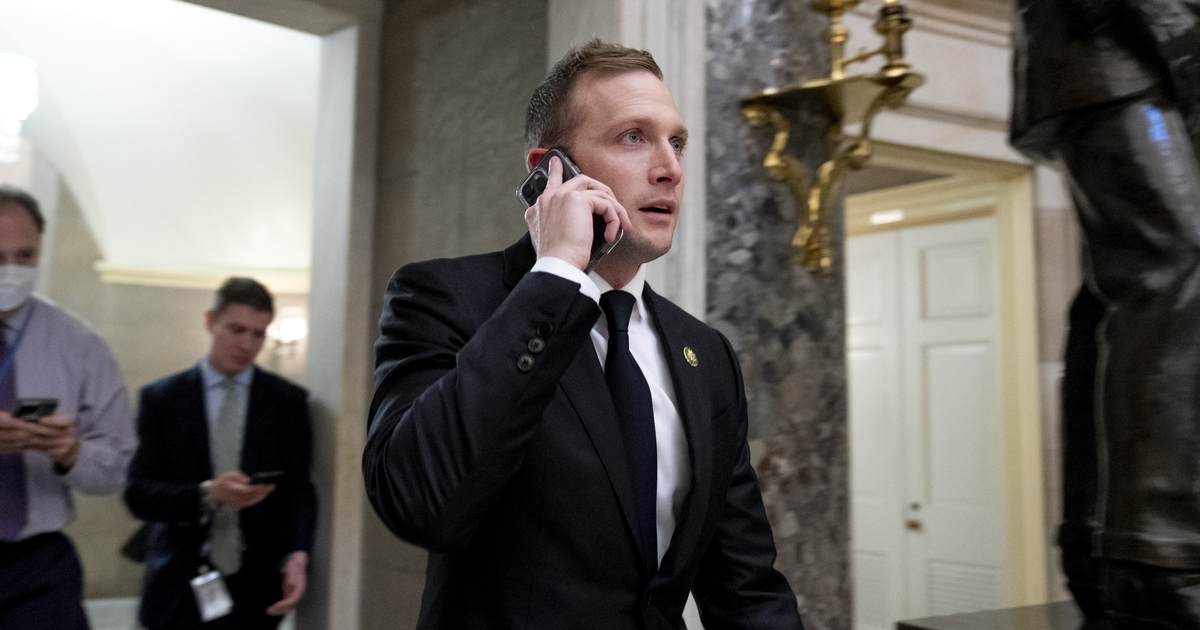
Sen. Jon Husted has urged Rep. Max Miller to resign amid allegations of domestic violence involving Miller’s ex-wife and daughter, a controversy that has drawn national attention and prompted calls for an ethics probe while the congressman denies wrongdoing and has requested his own investigation.
The situation centers on allegations involving Rep. Max Miller and his ex-wife Emily Moreno, who is the daughter of state senator Bernie Moreno. Those accusations have intensified scrutiny because Miller represents one of the most contested House districts in the country and because high-profile Republicans are weighing in. The controversy has also prompted private warnings from former President Donald Trump about the political danger it poses to the party’s chances in November.
Sen. Jon Husted publicly called for Miller to step down, saying moral and political responsibility require decisive action when allegations of this nature arise. “Anyone who commits domestic violence is not fit to serve in Congress,” Husted said in a Thursday statement. He urged the House Ethics Committee to investigate any credible claims thoroughly.
Husted went further, arguing the campaign and the congressional seat are now a distraction from what should matter most: the safety and well-being of the child involved. “Given everything they are facing, I do not see how a campaign for Congress benefits any of them. I believe Max would be making the right decision to step aside as a candidate and resign from Congress to focus on what is in the best interest of his daughter,” the senator continued. He stressed the personal toll these disputes take on families and extended relatives.
Husted added a personal perspective on future reflection, suggesting that stepping away could be the right choice for everyone concerned. “Years from now, I believe he will look back and know it was the right choice for her,” he added. That appeal blends legal concern with a moral argument aimed at preserving family stability over political ambition.
Miller has responded by contesting the allegations and seeking to frame the matter as politically motivated attacks against him and his family. He announced on X that he would file paperwork asking for an ethics investigation into himself to clear his name, a rare move meant to force a formal, documented review. “In light of all the renewed interest in my family affairs I am going to file my own paperwork for an ethics investigation into myself to clear my name from these horrific attacks on myself and family. I have absolutely nothing to hide,” he posted to X on Tuesday.
https://x.com/KristenEskow/status/2085400412698358033
He promised cooperation with investigators and insisted he would provide documents to support his account. “We will be providing the committee all necessary documents needed for a detail examination. The accusations continue to change, but my facts stay the same. I am looking forward to my colleagues reading everything for themselves,” Miller continued. That posture aims to shift the battle into a formal process where evidence can be evaluated.
Bernie Moreno has also weighed in publicly, telling reporters he removed his daughter, granddaughter, and wife from the area to a secure location until they felt safe. Moreno’s actions underscored the family-level fallout from the allegations and heightened the sense of urgency among local and national party officials. The family dynamics here complicate a standard political response because relatives occupy multiple public roles.
Practically speaking, the timing has electoral consequences. A special-election trigger and ballot replacement deadlines are in play, and Miller could still withdraw without leaving the party empty-handed on the November ballot. The window for a formal withdrawal and replacement is narrow, meaning party leaders must decide quickly whether to press for a candidate swap or stand by their incumbent.
Republicans now face a tactical decision: contain fallout by encouraging a quiet exit and replacement or back Miller and prepare for an aggressive defense in court of public opinion. For many in the party, the calculus balances principle and electability. The next steps will matter for local voters, national messaging, and the optics heading into the fall campaign.
The Ethics Committee’s involvement would offer a path toward resolution through documentation and testimony, though those processes can be slow and politically fraught. While Miller seeks to force transparency with his own request for review, the committee’s independent handling will determine how quickly the matter advances. Meanwhile, the political clock keeps ticking as the district heads into the final months before the general election.