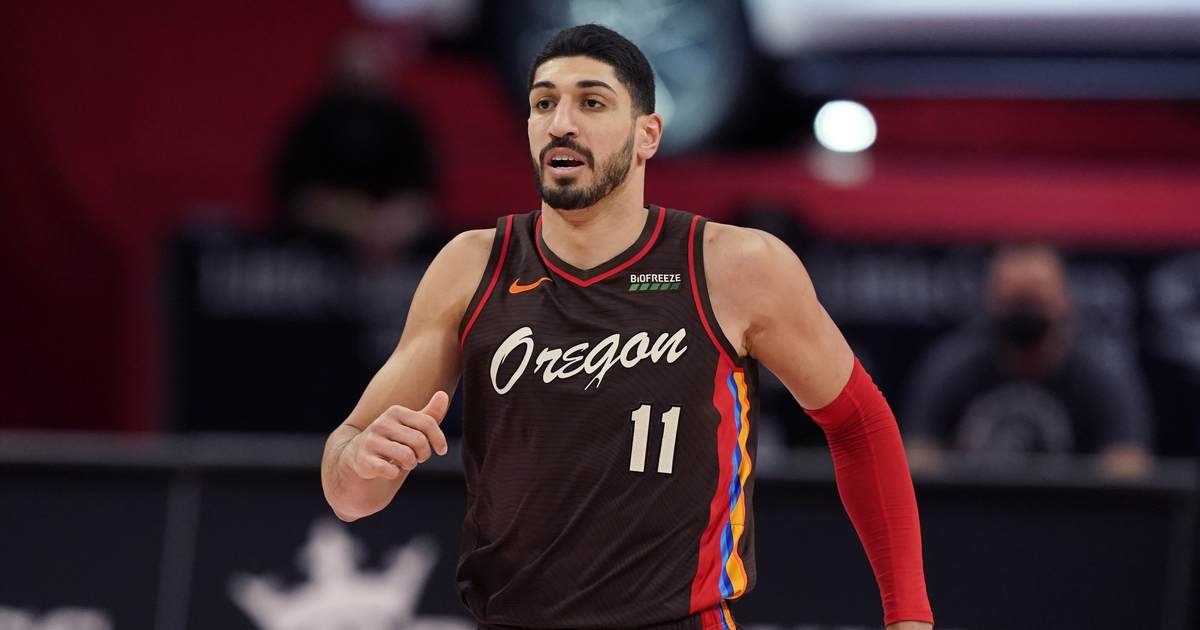
Enes Kanter declared for the WNBA draft and set off a national fight about fairness in women’s sports, sparking outrage, whatabout arguments, and heated debate over how leagues should handle transgender athletes and biological males who say they identify as women.
The announcement from Enes Kanter landed like a provocation and quickly exposed tensions inside the WNBA, among players, and in the wider culture. Coaches, owners, and athletes publicly condemned the move while others used it to test the league’s stated positions. That reaction turned the story into a wider test of whether leagues will protect women’s sports or bend to political pressure.
The WNBA Players Association issued a statement saying they will not be used as political pawns, and sportswriter Noa Dalzell called Kanter’s behavior “embarassing.” Those responses show the union and some commentators want no part of this kind of stunt being used to force a policy change. Yet the conversation kept moving, with people on both sides pointing fingers and rewriting the rules as they go.
For many Americans the core instinct is simple: men have no place in women’s sports, and that view polls strongly—roughly 80 percent of the public aligns with that basic idea. Advocates for women’s sports argue the point in practical terms: biology matters for competition, safety, and fairness. That perspective explains why so many were outraged at the notion of biological males entering women’s leagues, regardless of intent.
Some on the left tried to draw a sharp distinction between Enes Kanter and William (Lia) Thomas, the swimmer who competed in women’s college races. The attempt to split the two cases ignored the central issue that both are biological males competing in women’s divisions.
William Thomas did not live his life as a man. He did not take hormones and he did not have his genitals removed. He walked around the women’s locker room naked, his penis in full view of his teammates, who testified they were offered counseling so they could become comfortable with getting undressed in front of a man.
https://x.com/Anthonysmdoyle/status/2085827420188553684
Thomas’s race results added fuel to the argument. He ranked 89th overall and 554th in the 200-yard freestyle as a man, yet when he swam in the women’s category he finished first in the 500-yard freestyle and fifth in the 200-yard freestyle. Critics point to that swing as proof that male physiology can dominate in female events.
Supporters of trans inclusion often scoffed at those who suggested women should simply train harder, implying the problem was preparation rather than biology. The counterargument is blunt: telling women to train harder misses the point when competitors have innate, physical advantages. That reality matters when championships, scholarships, and careers are on the line.
The conversation also widened into sports history and comparisons. People pointed out that many male players—if placed on a WNBA court—would outmatch top WNBA rosters. Anecdotes about legends like Pete Maravich were used to underline the differences, with Maravich’s 3,667 NCAA Division I points often cited versus modern scoring totals. Caitlin Clark’s 3,951 points for her college career were mentioned in the same breath to highlight how eras and rules change scoring contexts.
League rules and collective bargaining agreements will likely be the technical route the WNBA uses to bar Kanter and others, with the union and management citing contract language to avoid appearing discriminatory. That approach lets the league claim neutral legal reasons for a decision rather than an explicit ideological stance. Critics call that a cop-out, saying it sidesteps the core ethical question about who should compete in women’s sports.
Republicans and many conservatives see this as part of a broader cultural fight over protecting women’s institutions and spaces. They argue that allowing biological males into female sporting events erodes opportunities for girls and women and that leagues must set clear standards based on biology. The debate is raw, partisan, and unlikely to quiet down any time soon.
Enes Kanter just wants to play sports, after all.