Republican commentators say Wisconsin’s Democratic primary is tipping toward Francesca Hong because a portion of Democratic voters embrace socialist ideas, and that split within the party is shaping how moderates and establishment figures react to her rise.
The Wisconsin primary feels like a civil war inside the Democratic Party, with one wing openly flirting with socialist candidates and another panicking about electability. Conservatives read this as proof that parts of the party have moved away from pragmatic governance and toward ideological experiments that will cost votes in the Midwest. That divide is influencing endorsements, campaign strategy, and how rivals position themselves in what should be a straightforward primary contest. The result is a messy fight that benefits Republicans in the long run.
On talk radio and cable, commentators point to simple numbers and messy politics as evidence that Hong is consolidating support despite alarm from party centrists. David Crowley’s back-and-forth candidacy is a convenient example for critics who say Democrats are scrambling to stop a candidate they consider too extreme. Internal polls showing big gaps reinforce the narrative that moderates can’t find traction and are resorting to desperate measures. For conservative listeners, the math looks like a clear warning sign for the left.
Dan O’Donnell, a conservative radio host, laid out the scene on national television and emphasized the weakness of Hong’s opponents. He noted poor polling and campaign chaos as evidence that the establishment is faltering. That sort of commentary is being used to argue that Democrats are choosing ideology over electability, which Republicans believe will cost them statewide. These arguments are blunt and designed to sound practical to swing voters in red and purple areas.
“So moderate Democrats don’t want Hong. They’re basically banking on her closest competitor, David Crowley, to pull off an upset. What do you need to tell us tonight about the state of this race, given that Bernie and AOC won’t endorse, and this seems to be going south for her pretty fast?” Ingraham asked.
https://x.com/IngrahamAngle/status/2086965424042774653
“David Crowley actually dropped out of the race a couple of weeks ago because he just wasn’t getting any traction, and the Democrat Party of Wisconsin got him back in after the Lt. Gov., Sara Rodriguez, had her campaign implode over a finance scandal. So that should tell you about how popular he was,” O’Donnell replied. “He was forced to drop out because he was polling at five percent. Just last week he released an internal poll showing him trailing Hong by 22 points and going through all sorts of tortured logic about past electorates here in Wisconsin in 2018 and 2022. If the electorate in 2026 looks like them, well, then maybe he’s within eight.”
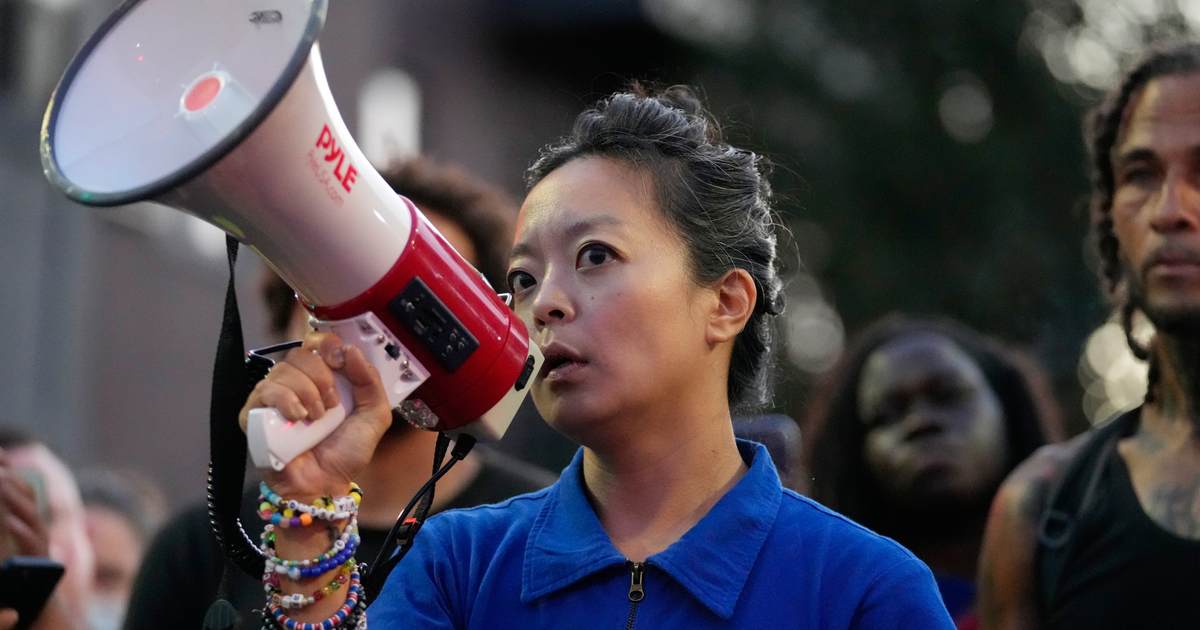
There’s also a strategic geography problem for Democrats: radical positions that play in Madison or parts of Milwaukee don’t travel well to suburban and rural counties. The autonomous zone that emerged after the July 22 officer-involved shooting became a flashpoint for critics who say Hong failed to back law enforcement decisively. Local leaders who asked for help were forced to clean up the mess, and critics argue Hong sided with activists when she attacked police actions. That narrative is useful politically in counties that swung for Trump in 2016 and 2024.
Madison, Eau Claire, Green Bay and other liberal pockets will tolerate activist energy that voters elsewhere find alarming. Conservatives highlight those events to make a practical argument to undecided voters: policies that appeal to far-left activists risk alienating working-class and rural voters. That’s why Republican strategists believe the Wisconsin governor’s race could be a referendum on whether Democrats have become too extreme. The messaging is stripped-down: electability matters.
Outside Wisconsin, similar dynamics are playing out where progressive candidates promise sweeping changes and more government spending. In Michigan, Abdul El-Sayed acknowledged plans that would raise taxes on everyone to fund “free” healthcare, which critics say is economically unrealistic. That example is used as a warning that the policy agenda being championed by a segment of Democrats has real costs and will drive swing voters away. Republicans see a pattern and are making the case that pragmatic conservatism is preferable to ideological experiments.
Questions about Hong’s personal history have entered the debate, with her own admission about bipolar disorder and past institutionalization becoming fodder for opponents who question her readiness for executive responsibility. Such personal disclosures are treated differently across the political spectrum, but in a tight race concerns about decision-making under pressure are politically potent. Critics also note that Hong has tried to soften some positions to court moderates, which conservatives interpret as political posturing rather than genuine moderation.
At the end of the day, Republicans are framing the Wisconsin primary as proof Democrats are divided between ideology and pragmatism. They argue that when a party tolerates candidates who flirt with abolishing institutions or pushing radical reforms, it risks losing the general election. That argument will be central to GOP messaging as the midterms approach and as voters weigh immediate concerns like public safety, taxes, and economic stability.