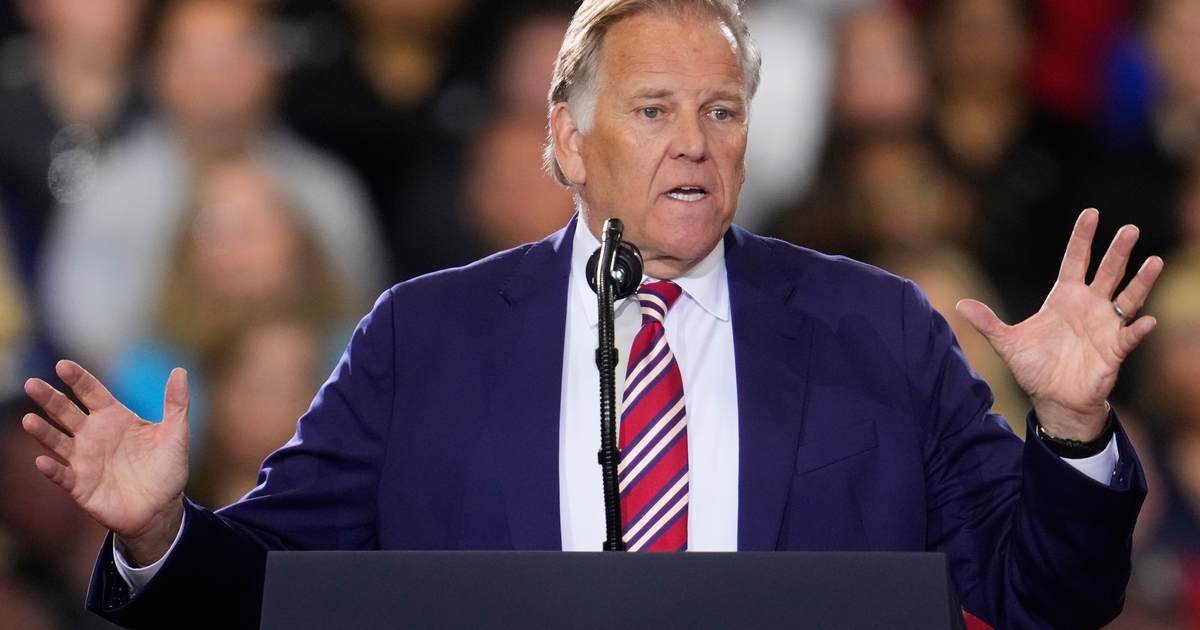
Mike Rogers has released a hard-hitting ad that frames Abdul El-Sayed’s green policies as an economic threat to Michigan, stressing factory roots, jobs, and opposition to gas bans.
The new spot puts the spotlight squarely on economics, painting a contrast between a candidate who worked on assembly lines and one tied to activist circles. It argues that rules aimed at phasing out gas-powered vehicles would hit Michigan where it hurts, threatening jobs and local industries. The ad frames that threat as an existential risk to the state’s manufacturing base.
For over a century, the gas-powered engine has powered Michigan’s economy.
It built the middle class, paid for mortgages, and put kids through college.
Abdul El-Sayed wants to ban gas-powered vehicles.
He wants to bury the beating heart of the Motor City.
Not on Mike Rogers’ watch. Mike Rogers built cars in Michigan factories.
No EV mandates ever.
Let our engines roar.
I’m Mike Rogers, and I approve this message.
The ad leans into contrast: Rogers’ resume includes time on the factory floor at two automakers, while his opponent has connections to national climate activist groups. That connection is presented as proof the opponent favors top-down mandates that would accelerate the move away from internal combustion engines. The copy doesn’t mince words about the potential fallout for workers and suppliers across the state.
Michigan’s economy and identity remain tied to vehicles and parts makers, the ad insists, and policy changes pushed by outside activists could rework that reality in ways Michigan families won’t welcome. The spot notes a recent job decline under current leadership, pointing to 200,000 fewer jobs as a warning sign of economic damage. That figure is used as a backdrop to argue for steadier, worker-friendly policies.
Rogers’ campaign is pushing the idea that manufacturing experience matters at the ballot box, saying someone who built cars understands what it takes to keep plants running and paychecks flowing. Voters skeptical of sweeping mandates are being asked to consider who has walked the factory floor and who has spent time in activist circles instead. The ad’s tone is blunt, designed to stick in viewers’ minds.
https://x.com/PollTracker2024/status/2088023762004222036
Polling cited by the campaign shows a tight race, with a recent snapshot putting Rogers ahead 51-47, a margin the spot treats as momentum to widen. Campaign strategists see the path forward as one of persuasion among working-class, rural, and minority voters who feel economic anxiety. The ad tailors its message to those groups by stressing tangible consequences rather than abstract goals.
Beyond the headlines and numbers, the ad presses a clear policy pledge: no statewide EV mandates from a Rogers administration. That promise is meant to reassure voters who fear being forced into sudden, expensive changes in vehicle ownership and employment patterns. The message aims to make choice and continuity the centerpieces of Rogers’ pitch.
Critics will say the ad simplifies complex climate and industry policy choices, but the campaign counters that pragmatic protection of jobs is not the same as denying energy transition trends. Rogers’ team casts the contrast as a choice between protecting livelihoods and adopting policies driven by activists who may not share Michigan’s economic priorities. That narrative drives the ad’s aggression.
The spot is part of a broader campaign strategy to define the race early and force the opponent to respond on economic terms rather than purely ideological ones. By anchoring the argument in personal experience and clear numbers, the campaign hopes to make its case compact and memorable. The contest looks set to revolve around which vision Michigan voters trust to sustain jobs and families.