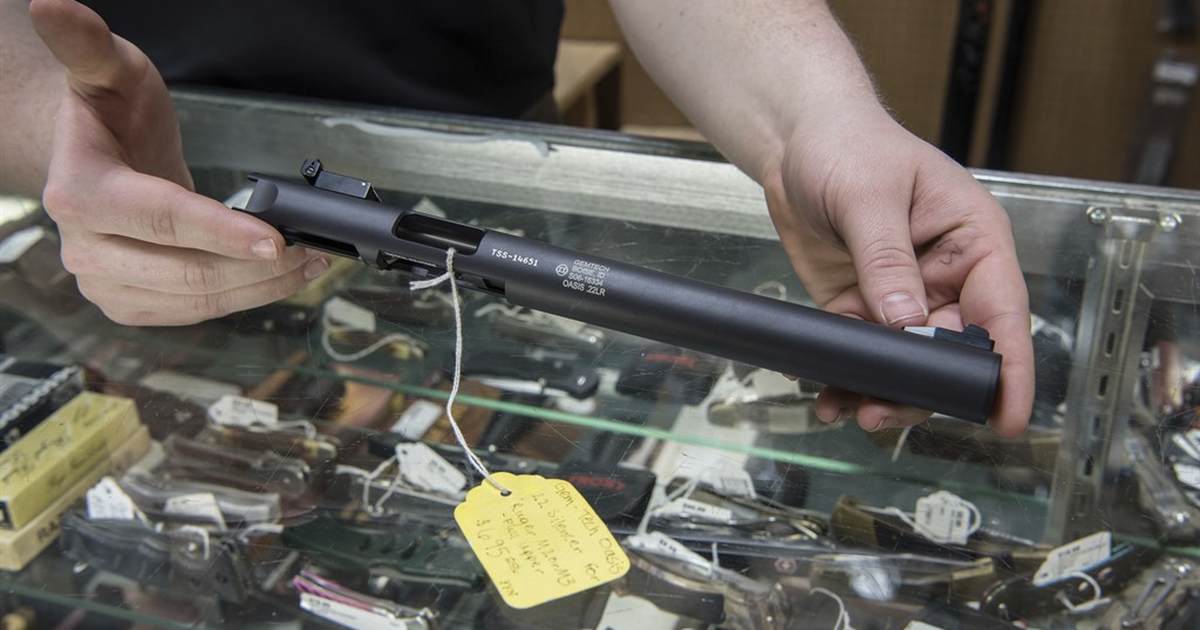
A recent Department of Justice choice has created a rare opening for firearms owners by leaving in place a court stay that calls long-standing parts of the National Firearms Act into question, and that uncertainty is reshaping how suppressors and similar items might be bought and transferred in the months ahead.
The Department of Justice declined to appeal the stay tied to a ruling that puts federal registration of suppressors under the microscope, and that move throws open an unexpected legal door for gun owners in friendly states. If your state law doesn’t add extra prohibitions, you could be in a position to acquire a suppressor after completing a Form 4473, rather than being forced into the old NFA registration process.
There are a lot of important limits to that possibility, though. Transfers often require a dealer who is willing to risk an untested legal posture, or membership in a plaintiff organization named in the lawsuit, so practical access is patchy. Whether the ruling extends to short-barreled rifles and short-barreled shotguns is still being litigated and remains unclear to most lawyers and dealers.
I’ve tried to test the waters myself and have a suppressor on order, sitting at a local dealer, so I understand how messy the reality is right now. I’m honestly about fifty-fifty on whether I’ll be handed the item without having to complete NFA paperwork, and many in the community feel the same mix of hope and caution. The Department of Justice has until September 4 to file an appeal of the underlying decision, though that deadline applies to the merits and not to the stay that’s already in effect.
If opposing parties pursue an appeal, federal registration could come back whether we like it or not, and people should be prepared to comply if that happens. Firearms dealers already retain Form 4473 records for 20 years, so investigators with a mind to find an owner don’t exactly lack options even under the current regime. That reality makes loud claims about privacy ring hollow when registration of purchases exists in practice through existing recordkeeping.
Republicans have pushed policy forward on this front in recent years, and the last administration deserves credit for significant changes that reduced burdens on lawful gun owners. Getting rid of the $200 tax stamp was a meaningful win, and the current legal movement now opens the conversation about ending arbitrary registration for common safety accessories and certain barrel lengths. These are not tiny victories for a community that has seen few such outcomes in decades.
Look at the contrast with Europe, where suppressors are treated as routine safety gear rather than something dangerous that requires putting a name on a government list. Here, criminal statutes around barrel length and other technicalities have made ordinary owners into potential felons for reasons that rarely align with public safety. The 16-inch rifle-barrel requirement replaced an arbitrary 18-inch line after a federal scramble to address illegal surplus sales that had ensnared many citizens.
Legal creativity sprouted from the absurdity of those rules, like the “pistol brace” workaround that tried to square real-world use with impossible regulations. The ATF’s repeated flip-flops on the brace and other interpretations have been a huge part of the problem, leaving gun owners guessing about compliance from one week to the next. If the current judicial momentum holds, those stop-and-start regulatory games may finally start to fade.
That said, the situation remains fragile and highly conditional on court decisions, state statutes, and the willingness of dealers to take legal chances. Responsible owners should follow the developments closely, know their state law, and understand that no single ruling ends the debate overnight. By choosing not to appeal the decision right away, President Donald Trump and his administration have placed themselves in a position that many gun rights supporters will call historic for modern policy.