Jennifer Balkcom won the Republican nomination for North Carolina’s 11th Congressional District and is running on a platform of community safety, fiscal commonsense, and strong support for law enforcement against a Democrat opponent backed by national left-leaning groups.
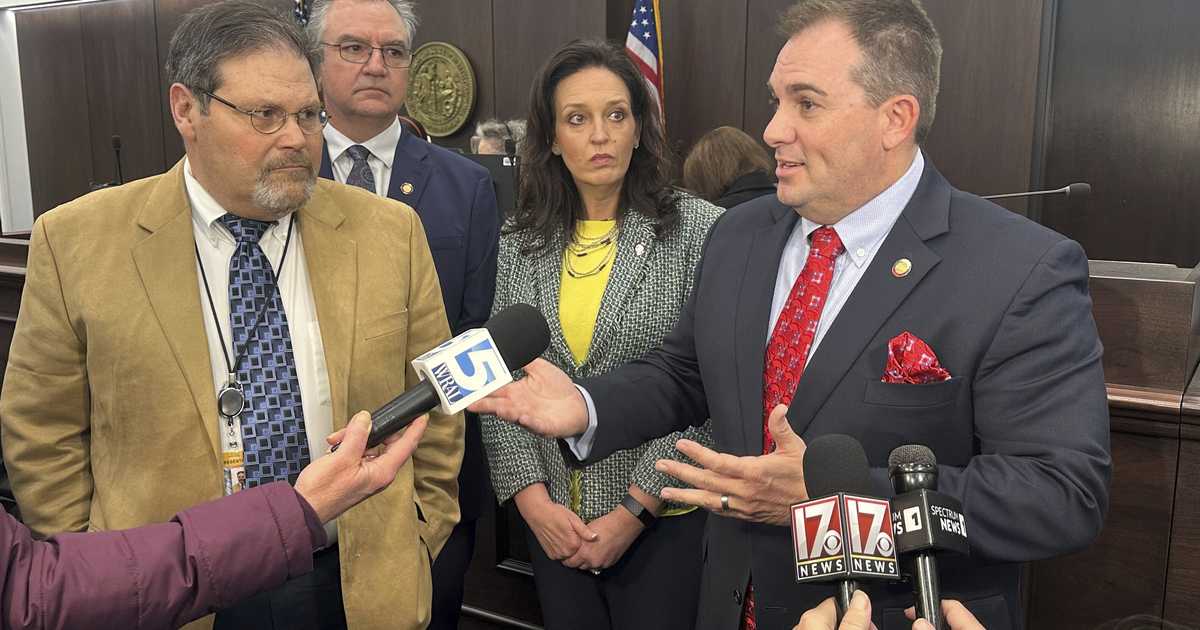
Republican State Representative Jennifer Balkcom was chosen as the nominee for the 11th Congressional District and she’s making a clear, simple promise to voters. “I’m blessed to receive the Republican nomination for the 11th Congressional District. Western North Carolina is where I was born, raised, and chose to raise my own family. It has been an incredible honor to fight for Henderson County in Raleigh, and I will take that fight to Washington and work every single day to make life more affordable for working families, improve community safety, support our farmers, and ensure we have the resources we need to continue to recover from Hurricane Helene.”
Balkcom brings a solid conservative record and proved results to a race that could decide control of the House this fall. She’s pitching steady leadership: lower costs for families, protection for farmers, and tougher measures to keep violent criminals off the street. Her message is blunt—communities should be safe, and government should not make it harder to enforce the law.
Balkcom’s campaign contrasts sharply with her opponent, the Democrats’ handpicked DC insider Jamie Ager, who has pushed proposals that would significantly constrain federal immigration enforcement and advocate a broad amnesty. Critics say those policies would handcuff ICE and other federal agents, while opening the door to mass amnesty that would reward illegal border crossings. Voters in Western North Carolina face a choice between enforcing the law and a softer approach that national Democrats and allied groups favor.
https://x.com/NRCC/status/2086972178067492973
Balkcom has also been active on criminal justice measures at the state level, playing a critical role in passing Iryna’s Law after the tragic murder of refugee Iryna Zarutska on Charlotte’s light rail. That law tightens rules on pretrial release for violent and repeat offenders, a direct response to crimes like the murder carried out by Decarlos Brown. Balkcom uses that work to underline a core argument: public safety policies must prevent dangerous people from being free to harm others.
On the campaign trail Balkcom stresses practical solutions rather than ideology, arguing for common-sense enforcement paired with support for victims and local law enforcement. She emphasizes resources for recovering from natural disasters and for rural infrastructure, tying those priorities to a commitment to protect families and businesses. That combination is designed to appeal to voters tired of partisan extremes and eager for steady stewardship in Washington.
Jamie Ager has drawn support and funding from organizations that have backed soft-on-crime figures in the state, including those aligned with Roy Cooper’s political network. Groups mentioned by critics include the North Carolina AFL-CIO, Save Democracy PAC, and the Planned Parenthood Action Fund, the latter of which supported calls to defund police in 2020. Balkcom’s campaign points to those alliances as evidence that Ager would follow national party pressures rather than local priorities.
The stakes in NC-11 are straightforward for many voters: who will defend local law enforcement and common-sense public safety rules, and who will prioritize national progressive priorities over community security. Balkcom frames her bid as a return to practical government focused on families, farms, and first responders, while arguing that Ager’s ties to national groups would bring policy swings that don’t fit Western North Carolina. That contrast is central to the campaign’s messaging as Election Day approaches.
Expect Balkcom to run on her record in the legislature, on her role in passing targeted public-safety reforms, and on promises to fight for affordable living and disaster recovery resources. Her pitch is that voters deserve representatives who put the safety and economic well-being of their communities first, not those who answer to distant, ideological backers. The choice in NC-11 will test whether local, practical conservatism or national progressive influence wins the day.
Voters will decide whether to send a lawmaker to Washington who leans on enforcement, community resilience, and pragmatic governance, or to back an opponent aligned with national groups that favor more permissive immigration and softer crime stances. The campaign is shaping up as a classic contrast between local accountability and outside-driven policy agendas, with both sides staking out sharply different visions for public safety and economic priorities in Western North Carolina.