This piece makes a blunt case that handing Democrats control of our healthcare system risks politicized rationing, higher taxes, and deadly consequences, drawing on the history of Obamacare, real-world examples, and personal stories to show why that path is dangerous.
Right around the time Obamacare was being shoved down our throats, Twitter was in its nascent days and many of us were warning even then that the purpose of the so-called “Affordable Care Act” was to collapse the private health insurance system in order to usher in socialized medicine. The rollout proved those warnings were not paranoid guesses but a warning we should have heeded earlier. The promises of lower costs and better access did not pan out for many families.
“That’s been the Democrats’ white whale for years, and much in the same way Captain Ahab disregarded the safety of his crew to chase Moby Dick, Democrats do not care how many people will die in their pursuit of Medicare for All. In fact, they’d likely see the deaths as a feature and not a bug of their plan.” Those are strong words, but they reflect a pattern where policy zeal overrides practical consequences. Partisan drive, not patient outcomes, too often guides their agenda.
We all knew when Obama said we’d save $2,500 a year on premiums and that costs would go down, it was a lie. Political salesmanship promised results that failed to materialize for many patients and providers. Nancy Pelosi’s old line about needing to pass the bill to find out what was in it still feels like a warning about hidden costs and consequences.
I know several people who could not, in fact, keep their doctors. One woman with cancer lost access to the care that might have saved her life because network changes and bureaucratic hurdles blocked timely treatment. Those are not abstract policy failures; they are literal, human consequences.
Democrats passed the Affordable Care Act unanimously within their ranks, and Republican fingerprints are nowhere to be found on that mess. Conservatives tried to push reforms and have worked to lower drug prices where possible, but repealing or replacing has been politically fraught. Meanwhile, the left circles back to bigger promises and broader control, now chanting “Medicare for All” as the cure for a system they helped break.
Democrats will blame Republicans, however. They always find a political foil when outcomes go sideways, and shifting blame does not fix rationed care or longer wait times. Voters deserve accountability, not predictable finger-pointing.
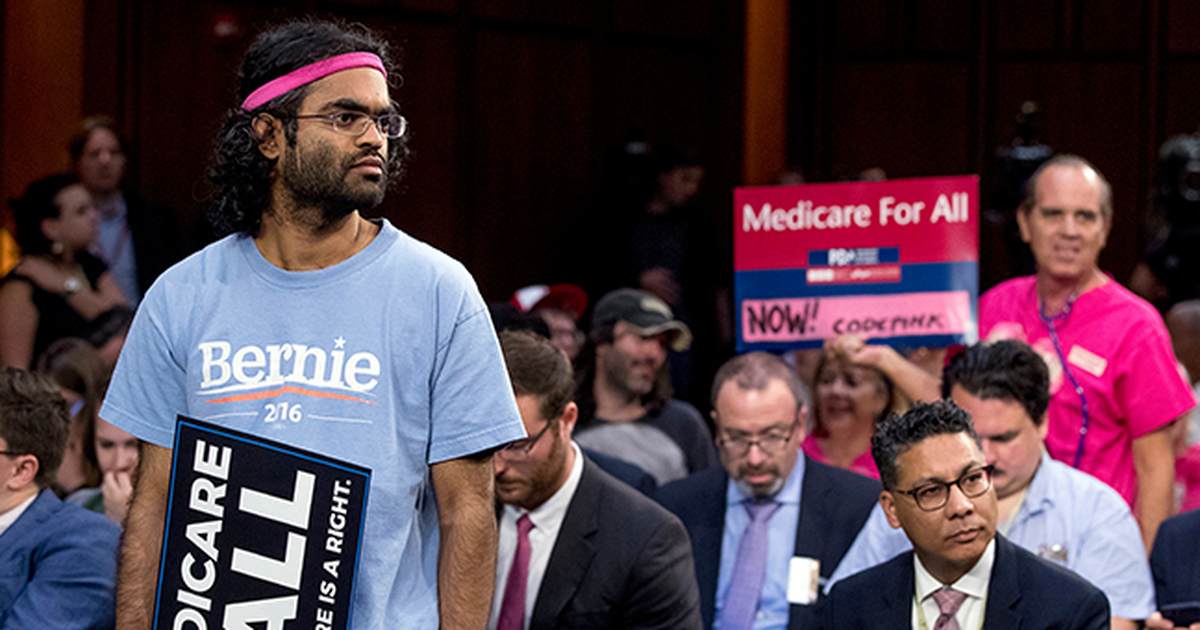
As the new crop of Democratic socialists renews the push for Medicare for All, we need to admit what many suspected all along: Obamacare was structurally flawed and left too many people exposed. Turning everything over to a single-payer model would mean top-down decision making and centralized control over who gets access to what care. That is a trade-off Americans should understand before any further expansion of government in medicine.
https://x.com/mazemoore/status/2089038707273629705
My mother is 71, retired, and has a slew of health issues, and she also has an openly conservative daughter who bashes Democrats on a daily basis. What chances would she stand if a guy like Abdul El‑Sayed were deciding who does and doesn’t get seen by a doctor? When political ideology meets medical rationing, ordinary families pay the price.
In addition to the inevitable tax hikes, care would have to be rationed because we do not have enough doctors to meet skyrocketing demand. Giving “free” healthcare to every American and to the tens of millions of illegal aliens some Democrats favor importing would crush capacity and increase delays. In the U.K., Rupert Lowe said immigrants get priority dental care over immigrants to “Ensure the service recognizes the inequalities faced by the detained individuals and proactively aims to reduce the inequalities therein.”
Now imagine those allocation rules applied in America, with “reparations” and identity politics shaping who receives priority care. My white, sick mother would not be the priority in such a system, and that reality is chilling for anyone who values equal treatment under the law. Meanwhile, some proponents cheerpack policy changes as moral wins while ignoring victims of those changes.
Maybe they’d pay for her to travel to Canada for MAiD, though. That grim possibility is not exaggerated when you see how other nations handle end-of-life policy combined with strained health systems. When the state decides how resources are used, the vulnerable can lose out.
The Left does not actually treat healthcare as a “right” in any operational sense; it’s a political slogan that breaks down under stress. That notion collapsed during COVID when parts of the left effectively judged unvaccinated people as less deserving of care. The same selective compassion can return if power is centralized and politicized.
Pay attention to who the advocates are. Men like Abdul El‑Sayed, who once oversaw the euthanasia of 4,000 dogs and cats in Detroit, talk about having the “political will” to impose broad, expensive schemes. That kind of ideological certainty is dangerous when it meets the levers of government control over life-and-death medical decisions.
Look to Canada and the United Kingdom for examples of systems that struggle under heavy government control: fewer providers, longer waits, and bureaucratic indifference to individual suffering. Both countries spend meaningful sums and still leave people waiting, frustrated, and sometimes dead. Those are not abstract warnings; they are case studies in what can go wrong.
The push for Medicare for All is framed as compassion, but it is also an acknowledgement that past experiments failed and now call for bigger bets. Giving one party, particularly one driven by ideological impulses, the power to decide who lives and who dies is a risk no family should accept lightly. Do not give them that power.