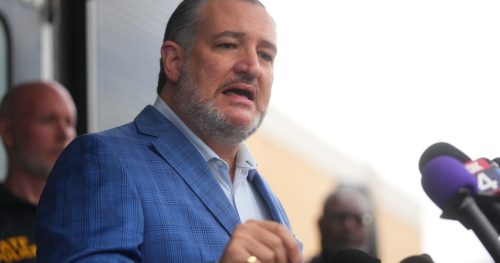
The New York Times was found liable in a defamation suit over a 2023 story about an Alabama shooting after relying on a single anonymous source, and a jury awarded millions to the player wrongly tied to the crime.
This is the rare case where a major paper actually paid a price for sloppy reporting. For the first time in over 50 years The New York Times faces a multi-million dollar judgment tied to a March 2023 story that wrongly placed University of Alabama player Kai Spears at the scene of a deadly shooting. The paper initially defended the piece, then issued an editor’s note acknowledging the error.
The legal bar for proving malice in defamation cases is notoriously high, especially for public figures, yet the jury still sided with Spears. An eight-person jury returned a $9.25 million award after a nine-day trial in federal court, with the judge later adjusting the payout downward under Alabama caps. That outcome signals the jury found the reporting seriously flawed, not just an innocent typo.
What sank the story was not a complex conspiracy but basic newsroom negligence: the article relied on a single anonymous source. The reporter, Billy Witz, attributed the key detail to one person who described seeing “a white guy on the basketball team,” and the paper ran with it. When follow-up denials came, the Times updated the piece but kept standing by the original reporting for a while before admitting the mistake.
Spears says the error exposed him to death threats and emotional distress, and he sued two months after publication. The legal team for The Times called it an honest mistake. That defense rings hollow when a single unverified tip becomes the backbone of a story linking a young man to a murder. Journalists are supposed to corroborate, not gamble someone’s life and reputation on a lone anonymous voice.
The eight-person jury awarded $9.25 million in damages, after a nine-day trial in the U.S. District Court for the Northern District of Alabama.
https://x.com/HolmesJosh/status/2090602708856156285
Kai Spears, who played for the University of Alabama men’s basketball team, sued The Times in 2023, accusing it of libel and “false light” invasion of privacy. He claimed the article, which mistakenly reported he was a passenger in a car at the scene of the shooting, had caused him emotional distress and forever linked him with a murder. Three other basketball players from the school were present at the shooting, which killed a 23-year-old mother.
[…]
The jury deliberated for about five hours on Thursday. Because Alabama law caps jury awards in certain cases, the damages will be adjusted down by over $2 million.
[…]
The article at the center of Mr. Spears’s lawsuit was published on March 15, 2023, after coverage of a deadly January shooting at which three Alabama basketball players were present. (One player was charged with capital murder and awaits trial. Two others were not implicated in the shooting or accused of any wrongdoing.)
The article, by the reporter Billy Witz, said that Mr. Spears had also been present at the shooting, attributing the knowledge to a single anonymous source. The article said that Mr. Spears had declined to comment and that university officials had not immediately responded to a request for comment.
After publication, Mr. Spears’s father [athletic director at Marshall University] and the university’s athletic department [Greg Byrne] denied that Mr. Spears had been at the shooting. The article was updated with the denials, and The Times continued to stand behind its reporting.
Two months later, Mr. Spears sued The Times. In his complaint, he said he had been out that night with some of the players, but had been back at the Alabama athletes’ dorm by the time the shooting occurred. The lawsuit said The Times’s “false statements will be associated with him for the rest of his life,” and that he had endured mental anguish and death threats.
[…]
During the trial, lawyers for The Times argued that the article was not defamatory because it did not convey that Mr. Spears had been involved in the shooting, even if it incorrectly placed him at the scene. They also argued that Mr. Witz had taken reasonable steps to corroborate his source’s information, including approaching Mr. Spears in person.
Jurors were shown surveillance footage, dashcam footage and text messages that confirmed Mr. Spears was nearby in another car, but not at the scene. He testified that he was heckled at a game the day after the article was published and had been under so much stress that his grades slipped.
On the witness stand, Mr. Witz, the Times reporter, apologized to Mr. Spears. He said he had been confident in his source and had tried to confirm with other sources before talking to a person who told him that the car’s occupant was “a white guy on the basketball team.” That person did not recall the name.
Matt Glover, a lawyer representing Mr. Spears, told the jury in his closing argument that the case gave them “the opportunity today to change the way journalism works at The New York Times.”
[…]
Michael Bell, a lawyer for The Times, argued that Mr. Witz and The Times had published the article believing the information from the source was true, and that Mr. Witz had taken steps to verify it.
This should be a wake-up call for national outlets that treat anonymous sourcing like a shortcut. One tip from an unnamed person is not journalism, it is rumor dressed up in a byline. The Times had multiple chances to back away or dig deeper and didn’t.
There used to be pride in getting the facts right even when a story was inconvenient. That standard has eroded, and the result is predictable: reputations ruined, trust shredded, and now a judgment that will sting their wallet and their brand. Accountability should mean better work, not just public apologies.
The legal loss here is more than money. It is a reminder that the rules of reporting still matter and that readers will notice when major outlets cut corners. If journalism wants to reclaim credibility, it starts with rigorous sourcing and an honest willingness to correct errors before they become public harm.