The WNBA keeps drifting from basketball into spectacle, and the latest stunt with two mascots only underlines how far the league has wandered from the game.
The league has a pattern of choosing controversy over competence, and that tendency is costing it credibility with fans who just want to watch high-level basketball. When off-court narratives overshadow on-court talent, interest erodes and the product weakens. The recent introduction of mascots by a new franchise is another example of spectacle taking precedence over sports.
The Toronto Tempo debuted two mascots that come with assigned pronouns and a backstory that reads like a marketing brief for identity politics. Instead of being a light, family-friendly addition, the rollout became another cultural flashpoint aimed at signaling virtue rather than boosting ticket sales or improving the game. Fans seeking actual basketball were offered more messaging and fewer reasons to stay engaged.
People follow sports for competition, storylines, rivalries and skill, not to be lectured or nudged into cultural conversations at every turn. When the league spends headline energy on pronouns and narratives, it dilutes the simple appeal of the sport itself. That choice has consequences: casual viewers tune out and die-hard fans get frustrated watching attention shift away from the hardwood.
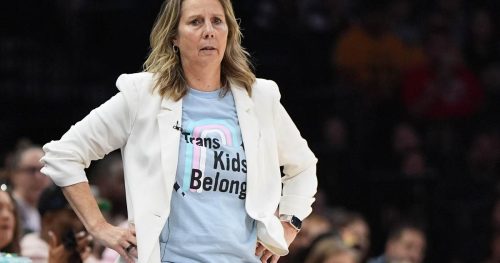
The WNBA recently held a meeting to discuss who qualifies as a woman, and it produced little more than confusion and headlines that distracted from the season. A league that can’t have a clear, decisive stance on such a basic issue invites outside critics to question its direction and priorities. This lack of clarity feeds a broader narrative that the league is more interested in politics than in protecting fair competition and the integrity of women’s sports.
https://x.com/OliLondonTV/status/2090773357751144856
At the same time, marquee players who should be building the league’s brand have been caught in controversies that further muddle public perception. When star athletes become lightning rods for culture-war battles, the game around them becomes collateral. That hurts attendance, viewership and the league’s reputation as a serious sports enterprise.
The commissioner’s role is to steer the league toward stability and growth, yet many fans see little evidence of decisive leadership. A strong leader would prioritize clarity, competitive fairness and the product on the court. Instead, the impression is of an organization distracted by symbolism and side issues while the sport competes for attention with its own messaging.
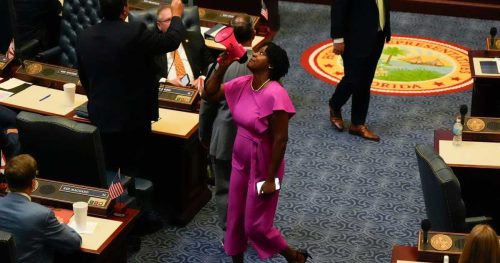
Outside the boardroom, incidents like objects being tossed onto courts and players trading barbs over policy choices turn arenas into debate stages rather than sports venues. Those scenes alienate mainstream fans who prefer the drama of close games and impressive plays to political theater. The more the league tolerates disruptive theatrics, the harder it will be to maintain a broad, engaged fan base.
The Toronto Tempo’s mascots aim for charm and local color, but they arrived wrapped in identity-driven language that made the rollout controversial by design. The focus on pronouns and personality traits shifted attention away from how a new franchise can build a competitive team and grow a loyal fan base in a major market. When promotional decisions are engineered to score cultural points, the core mission of building a sustainable sports brand gets sidelined.
Dez (she/they) is a Borealis Blue Snapping Turtle from Muskoka, Ontario. Their name is inspired by decibel, a nod to their love of music and role as the more measured half of the duo. Dez is calm, clever and always thinking a few steps ahead.
A Taurus who spins the 1s and 2s in their spare time, Dez’s secret talent is snapping – they also have a particular fondness for soft shell tacos.
Dot (she/her) is an Arctic Hare named for Toronto’s longtime nickname, T-Dot. Originally from the Arctic Circle, she brings seemingly endless energy, acrobatics and enthusiasm to everything she does – making her the undisputed hype woman of the pair.
A Gemini whose hobbies can best be described as “hops and hype,” Dot loves cotton candy, Drive to Survive, and any opportunity to get the crowd on its feet.
Their story began much farther apart.
Dot grew up chasing the northern lights across the Arctic, flipping and leaping beneath the aurora. Farther south, Dez could be found moving at her own steady rhythm through the lakes of Muskoka.
When the northern lights stretched south one winter, Dot followed them to Ontario, where she met Dez. The two quickly discovered a shared love of rhythm – even if they approached it very differently. Dez brought patience and timing; Dot brought speed and fearless energy.
Eventually, the pulse of Toronto drew them both to the city.
Some will say mascots are a small thing and this is overblown, but the pattern matters. Small decisions signal priorities, and a league that repeatedly chooses cultural theater over athletic focus sends a clear message to fans and sponsors. That cumulative effect is what turns a promising season into a missed opportunity.
If the WNBA wants to expand its reach and take advantage of the current interest in women’s basketball, it needs to stop weaponizing every move for woke points and start rebuilding trust with the audience. That means putting basketball first, protecting fair competition, and letting the sport itself be the main attraction. Anything less keeps turning a national pastime into a political petri dish.