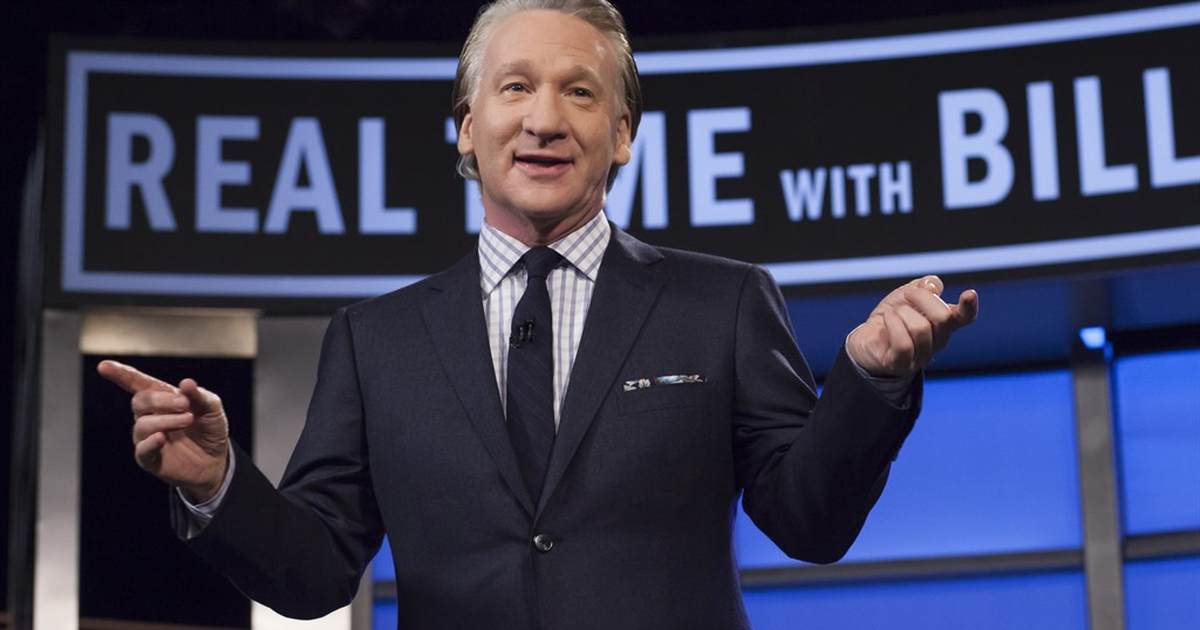
Bill Maher hosted Scott Galloway on Club Random, and the conversation veered from big-picture tech critiques to a bold prediction about the presidency, sharp takes on gender and politics, and a defense of American capitalism that pushed back against the prevailing leftward narrative.
On the show, Scott Galloway declared that Gavin Newsom will be the next president and argued that America is dominated by superficial judgments and deep-seated biases. His comments tied together culture, dating, and political identity in a way that seemed to assume the left holds an inevitable cultural edge. Listening from a conservative angle, those claims felt like wishful thinking dressed up as analysis.
Galloway’s description of why Hillary Clinton lost in 2016 landed as a headline-grabbing moment when he suggested that sexism, rather than strategy or campaign failures, was decisive. That line sits oddly against the facts of Democratic overconfidence, messaging missteps, and the unique electoral map dynamics in 2016. Republicans hear this and think: blaming sex or looks sidesteps the real reasons a candidate fails to win.
Scott Galloway: “I think Gavin Newsom is going to be our president. I think we’re a looks-ist, s*xist, racist country… and the only thing I’m fairly confident about is that the Democratic nominee will be a straight white man over 6 feet tall.”
https://x.com/RedWavePress/status/2091906851226935451
Bill Maher: “You think in general the country is racist and s*xist, in 2026?”
Scott Galloway: “Yeah… I don’t see any reason why Secretary [Hillary] Clinton lost to Donald Trump other than s*xism. I think if she’d had a d*ck, she’d be our president.”
Bill Maher: “I mean, I’m a fan. You know, I always thought Hillary would be good. She’s one of the most sort of common-sensical people I’ve ever seen in politics.”
Scott Galloway: “Confident, smart, centrist.”
That exchange left some clear contradictions: Galloway calls Newsom a future president and at the same time brands the country as biased in a way that should hurt Democrats’ chances for novelty candidates. For conservatives, it’s hard to reconcile his forecast with the political baggage Newsom carries in a year where voters are focused on inflation, border security, and basic competence. Predicting the White House is more than wishful cultural reads.
Galloway did make valid observations about social media and algorithmic manipulation, pointing out how platforms silo us into caricatures that harden into identity. He argued that algorithms push people to extremes by tagging them left or right, which then turns neighbors into enemies. Republicans typically agree tech platforms shift incentives and reward outrage, even if we differ on who radicalizes whom most effectively.
BILL MAHER: “If you ask me what I think the bottom line problem is it’s hate. It’s just everyone is just so hateful of the other side. You can’t I know this as a stand up that if you make the crowd hate you, you can say the funniest thing in the world, they will not laugh.”
“And it’s the same I think in politics. If they hate you, you could have the greatest plan, the greatest idea, the thing that’s actually going to make lives better. Mhm. Doesn’t matter. I hate you. I hate you and so I’m going to oppose that and try to sink it and kill it and kill you. That’s where we’re at.”
SCOTT GALLOWAY: “I don’t think people I don’t think people realize how much we’ve been manipulated by the social media algorithms that immediately want to identify us as far left, far right. Our enemy isn’t Russian soldiers pouring over the border in Ukraine, it’s your neighbor who has the wrong political sign in his yard and it’s coarsening our discourse.”
SCOTT GALLOWAY: “And going back to dating, do you remember the political leanings of anyone you dated in your 20s and 30s? We didn’t talk about it.”
“It’s yet another reason why young people aren’t hooking up.
BILL MAHER: “You’re right.”
SCOTT GALLOWAY: “I mean, it just didn’t matter. It just it wasn’t our identity. Now it’s now it’s become your politics, your identity. And if I disagree with your politics, then you are wrong.”
The social media critique landed strongest when it focused on the corrosive effects of trauma-driven engagement, outrage economics, and performative purity. You can agree that tech funnels people into camps without conceding Galloway’s broader political predictions. Conservatives like to highlight how platform bias and cultural elites often push policies and narratives that alienate middle America.
Maher pushed back in parts and offered a defense of America and free markets that landed well for viewers skeptical of leftist critiques. He reminded listeners that policy and prosperity deserve attention beyond identity theater, and he stressed the human costs when debate turns into vengeance. That tone resonated with anyone concerned about the fragility of public norms and civic comity.
When the show drifted into cultural explanations for political outcomes, the analysis felt incomplete and tilted toward comforting explanations for Democratic setbacks. Predicting a Newsom presidency ignores the blunt realities of governance, budget failures at the state level, and a nation that still prizes economic performance. Republicans will point to those ongoing problems and say cultural analysis alone won’t win a White House.
Galloway remains an influential voice whose takes are part analysis, part provocation, and part branding, which is fine as long as listeners separate theatrical provocation from political forecasting. His tech critique deserves debate, and Maher’s defense of capitalism deserves attention, but bold predictions about who will lead the country should be anchored in hard data, not just cultural intuition.
In short, the episode offered sharp moments and shaky claims, mixing useful observations about algorithms with sweeping judgments about voters and gender that invite pushback. For conservatives watching, the program served as both a reminder that the left can be self-satisfied in its predictions and a prompt to keep making the case for practical governance over cultural posturing.
In case you forgot who Galloway is, it’s this guy:
Maher also gave another full-throated defense of America and capitalism.