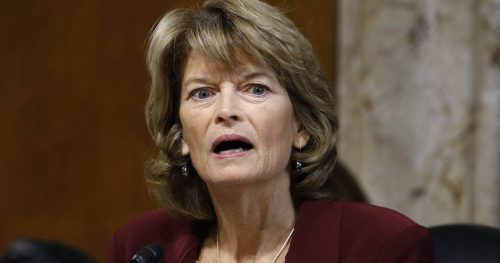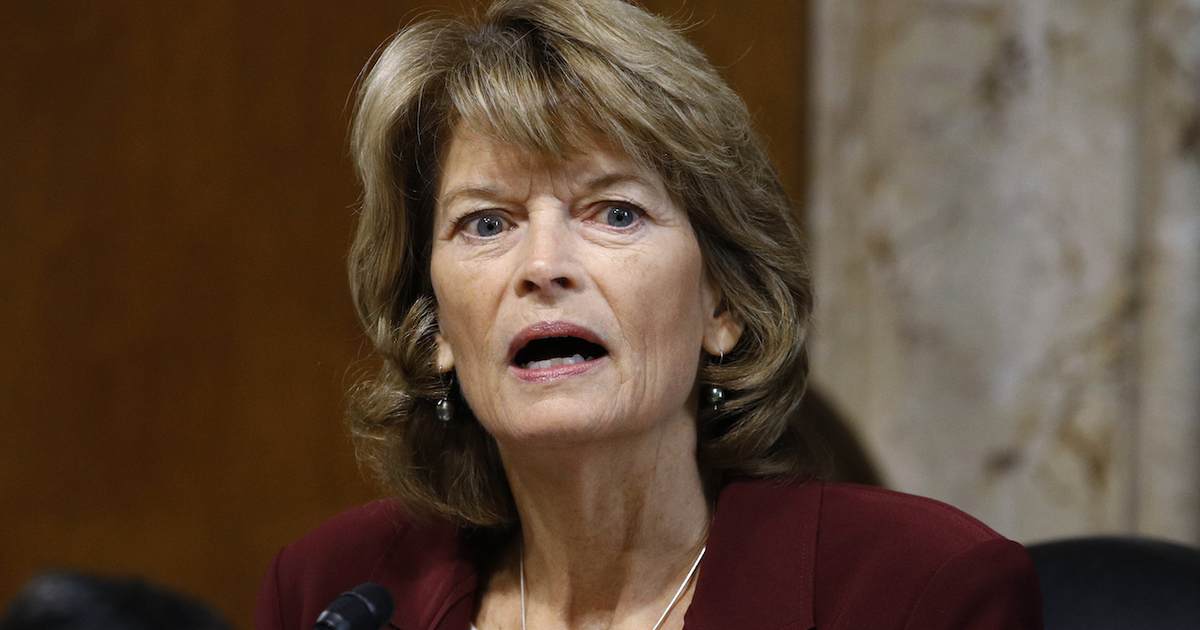
James O’Keefe’s latest undercover reporting confronts Sen. Lisa Murkowski’s objections to the SAVE America Act by documenting voting irregularities, local testimony that contradicts her claims about access to voter ID, and questions about whether election rules are being applied consistently in Alaska.
Senator Lisa Murkowski has publicly opposed the SAVE America Act, arguing it takes a one-size-fits-all approach to election law. That stance sits awkwardly next to the fact she supports many provisions inside the bill, and it has opened her to scrutiny from conservative investigators. The result is a bruising exchange where principles and politics collide, and voters are left sorting through competing claims about how elections are run in remote parts of the country.
James O’Keefe and his team set out to test how election rules play out on the ground, and their footage centers on basic questions voters care about: identification, chain of custody for ballots, and whether local procedures match the public record. In multiple interactions, workers allowed ballots to be handled or processed without the strict ID checks many expect. That alone raises concerns about uniform enforcement of election safeguards that the SAVE America Act seeks to standardize.
O’Keefe’s crew documented instances where ballots were obtained that did not belong to the people handling them, and they showed election workers giving the green light to cast ballots without seeing ID. One striking detail was the claim that a ballot belonging to Murkowski’s brother was obtained, even though he no longer lives in Alaska. Those are the kinds of on-the-ground contradictions that make a strong argument for clear, consistent federal standards on election administration.
The follow-up reporting took the team to Unalaska on the Aleutian chain, a place Murkowski cited when warning that passage of the SAVE America Act would force residents to travel hundreds of miles to register or obtain identification. Murkowski said people would supposedly have to make an 800-mile trip to Anchorage for basic election paperwork, a claim that sounds harsh to anyone familiar with life in remote communities. O’Keefe’s reporting tested that claim directly, and the local answers were not what the senator suggested.
https://x.com/JamesOKeefeIII/status/2090542918193074566
O’Keefe asked an Unalaska local DMV employee, “We don’t have to go to Anchorage to get an ID?” The employee responded, “No, you can come here.”
An Unalaska resident confirmed voting takes place at City Hall and said residents “Don’t have to go to Anchorage [to register to vote or obtain ID].”
After visiting the library, DMV, City Hall, post office, and speaking directly with residents, O’Keefe reported: “Everybody here [Unalaska residents] are contradicting what Lisa Murkowski is saying [Have to travel to Anchorage to register to vote or obtain ID].”
Those verbatim responses are hard to ignore: local officials and residents saying they can obtain ID and vote without making an 800-mile trek undercuts the senator’s public reasoning for opposing a federal minimum standard. If communities already offer access, the argument that a law would deny rural voters reasonable accommodation falls apart. For Republicans who want consistent rules, that creates a straightforward talking point: federal clarity prevents local confusion and abuse.
The political fallout has been immediate. O’Keefe reports being threatened with legal action and potential prosecution over the disclosures, a familiar pattern when undercover reporting exposes powerful figures. Those threats haven’t stopped the footage from circulating, and the material is now forcing voters and lawmakers to wrestle with a simple question: should election rules be consistent nationwide, or left to patchwork local practice?
From a pragmatic conservative angle, these episodes underscore why many in the party back the SAVE America Act. The bill aims to set baseline protections so a voter’s ability to participate isn’t subject to local variation or informal practices. When ballot handling and ID requirements vary from place to place, confidence in outcomes erodes and legal challenges multiply, which is exactly what the country wants to avoid as it heads into high-stakes election seasons.
Senator Murkowski has argued against a uniform approach, but the on-the-ground evidence presented here weakens that position and strengthens the case for federal standards that ensure equal treatment. Public officials should expect tough scrutiny when their public claims don’t match local realities, especially on something as crucial as how elections are run. Pass the SAVE America Act, Lisa. Whatever you just said for the congressional record has been debunked.