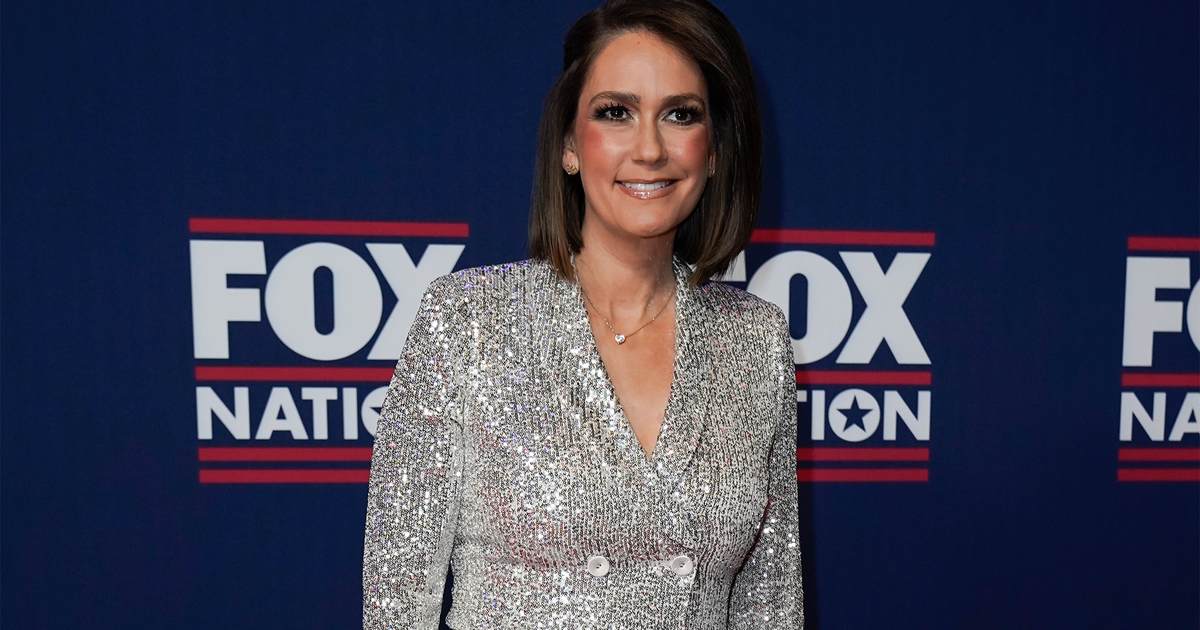
Jessica Tarlov told The New Yorker’s David Remnick that she wished Donald Trump had won in 2020 and that his posts on Truth Social have left her in tears, a moment that reveals how personal and public political fights have become.
Jessica Tarlov, a frequent liberal voice on Fox News programming, admitted in a high-profile interview that Trump’s online attacks get to her and that she regretted not seeing him re-elected in 2020. The exchange highlights two things: personality-driven politics and how media contributors react when they become targets. For many conservatives, the episode simply reconfirms that political combat lives in plain sight and that emotional responses are part of the current media landscape.
The New Yorker’s David Reminick: “He wrote this: ‘Why does Fox News allow failed TV personality Jessica Tarlov to soil The Five? Her voice, her manner, and above all else what she says are a disgrace to television broadcasting.'”
“When you read that on Truth Social, do you feel terrible — or do you go, ‘I like that’?”
https://x.com/JasonJournoDC/status/2092703338060009697
Tarlov: “I feel terrible … I’m mostly in tears about it. Not that one in particular … What really gets to me is threatening my job.”
That exchange lays bare a familiar pattern: a conservative base lashes out on a platform built expressly for political pushback, and a liberal commentator reacts emotionally on national television. Conservatives see this as proof that the fight matters and that a vocal movement can rattle media figures who think they are untouchable. Whatever anyone thinks of tone or tactics, the dynamics are obvious — a public figure takes aim and the target reacts under public scrutiny.
Don’t mistake tears for weakness in a political sense; they are a human response, but they also show how much influence platform-based attacks still carry. Many on the right will argue that Tarlov made her bed by being a partisan foil on cable news and should expect sharp criticism. At the same time, the political point remains: these exchanges drive attention, shape narratives, and reward those willing to push back hard.
“I believe without COVID that Trump would’ve won reelection — and I wish that he had! I wish we were done now — because he, like Ursula, got stronger in those four years,” she said.
That admission matters because it contradicts a common media posture: some on the left still privately acknowledge Trump’s draw even while publicly criticizing him. Saying you wished he had won is a frank assessment of political reality, and it cuts both ways for people who assumed her line of commentary would always be on steady ground. For conservatives, it confirms that Trump’s absence actually sharpened his appeal and hardened his base.
There’s also a workplace angle that Tarlov mentions: job security and reputational risk. She told Remnick that threats to her job hit her hard, and that reaction is part of the story the left doesn’t always want to own. To many Republicans, the idea that being outspoken invites consequences is logical — media outlets tolerate a range of voices, but public opinion and advertiser pressure still matter.
Look past the theatrics and you see the strategic endgame. Trump’s social media attacks are designed to unsettle opponents, mobilize supporters, and keep attention trained where it benefits his agenda. Whether you approve of the tone or not, it is clear the approach has political utility: it forces opponents onto the defensive and keeps the conversation on the terms of those who push hardest.
Meanwhile, cable shows that invite ideological diversity will continue to feature voices that clash with their audience because controversy sells. That calculus allows networks to show “balance” while also generating heat and ratings — a neat arrangement until one side becomes the target of relentless online attack. Critics who act surprised that this leads to emotional reactions are missing the only-slightly-hidden mechanics of modern political media.
At the end of the day, moments like this do two things for conservatives: they expose the vulnerabilities of prominent left-leaning commentators, and they underline a truth about modern politics — the street fight is permanently televised. People on all sides will keep using the tools available, and the rest of us get to watch who stands firm and who folds when the heat rises.