A federal judge temporarily blocked enforcement of President Trump’s executive order on mail-in ballots, stopping the U.S. Postal Service from mailing ballots to states that did not provide voter rolls for verification.
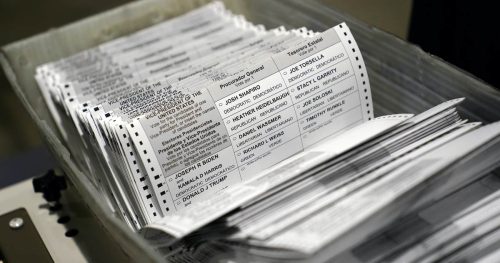
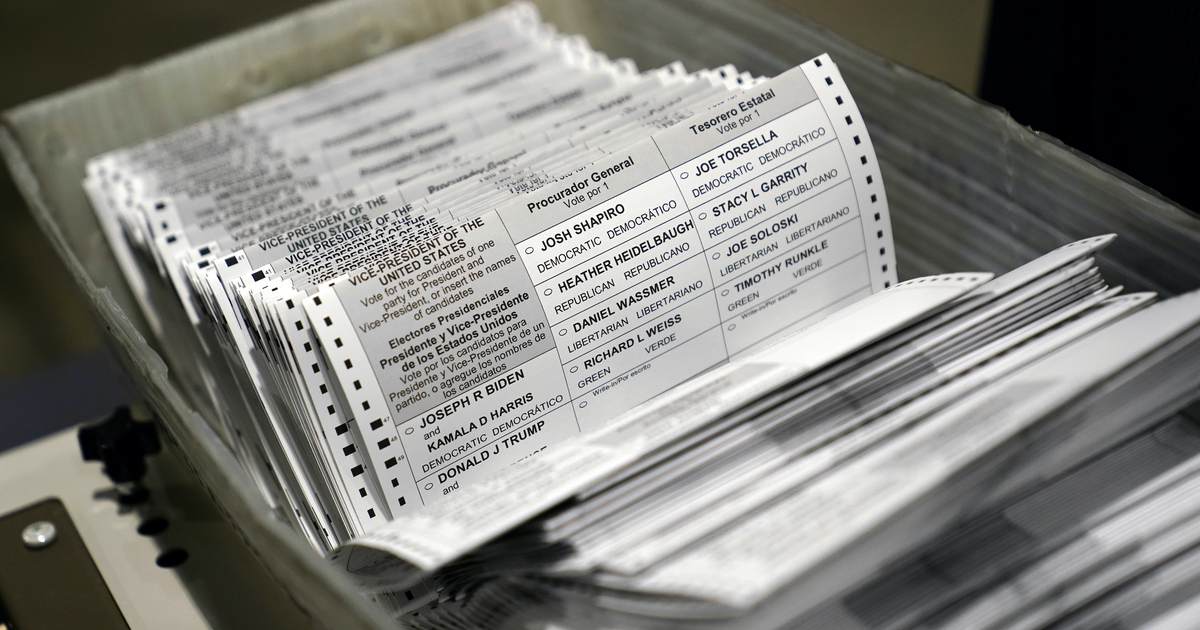
A federal judge has issued a nationwide injunction stopping the U.S. Postal Service from carrying out President Trump’s executive order on mail-in ballots for now, citing procedural concerns. The order had directed the Postal Service not to mail ballots to states that declined to turn over their voter rolls for verification. That restriction would have affected how and when millions of absentee and mail ballots are distributed ahead of the midterm cycle.
The pause comes with timing that changes the election calendar pressure, because the first mail ballots are set to go out very soon. U.S. District Court Judge Indira Talwani blocked implementation of the order for two weeks, creating a narrow window for appeals. The case could rapidly return to higher courts, and that uncertainty will dominate the next several days.
A federal judge on Thursday halted — at least for now — attempts to implement President Donald Trump’s executive order limiting mail voting.
https://x.com/EricLDaugh/status/2093154742117486721?ref_src=twsrc%5Etfw
The move stalled the directive for a second time only about a week before the first mail ballots are due to be sent out for the rapidly approaching midterm elections. U.S. District Court Judge Indira Talwani blocked the government from implementing the order for two weeks.
The case could soon be appealed back to the Supreme Court, days after the justices handed down a procedural decision that allowed the the administration to move ahead.
The ruling Thursday came after Democrats and voting rights groups refiled their lawsuits to comply with the recent Supreme Court decision. The high court’s conservative majority did not rule on the legality of Trump’s executive order, instead saying Talwani had acted too soon.
This is not just a legal skirmish; it’s a fight over who sets the rules for elections. Conservatives argued the executive order aimed to protect ballot integrity by tying ballot mailings to verification of voter rolls. Opponents said the order would suppress voting and that the administration overstepped its authority, which is why the courts are now in the center of the debate.
From a Republican angle, the core gripe is simple: if states refuse to cooperate with basic verification, the federal government needs a tool to ensure ballots are not sent into a system with known vulnerabilities. The administration framed the order as a common-sense check on mass mailings when voter rolls are not subject to cross-checks. When judges step in to halt policy, it raises the question of whether courts are substituting their judgment for elected officials.
The mechanics matter. If states do not turn over voter rolls, the Postal Service was ordered to withhold ballot mailings to avoid sending ballots based on unverified lists. That enforcement mechanism was the most contentious element and the exact focus of the injunction. Election administrators, state officials, and postal workers face a scramble to interpret what a blocked order means practically and how to keep ballots flowing without legal exposure.
Legal process will move fast. The administration can appeal, and the Supreme Court may be asked to weigh in again on an accelerated schedule given the calendar. The high court previously cleared a procedural path that allowed parts of the administration’s push to move forward without deciding the underlying legality. Expect a fight over procedure first and merits second, with both sides jockeying for emergency relief.
Practical consequences include confusion among voters, election officials, and postal workers as deadlines loom. Two weeks of limbo is long enough to disrupt mail plans in several states and short enough to force a rushed appeal. Whether this slows ballot distribution or just causes chaos depends on how quickly higher courts act and how state election offices respond under pressure.
Look for more litigation and a public push from conservatives stressing the need for transparency in voter rolls and secure ballot delivery. The dispute underscores a larger battle over who calls the shots on election logistics when federal and state interests collide. Expect swift legal filings and political theater as both sides race to shape the rules before ballots start landing in mailboxes.