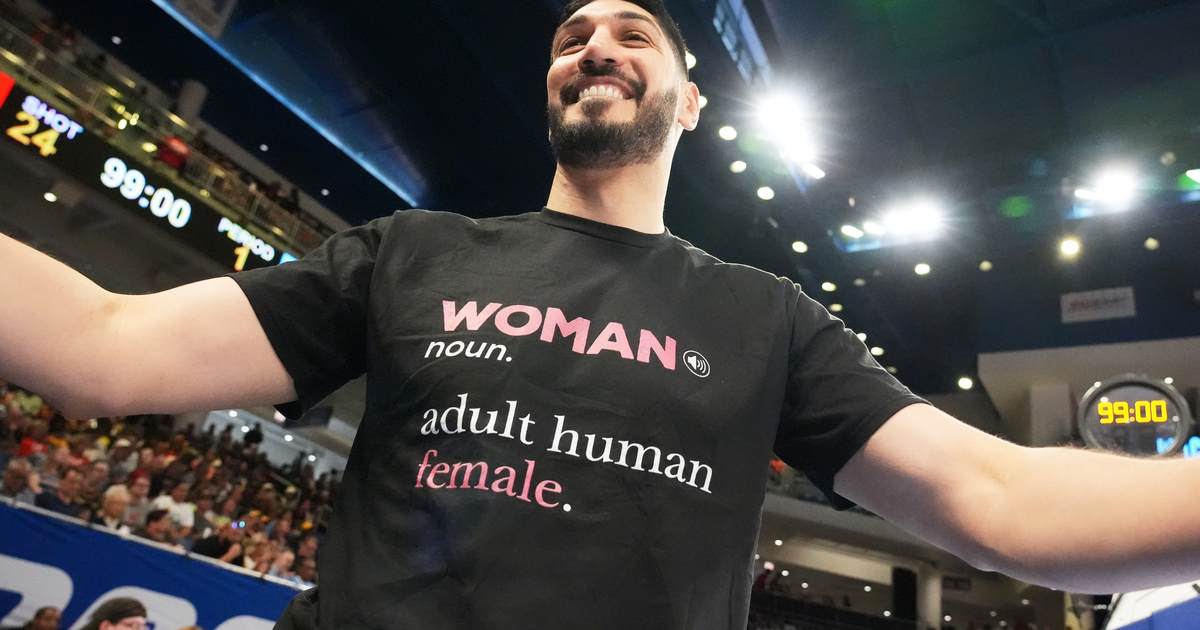
Summary: A conservative take argues the WNBA’s response to a fan wearing a shirt defending biological women crossed a line when Chicago Sky owner Michael Alter compared that act to shooting someone, and that comparison risks normalizing threats and eroding women’s sex-based protections.
The conversation around women’s sports has turned raw and personal, and not in the way defenders of tradition would like. The WNBA is supposed to be a space for women, yet the league’s recent handling of a fan wearing a shirt that referenced biological sex has critics asking who, exactly, the league protects. From a conservative perspective, treating a pro-woman statement as equivalent to violent behavior is dangerous and inconsistent with protecting ordinary fans.
Fans have a right to attend games and express support for the category the league was built around: women. When an owner of an organization likens a protest or a printed definition on a shirt to shooting a gun, he is inflaming tensions rather than calming them. That analogy collapses ordinary civic disagreement into violent criminality, and it invites overreach from security and league officials who should be staying neutral about contested cultural questions.
Chicago Sky owner Michael Alter made that exact comparison, saying, “He wasn’t given a warning because certain threats don’t get warnings.” “To use an extreme example, uh, when you, when you shoot a gun at someone, you don’t get a warning, ‘Don’t do that again.’ It, it’s, you know, your action doesn’t deserve a warning.”
Freedom has since argued he should have been given a warning before his ejection in a letter to the WNBA. The WNBA fan code does not state that fans are entitled to a warning before ejection. When asked why Freedom was not given a warning before his ejection, Alter said “He wasn’t given a warning because certain threats don’t get warnings.
“To use an extreme example, uh, when you, when you shoot a gun at someone, you don’t get a warning, ‘Don’t do that again.’ It, it’s, you know, your action doesn’t deserve a warning.”
https://x.com/JackThompsonFOX/status/2092739164131283078?ref_src=twsrc%5Etfw
Alter acknowledged that he does not know if Freedom actually stepped on the court. Freedom has said he did not step on the court.
That language does real work in the world. Words from prominent figures normalize how others should respond, and likening a shirt to an act of attempted murder effectively lowers the bar for harsher treatment of dissenting fans. Conservatives worry this creates a permissive environment for retaliatory behavior, especially when the targets are women insisting on sex-based distinctions and safety in female spaces.
There is also a pattern here that cannot be ignored: aggressive responses to protest have come from factions that, in other contexts, tolerate far harsher conduct by their allies. Activists who have used obscene slurs, threatened violence, or blocked public spaces often face different standards than ordinary citizens who voice traditional views. That double standard erodes trust and makes reasonable debate impossible.
When defenders of women’s sex-based rights are labeled in extreme terms — and when a league with “women” in its name treats those defenders as threats — the result is chilling. People who simply want sports to remain fair and safe for biological women feel pushed out of public life. Conservatives argue the proper response would be clear rules applied evenly, not comparisons to gun violence that imply no right to a warning or to be heard.
There’s a practical danger, too. If league officials and team owners equate speech with violent action, venue security may be pressured to escalate encounters instead of de-escalating them. Fans should not be treated like criminals for wearing a shirt expressing a belief about sex categories. Reasonable policies should protect attendees without endorsing ideological positions that criminalize disagreement.
This is not a plea for harassment or hate; it is a plea for consistency and safety. Women who ask to maintain sex-based protections are not asking for hateful treatment, they are asking to be heard and safeguarded. Labeling their statements as threats sets a precedent where defending biological distinctions becomes synonymous with wrongdoing.
Ultimately, the way the WNBA and team owners react to these moments matters beyond a single game. When leaders use stark analogies that equate nonviolent protest with shooting, they shape how fans, security, and even the legal system treat ordinary people. Conservative readers see this as a step toward silencing traditional views and elevating ideologues who push a different set of rules for everyone else.