Immigration and Customs Enforcement is weighing a new technology purchase that would expand the agency’s tactical tools, building on recent investments and raising fresh questions about operational scope and oversight.
Federal officials are reported to be considering a multimillion-dollar buy of robotic platforms to complement recent equipment acquisitions at Immigration and Customs Enforcement. The potential acquisition follows a separate, larger investment in restraint technology announced earlier this summer, signaling a wider embrace of novel tools inside the agency. This move is framed by supporters as a way to make operations safer for officers and the public.
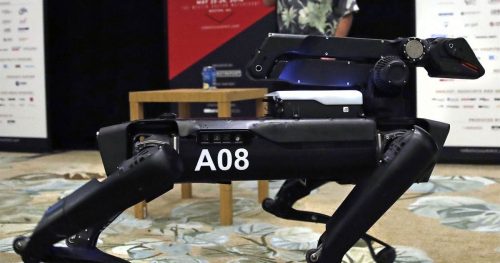
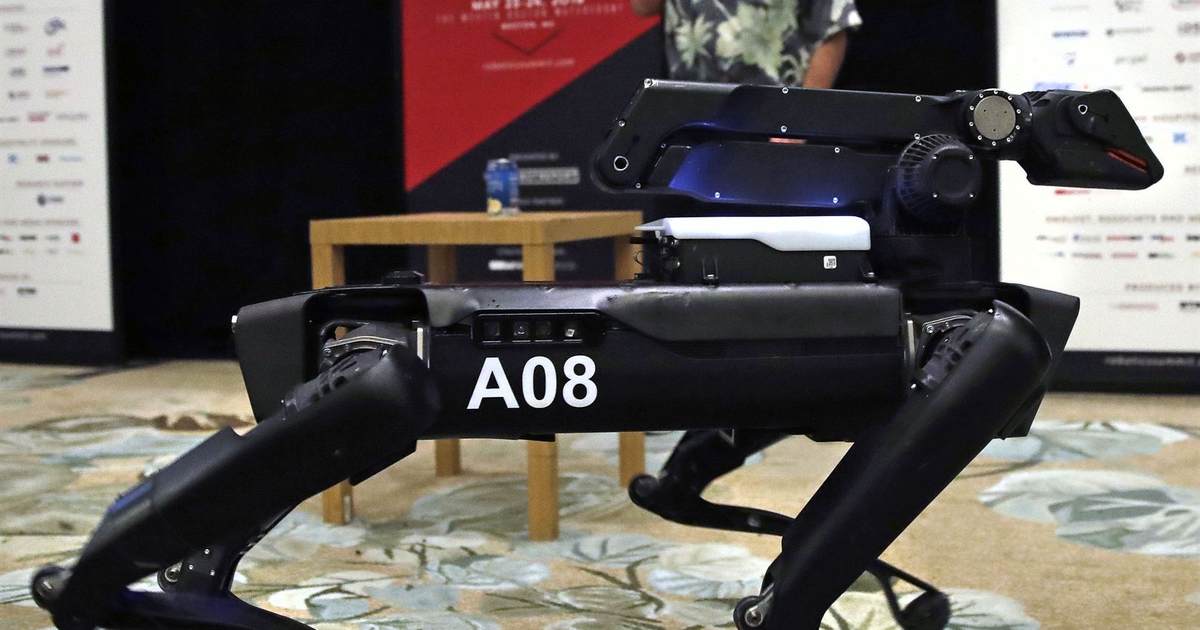
According to reporting, ICE has floated a roughly $2 million package to procure robotic dogs and associated gear from Boston Dynamics. Those discussions center on a model known as Spot, a commercially produced quadruped built to traverse spaces that could be risky for humans. Officials say the robotic systems would be used to scout, survey, and interact with environments before sending personnel into them.
Boston Dynamics markets Spot as a versatile platform outfitted with a suite of sensors and actuators designed for field work. The company says the robot includes a 360-degree camera array, a remote arm capable of manipulating doors and objects, and sensors meant to detect hazardous substances. Advocates point out that those features can shorten the time officers spend in harm’s way when evaluating a scene.
https://x.com/TheCalvinCooli1/status/2093761605221687314
One description of the intended use put it plainly: “support ICE missions by allowing officers to remotely assess potentially dangerous environments before entering them,” according to a report from USA Today. That language captures how buyers describe the benefit: remote assessment that yields better situational awareness without committing personnel to immediate risk.
Boston Dynamics reports more than 1,500 Spots have been deployed by various agencies and organizations across the country, including the U.S. Secret Service. Agencies have adopted the platform for tasks such as perimeter inspections, search support, and work in constrained or contaminated spaces. Those deployments are cited by proponents as evidence the technology is mature enough for law enforcement and government use.
Still, the idea of robotic dogs in law enforcement hands has prompted debate about privacy, transparency, and the expanding toolkit available to federal agents. Civil liberties groups and some lawmakers have previously asked for limits or clearer rules when agencies adopt emerging surveillance or force-multiplying technologies. The conversations often center on oversight mechanisms, accountability for misuse, and public notice when new equipment is introduced.
ICE’s interest in Spot would come on the heels of its recent reported purchase of a separate restraint technology valued at roughly $20 million. Together, the transactions suggest a pattern of investment in devices intended to broaden how the agency manages risky encounters and operations. Agency spokespeople emphasize training, policy guidance, and incident review as parts of any rollout for new systems.
Procurement details such as contract scope, delivery timelines, and specific accessory packages remain subject to internal review and public-record processes. Where those documents go next will determine how quickly the machines appear in field units and what limits, if any, accompany their use. For now, the considerations are mainly about capability, safety, and how new tools fit into existing operational policies.