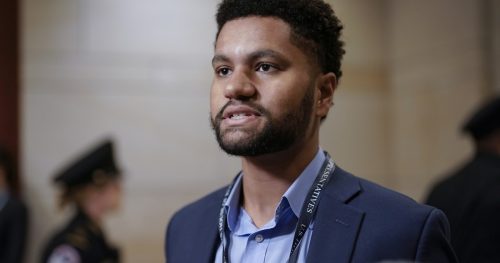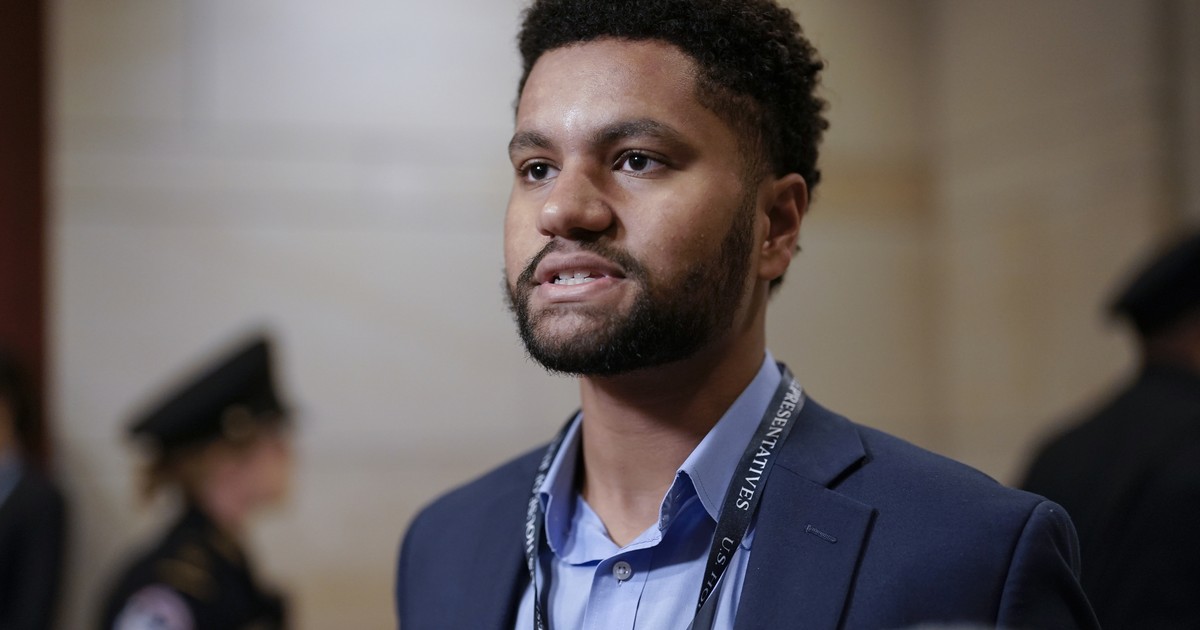
Representative Maxwell Frost, a rising Gen Z Democrat, tried to defend his party’s spending-first answers in a room full of skeptical Baby Boomers, and the clash exposed the deep generational distrust of big promises wrapped in higher taxes and more government control.
Frost went on the show Surrounded to make the case for modern progressive policies, but he faced 20 older voters who have watched Washington promise change and mostly deliver higher costs and less freedom. The format puts one guest in the middle of rapid-fire challenges, and Frost found himself having to explain why the Democratic playbook of more spending and higher taxes should be trusted. It quickly became less about ideology and more about credibility.
The debate ranged from affordability to socialism to whether the American dream still exists, and every topic circled back to a simple Republican critique: big government has been the problem, not the cure. Boomers in that room spoke from experience, seeing repeated promises followed by higher taxes and more regulation instead of the growth and opportunity politicians promised. Their distrust is political capital for a conservative message focused on markets, lower taxes, and personal responsibility.
On affordability, Frost argued for more government solutions while Boomers pushed back with blunt realities: they have already lived through cycles of promises that added cost and complexity to ordinary life. Americans are frustrated by rising prices, difficult housing markets, and the feeling that hard work no longer guarantees stability. That frustration made Frost’s explanations feel less persuasive to many in the room, who wanted concrete changes that do not come only from writing bigger checks.
Frost tried to answer by reframing tax policy as a way to ensure everyone benefits from public services, but opponents in the room described higher taxes as a disincentive to growth and a pathway to more government control. The exchange highlighted a Republican point: when you penalize success with higher taxes and heavier regulation, you choke the very incentives that create opportunity. For voters who have seen tax hikes time after time, the idea of trusting more government is a tough sell.
“I want to teach people is that we’re going to make smart decisions as a nation, not just based on the fact that I went through this or you have to go through it, but how can we uplift our economy?” Rep. Frost said. “You saying that young people are all of a sudden going to think everything that can be paid for by other people is just not true. Why? We’re not dealing with one crisis here. It’s not just a crisis of student debt. We’re dealing with the housing affordability crisis. Healthcare is too expensive. Getting a car is too expensive. You were talking about the student loans on top of that, the groceries, every little thing that we consume in life has gone up.”
“The reasons that things go up, three things, taxation, regulation, and currently illegal immigration,” the guest said. “Those are the reasons.
https://x.com/RNCResearch/status/2094215924899295284
Another guest zeroed in on socialism, arguing that the Democrats’ tilt toward bigger government and centralized control is no longer subtle. That argument echoed a bigger conservative warning: a drift toward redistribution over growth risks trapping Americans in dependency and eroding the free enterprise engine that built prosperity. Boomers in the room made the point crisply — they want solutions that restore growth instead of expanding state power.
The episode turned to whether the American Dream still exists, and Republicans can use that moment to push a hopeful, pro-aspirational defense of opportunity. There are hurdles — high taxes, burdensome rules, and rising costs — but the conservative case is that lowering barriers and unleashing private-sector growth preserves mobility. Frost himself is living proof of mobility in one sense, but his critics say individual success doesn’t validate a policy agenda that would make broad improvements harder.
Baby Boomers earned their skepticism by watching repeated policy experiments that often meant bigger budgets and more federal reach, and that experience shaped their questions about promises from a younger lawmaker. For conservative voters, that moment underscored a lesson: experience matters and skepticism of centralized solutions is reasonable. If Republicans want to win more hearts, they should keep making the case for freedom, lower taxes, and policies that encourage jobs and affordable housing.
The debate didn’t end with fireworks or a single knockout argument, but it did clarify something important for both parties. Democrats still sell expansion of government as the fix for complex problems and Republicans keep pointing to incentives, regulation, and fiscal responsibility as the real levers for growth. For millions of Americans worried about prices and opportunity, the question is which approach will actually deliver sustainable results without sacrificing liberty.