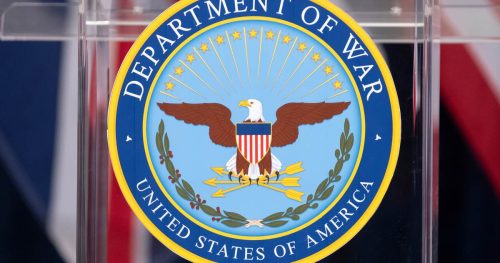
Secretary of the Army Dan Driscoll has resigned amid reported clashes inside the Pentagon, a development tied to tensions with Department of War Secretary Pete Hegseth and first reported by Fox News on August 31, 2026 8:45 PM.
Secretary Dan Driscoll announced his resignation from the Department of the Army following reported altercations with Secretary of War Pete Hegseth, with initial coverage coming from Fox News Monday evening. The move surprised observant conservatives because Driscoll had been prominently linked to efforts to sharpen the Army’s focus on readiness and operational strength. Insiders say the change was not entirely sudden, but the timing still left troops and observers watching closely.
Tensions between top civilian leaders at the Pentagon are rarely public, yet this episode spilled into the open as officials and reporters described disagreements about priorities and approach. Driscoll’s tenure was marked by frequent references to restoring lethality and preparing forces for high-end conflict, goals that align closely with Republican defense priorities. Those priorities — readiness, deterrence, and clear support for troops — helped build Driscoll a reputation among veterans and conservative national security voices.
“Secretary Driscoll has been highly effective in advancing President Trump’s agenda to Make America Strong Again at the Department of the Army by providing outstanding leadership during historic military operations, restoring an emphasis on readiness and lethality, assisting with negotiations between Russia and Ukraine, and more,” White House spokeswoman Anna Kelly said in a statement to the Wall Street Journal. “The United States Army is more powerful than ever thanks to his work alongside the Commander-in-Chief and Secretary of War.”
https://x.com/nicksortor/status/2094547552490181095
No official departure date has been released, though multiple reports indicate Driscoll is expected to leave the Pentagon “in coming days.” That window suggests the White House and senior Pentagon officials want a controlled handoff rather than a sudden leadership vacuum at a critical time. Transition details matter for unit readiness, budgeting decisions, and ongoing operations where senior civilian guidance carries weight.
During his tenure, Driscoll pushed policies meant to sharpen combat readiness and increase investment in key capabilities, and he often framed those changes as part of a broader agenda centered on American strength. Supporters point to improved training cycles, a renewed emphasis on munitions and maintenance, and clearer lines to prioritize modernization spending. Those moves fit a conservative defense playbook that prizes preparedness and the ability to deter adversaries quickly and decisively.
The reported clashes with Secretary Hegseth highlight friction that can emerge when reform-minded officials pursue rapid change inside a sprawling bureaucracy. Disagreements over personnel, tone, or strategy at that level can cascade and affect morale, procurement, and interagency coordination. For Republicans who favor decisive leadership, the public spectacle of a resignation is a reminder that reshaping big institutions requires both political backing and smooth internal management.
For the Army itself, the immediate concern will be continuity. Commanders want steady civilian partners who back readiness and support force structure decisions that keep soldiers equipped and trained. A change at the top risks short pauses as acting officials step in and new policy signals are reviewed, but the broader agenda Driscoll championed has strong buy-in from many in uniform and in conservative circles.
Politically, the resignation offers a moment for Republican leaders to reassert priorities and to ensure the next civilian leader continues the push for a tougher, more capable Army. That means keeping pressure on procurement timelines, sustaining readiness budgets, and making personnel decisions that reflect an amber light for complacency. For now, the administration and defense stakeholders will manage details behind the scenes while the service maintains focus on its missions.
Expect a steady stream of briefings and background conversations in the days ahead as the Pentagon names an interim leader or confirms a successor. Observers will watch whether the next appointee is a seasoned defense manager, a political loyalist, or a hybrid who can navigate both the uniformed chain of command and the political battlefield. The Army’s path forward hinges on stable leadership that keeps America strong and ready.