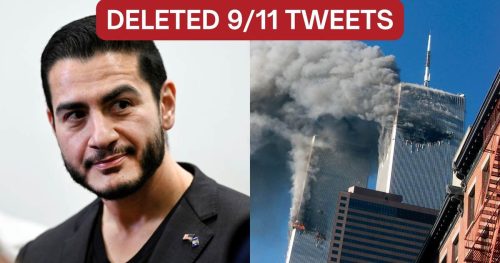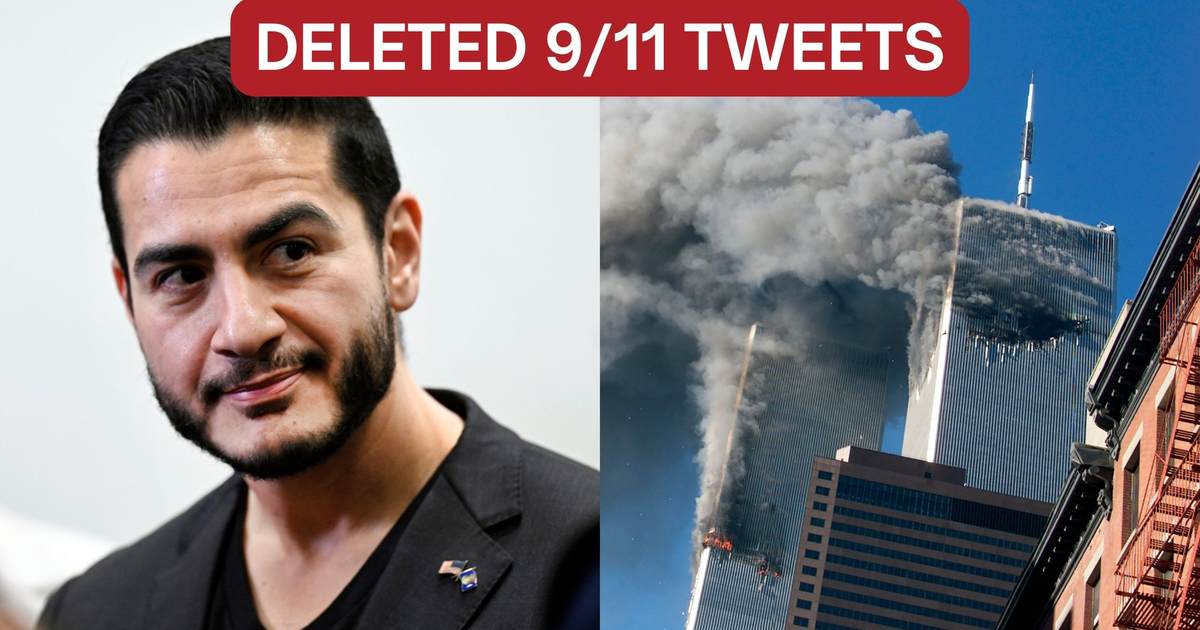
Abdul El-Sayed’s past tweets about 9/11 have resurfaced, showing a pattern of comments that downplay the role of radical Islamist terror and pivot blame toward U.S. policy and institutions.
Abdul El-Sayed has a record of deleted posts tied to the 9/11 attacks that are worth scrutiny, and those posts reveal a consistent angle: criticize American responses and emphasize systemic harms over the attackers themselves. Over the 2020 to 2022 period, multiple tweets framed the aftermath and the long wars as an equal or greater moral problem than the initial atrocity.
That framing matters in a Senate race where voters expect clear condemnation of the people and ideology behind 9/11, not equivocation. El-Sayed’s past commentary threaded COVID, past wars, and civil liberties into his hot takes, making days of national tragedy into fodder for policy critique.
There are 11 identified tweets from 2020 to 2022 in which El-Sayed offered this kind of commentary, and many of them were later deleted. Those deletions raise questions for voters who want to know whether those views represent a private belief or a position he’s trying to hide.
Across these posts, the tone often shifts from grief to critique quickly, pivoting to institutional failures and perceived injustices in the post-9/11 era. That’s fair to debate, but it is not the same as a straightforward denunciation of the violent ideology and organizations behind the attacks.
El-Sayed has also tied the conversation to other issues, using the pandemic and prior military campaigns to make broader points about U.S. power and civil liberties. Those arguments appeal to some audiences, but for many voters they come off as minimizing the specific threat that motivated those wars.
The debate isn’t just rhetorical. Black and Jewish voters are significant constituencies in his state, and his handling of antisemitism concerns and controversial endorsements has left many uneasy. When a candidate’s comments about national trauma appear to prioritize critique of American policy over condemnation of the perpetrators, that unsettles voters who expect protection and clarity.
The logic of the post-9/11 era sacrificed our basic collective liberties, most of all against Muslim Americans. A whole new edifice of control, the Department of Homeland Security, was created in order to marshal the full might of a sprawling security state that confused ethnicity and faith for mal-intent. Shining its spotlight harshly on Arabs, South Asians and Africans, it deliberately left the greatest threat to our security in the shadows — missing the most common source of American terrorism, “homegrown” and “radicalized” White men.
We fought 20 years of collective war through which we violated the basic rights of millions of non-combatants to make home, live prosperously and thrive in the places in which they were born. Hundreds of thousands lost their lives. Thousands of U.S. service members and contractors died, too — most of them back home. Among veterans of these wars, death by suicide has been four times as common as death on the battlefield.
In an echo of the worst of our history — the decimation of Native Americans, the Transatlantic Slave Trade, Jim Crow segregation, Japanese interment — we did all of that in the name of an America founded on the self-evident truths that “all men are created equal.” Though the past 20 years have obscured their light, those ideals remain as luminescent as they were when they inspired our parents and our parents’ parents to come to these shores.
The “what, exactly?” It’s nothing short of the America of her ideals.
On 9/11 millions of Muslim Americans were called to defend it. Admittedly, at first, we demurred. Our leaders told us this would pass. The best course of action, they said, was to keep our heads down, to “fit in” — change our names, fix our accents and hide our heritage. The patriotic duty was to assent to the implication that we were guilty until proven innocent, to take our collective punishment with a smile for the privilege of playing our part in a war on terror increasingly defined in opposition to our very identities. Only in complicity could we prove that we were more “us” than “them.”
It only got worse, though. The cancer born of a bellicose White supremacy that has stained so much of our history metastasized still.
The blockquote above is part of El-Sayed’s public writings and reflects the worldview voters are weighing when they look at his deleted social posts. It emphasizes civil liberties concerns and the impact on Muslim Americans while critiquing broader structures put in place after 9/11.
Republican-leaning voters will read those passages as evidence that El-Sayed prioritizes critiques of American policy and institutional overreach in a way that can obscure the clear threat posed by radical Islamist terrorism. That’s a legitimate frame for a campaign seeking to contrast itself on national security.
Beyond that, his critics point out that tossing white supremacy into the conversation as a competing culprit diminishes the specificity of the Islamist threat that produced 9/11. For many people, acknowledging both problems is possible, but equating them on the scale of causation and responsibility feels off balance.
Deleting tweets doesn’t erase the record. Voters expect transparency and an honest account of where a candidate stands on matters of security, ideology, and national trauma. When posts are removed after scrutiny, it creates space for doubt rather than trust.
Ultimately, the resurfacing of these deleted tweets is forcing a conversation in this Senate race about priorities and perspective. Voters will decide whether they want a candidate who frames the post-9/11 era primarily as a story of institutional failure, or one who places clearer emphasis on condemning the ideology and actors behind the attacks.
What remains clear is that these past posts are now part of the public record people will use to judge El-Sayed’s judgment, empathy, and consistency on matters of national security and the memory of 9/11.