The trial over Lindsay Clancy’s killing of her three children has produced a deadlocked jury, a surprising wave of public support for her defense lawyer, and a fierce cultural split over accountability, mental health, and how we treat mothers accused of the worst crimes.
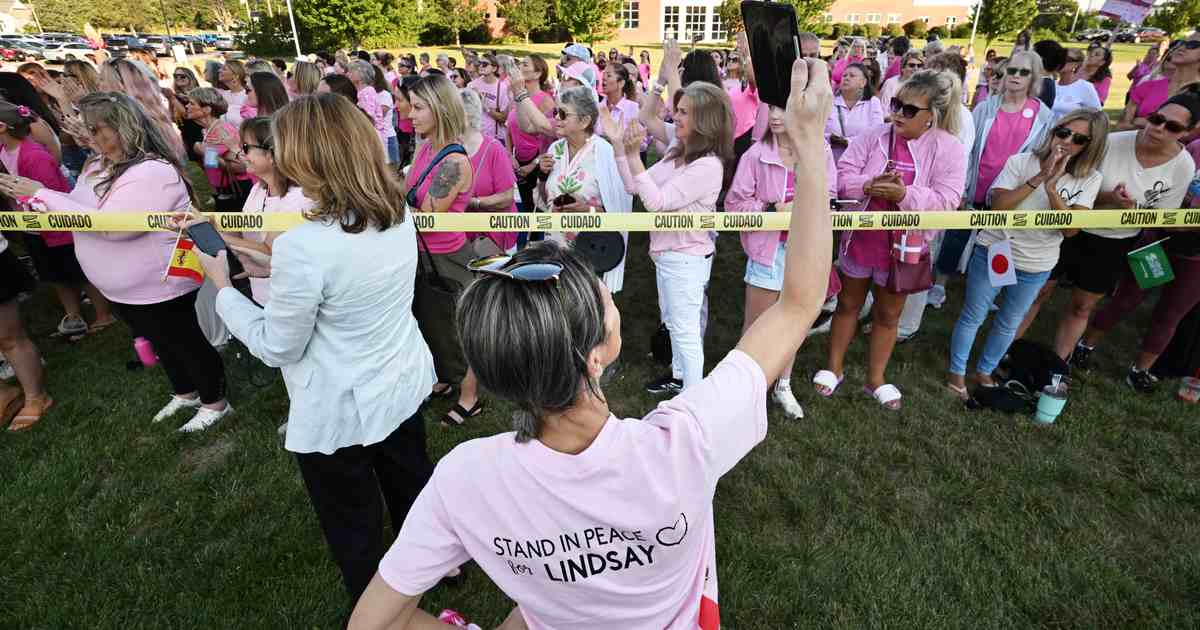
The jury is deadlocked in the Lindsay Clancy case, and the composition of that jury matters. Reports say roughly 75 percent of jurors are women, and observers noted some wore pink during deliberations, which has fed questions about bias and sympathy in how the case is being judged. A criminal case that centers on the deaths of three children should demand clear thinking, not performative displays of solidarity.
Outside the courtroom an organized crowd of supporters gathered, overwhelmingly white women who treated the defense team like celebrity. They clustered around Kevin Reddington, wanting selfies and praise, and they praised him in emotional terms that set off alarm bells for anyone focused on justice for victims. “You’re the voice of so many moms,” they cried, and some traveled long distances — even from Houston — to meet him, via NY Post.
Lindsay Clancy’s criminal defense lawyer has become a feminist icon for many of the postpartum mom’s supporters — one of whom emotionally hugged the attorney as she called him the “voice of so many moms,” Monday outside of court.
Lawyer Kevin Reddington was mobbed by dozens of reporters on his way to grab a coffee as he and a “nervous” Clancy were awaiting a verdict in her high-stakes case when Texas mom Laurel Witwen and her daughter Hannah Estrada commended his work at the heartbreaking trial that has turned on postpartum psychosis and mental health.
“We came from Houston to watch you. I wish someone would have held my daughter’s hand,” said the 65-year-old Houston mother through tears.
https://x.com/nypost/status/2094481971854430566
“We want to take you out for a steak dinner, Mr, Reddington! We love you so much,” Estrada, 37, said. “I had my health weaponized against me in family court.”
“You’re the voice of so many moms!” Witwen added.
Reddington told reporters his newfound status with women is “kind of unusual.”
Witwen told The Post earlier that “our hearts are here with women’s health” and added she wanted Clancy “to continue getting help.”
Estrada said she related to Clancy’s postpartum struggles after the birth of her second child.
“I had an experience with postpartum psychosis,” Estrada said. “I was mishandled so I understand exactly what happened to her.”
“My mental health experience was weaponized, used against me in divorce proceedings. This is why women don’t speak up because instead of it being a cry for help it becomes a criminal record,” she said.
The legal argument around postpartum psychosis and mental health is serious and deserves rigorous, sober attention from courts and experts. But sympathy for a defendant cannot erase the fact that three young lives were taken in January 2023, and Americans have a right to expect consequences that protect the innocent. Turning a defense lawyer into a cause celebre and a supposed “feminist icon” shifts the conversation away from the victims and toward identity politics.
This isn’t a debate about motherhood versus punishment; it’s about how we balance compassion with accountability. Some call for institutionalizing or medicating a defendant found not guilty by reason of insanity, but those measures are not a substitute for transparent legal outcomes that reflect the severity of the crimes. The public spectacle — selfies, adulation, travel from out of state — makes it look as if certain cultural tribes are determined to rewrite the meaning of responsibility when it suits their narrative.
There is also a broader cultural angle here that conservatives should be pointing out bluntly: when political identity and groupthink drive which side of justice people take, the system bends. White liberal women gathering outside a courthouse to cheer on a lawyer for a woman charged with triple homicide sends a clear signal about where cultural priorities lie for some segments of the left. That’s not a neutral observation; it’s a warning about misplaced loyalties.
Meanwhile, the courtroom drama continues with no quick resolution, and that vacuum invites performative activism that can drown out facts. Reporters and cameras swarm, supporters chant, and the process faces pressure from outside forces that prefer emotion over evidence. If jurors let social identity shape their verdict instead of proof beyond a reasonable doubt, the trial’s legitimacy suffers, and the victims’ families get the short end of the moral ledger.
The spectacle of celebrity defense and public mourning for an accused killer should unsettle anyone who cares about justice. Lawyers do their jobs, and mental health issues deserve treatment and study, but glorifying a defense attorney while three children lie dead is a cultural choice. The court needs to decide based on law and fact, not fan clubs, and the rest of us should judge how we respond when sympathy eclipses accountability.