This article examines current police staffing trends, the forces behind officer shortages, and the policy roadmap the America First Policy Institute offers to recruit, retain, and properly staff law enforcement across federal, state, and local levels.
The nation is grappling with a significant police staffing shortfall that predates recent headlines, and its effects show up in budgets, patrol coverage, and community safety. The FBI reported the biggest one-year drop in violent crime since tracking began in 1939, with murder rates down 18 percent, even as staffing sits about five percent below 2020 levels. That paradox makes the staffing debate urgent: fewer officers, better outcomes, but fragile gains that depend on solid policy choices.
The America First Policy Institute lays out a compact analysis of the crisis, tracing root causes and offering concrete recommendations for lawmakers. AFPI highlights long-term trends, including retirement waves and morale damage from the 2020 “Defund the Police” movement, which discouraged applicants and accelerated departures. The paper calls for coordinated federal, state, and local actions to stabilize staffing and protect public safety.
Data from law enforcement research groups makes the problem concrete. The Police Executive Research Forum found participating agencies had 5.2 percent fewer sworn officers in January 2025 than in January 2020, while resignations in 2024 remained 18.4 percent above 2019 levels. Small agencies with fewer than 50 officers felt the squeeze hardest, reporting roughly 60.4 percent more resignations and 66.7 percent more retirements than in 2019.
Recruiting is a real hurdle and many departments are operating below authorized strength. The International Association of Chiefs of Police surveyed 1,158 agencies and found more than 70 percent had more trouble recruiting than five years earlier, with average staffing around 91 percent of authorized levels. About 65 percent of agencies reported cutting services or specialized units because they simply did not have the personnel to maintain them.
Retention is equally critical because experienced officers carry judgment, local knowledge, and community trust that replacements take years to build. Replacement hiring costs can reach up to five times an officer’s annual salary when recruitment, training, and lost productivity are counted. Studies show that keeping senior officers in place reduces crime and use of force; for example, a Chicago analysis found equalizing seniority could cut violent crime 4.6 percent and officer use of force 10 percent.
Four factors drive the crisis: retirements tied to demographic bulges funded by the 1994 crime bill, reputational damage from political movements, burnout from overtime and trauma, and pay-and-process gaps that push officers to private or less demanding public work. A 2026 Government Accountability Office study noted about one-third of federal officers will be eligible for retirement in the next five years, while nearly 25 percent of state and local commissioned staff were eligible in January 2025. Those timelines create a narrow window to act on retention and recruitment.
There are practical, proven fixes. Cities that invested in recruitment and retention have seen turnout: Birmingham spent $18.5 million on incentives and supports, lifting staffing from 73 percent to more than 96 percent and running the largest academy class in decades. Rapid City cut vacancies dramatically through referral bonuses, wellness benefits, and a co-responder model that diverts non-criminal calls to mental health professionals. San Antonio added 165 patrol officers and saw faster response times and a drop in overall crime.
AFPI’s roadmap offers a clear split between federal and state-local steps. Federally, it recommends modernizing and reauthorizing the COPS hiring program, raising and indexing the per-officer grant cap, allowing recruitment and retention uses, and preserving access for small and rural departments. It also urges expanding mental health and wellness funding beyond the current Law Enforcement Mental Health and Wellness Act ceiling, and promoting public service loan forgiveness as a recruitment tool.
At the state and local levels, AFPI urges making experienced officers portable by streamlining reciprocity and lateral entry, rewarding service and supporting families, and building statewide wellness infrastructure while keeping merit-based hiring. Agencies should adopt multi-year staffing plans, shorten time-to-hire, and retain trained officers through benchmark compensation, wellness protections, and co-responder programs for appropriate non-criminal calls. Performance measurement should track time-to-hire, academy completion, retention at one, three, and five years, plus response times and community confidence.
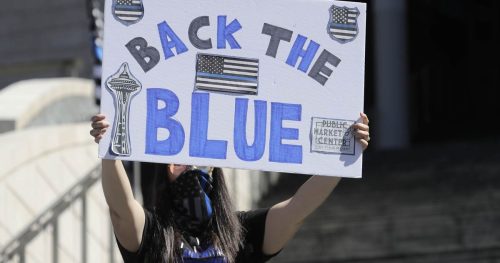
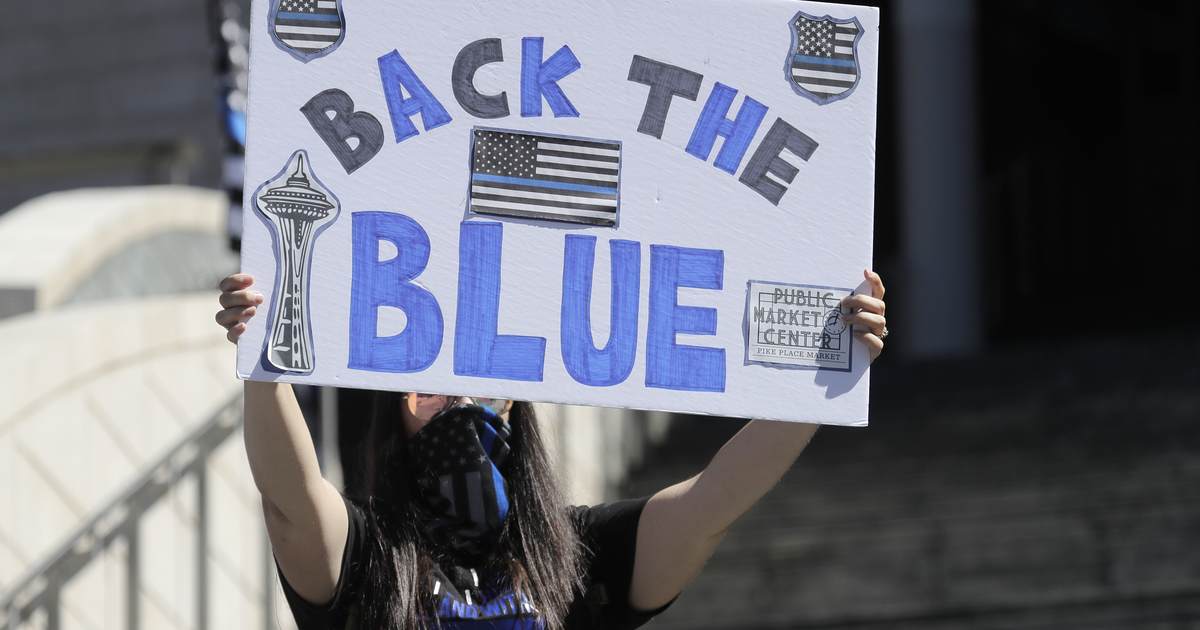
Tennessee Gov. Bill Lee put the argument plainly: “President Trump is delivering historic results on public safety; leaders in Tennessee and across the country have a responsibility to make that progress last,” Gov. Lee told Townhall. “Tennessee has worked to make this a state where officers want to build a career, rewarding those who sign on and stay, easing the training burden on local departments, and helping agencies hire and train. In Memphis, we went even further by supporting the Memphis Safe Task Force, which brought federal, state, and local law enforcement together to target violent offenders and drive crime down across the city. AFPI’s ‘Back the Blue’ roadmap takes proven approaches like these from the Volunteer State and gives leaders nationwide a practical guide to recruit, retain, and properly staff their agencies.
Editor’s Note: The American people overwhelmingly support President Trump’s law and order agenda.