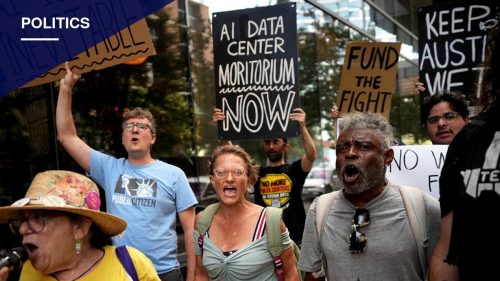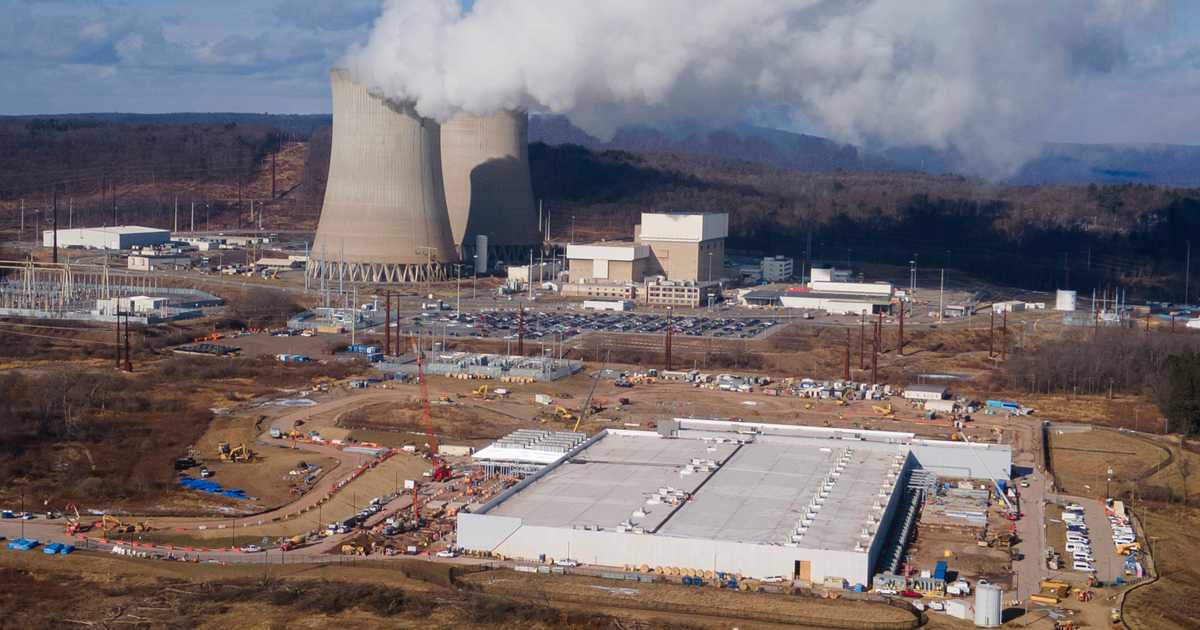
Americans broadly back the economic goals tied to big infrastructure and industrial revival, but many oppose the specific data centers and AI projects that would deliver those gains.
Donald Trump’s 2024 economic message promised tax cuts, revived manufacturing, stronger national security, expanded energy production, fewer regulations, and lower costs for working families. Those are plain objectives that appeal across large swaths of the country, and they form the backbone of a pro-growth, pro-worker agenda. The tension is that some of the most effective tools to achieve these goals are now deeply unpopular.
More than 70 percent of Americans oppose the local siting of AI data centers, even though those projects bring clear economic activity and industrial demand. Data-center construction has already supported manufacturing, trades, and other blue-collar jobs, and it can anchor supply chains the country needs for defense and competitiveness. The buildout spurs new companies and investments that keep the United States ahead of rivals who are racing to dominate advanced computing.
Communities that welcome these facilities often see reduced property taxes in the majority of places where data centers land, alongside the revenue needed to rebuild towns hollowed out by offshoring and declining factories. Those economic shifts are tangible: they deliver payrolls, contracts for local firms, and financing that can revive previously neglected infrastructure. At the same time, higher electricity demand forces a much-needed upgrade of an aging grid that has lagged behind competitors like China in power production.
Elon Musk endorsed exactly that same message, sharing a post from Nvidia CEO Jensen Huang.
Despite the upside, opposition is rooted in real concerns and amplified misinformation. Worries about water use, electricity prices, and land consumption circulate widely and have been magnified by foreign actors and online campaigns. Distrust of Big Tech and a collapsing faith in free-market outcomes make many voters skeptical that communities will actually benefit, even when the math suggests otherwise.
Fear of AI itself compounds the problem; many Americans imagine worst-case sci-fi scenarios before they consider the gains. That anxiety is understandable but incomplete: technology has always been a double-edged force, and the right approach is oversight and accountability rather than reflexive rejection. People deserve transparency, enforceable community benefits, and clear safeguards when massive projects land in their neighborhoods.
https://x.com/JensenHuang/status/2094173025881272408
Those community protections are not optional. Local leaders should demand transparency, ensure developers pay their fair share, protect water and other resources, and secure real, enforceable benefits for residents. At the same time, it is unrealistic to want the jobs, industrial capacity, cheap and reliable power, and AI leadership without accepting the infrastructure those advances require. You cannot have the economic cake and insist it appears without the oven.
History favors those who harness progress rather than preserve outdated arrangements. Americans rebuilt industries and modernized systems during past technological waves by embracing new capabilities while writing the rules to protect citizens. That same pragmatic balance is needed now: welcome innovation that creates jobs and strengthens security, but do it with strong local oversight and clear public gain.
Technology does not automatically remove human control; more often it increases our ability to shape outcomes, delivering clean water, better medicine, faster communication, and more efficient transportation. These are concrete improvements people can touch and measure, not abstractions. Billions around the world still lack basic infrastructure and would view advances like reliable power and industrial growth as clear steps toward greater opportunity, not loss of agency.
Policy choices today will decide whether America sets the terms for AI and data infrastructure or cedes that role to others. The choice is not between progress and stasis; it is between smart, sovereign development guided by public interest and a passive stance that lets foreign competitors and large, unaccountable firms dictate outcomes. That should matter to anyone who cares about national strength and local prosperity.
We can insist on tougher rules, enforceable community benefits, and full transparency without rejecting the projects that create jobs and strengthen national security. Reasonable controls and rigorous oversight are the right conservative response—protect communities, preserve liberty, and secure the industrial and energy base the country needs. Refusing to build the infrastructure this moment requires would be a strategic mistake for working Americans and for national competitiveness.