The Democratic coalition is visibly fraying over Israel, and a recent House vote on college funding and boycotts made that split impossible to miss.
The latest congressional dustup shows the party at odds with itself, and Republican observers are calling it a leadership problem for Rep. Hakeem Jeffries. What started as a policy fight over federal funding and college boycotts has swelled into a larger debate about antisemitism, free speech, and party identity. That mix is creating real headaches for Democrats heading into the midterms.
The House vote on legislation tied to federal funds for universities revealed a clear divide in Democratic ranks. Many Democrats framed the bill as a First Amendment issue, while Republicans pitched it as protection for Jewish students and a stand against campus antisemitism. The split has been loud and public, and it is exposing fault lines between the party establishment and its left flank.
From a Republican vantage point, that split is politically useful and morally plain. Parties need cohesion to govern, and a party that cannot hold its own caucus together on a widely watched issue looks weak. That weakness is not just about messaging; it signals a failure to manage the yawning gap between pro-Israel voters and activists pushing for measures that undermine Israel.
Today’s congressional debate was about more than college policy. It touched on identity politics and party priorities, and it forced lawmakers to pick a side under bright lights. For some Democrats, protecting academic institutions from federal penalties was the principle at stake. For others, ensuring Jewish students are safe and that universities do not endorse boycotts of an allied nation was nonnegotiable.
The House of Representatives passed a bill aimed at blocking federal funds to colleges that boycott Israel, with the vast majority of Democrats voting against it.
All but 33 left-wing lawmakers voted to block the measure, which would “prohibit an institution that participates in a non-expressive commercial boycott of Israel” from getting government funding. It would also force universities that do get federal funds to affirm their students “are not unreasonably obstructed” from studying abroad in Israel.
It comes as antisemitism continues to be a growing threat in the U.S. amid Israel’s war in Gaza.
Democrats have argued the bill is an infringement on the First Amendment, while Republicans hold it up as a way to ensure Jewish students feel safe at U.S. colleges and universities.
Republicans have seized on Democrats’ divisions on the issue, which has coincided with a far-left insurgency plunging the party into civil war ahead of the midterms.
That blockquote captures the optics: a majority of Democrats voting to block the measure, and a core of about 33 left-wing lawmakers resisting any restriction tied to boycotts. For Republican strategists, those numbers are proof of how deep the split runs. The GOP can point at the rank-and-file and say the party is not unified on security, ally relations, or even the safety of minority students on campus.
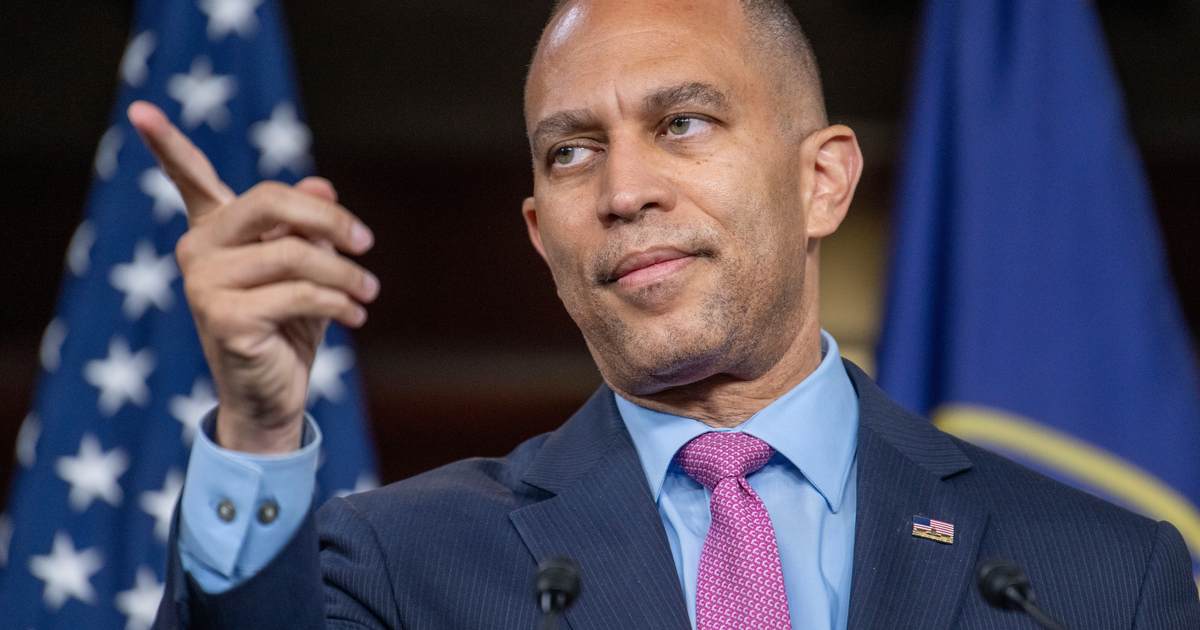
The political pain is personal for Democratic leaders. Rep. Hakeem Jeffries was elevated to manage a fragile coalition, and now the coalition is showing cracks over a high-emotion issue. Leadership that looks ineffectual invites more public rebellion, and Democrats spend political capital trying to paper over disagreements rather than resolving them.
Beyond party politics, there is a cultural element that cannot be ignored. Antisemitism has surged in public discourse and on campuses since the conflict in Gaza intensified, and concerns about student safety are real. Conservatives see the Republicans’ role as calling out those threats and pushing for policies that protect vulnerable students and support allies.
That said, this alignment is not one-sided. Anti-Israel sentiment has also appeared in unexpected corners, and some conservatives have expressed skepticism of U.S. policy toward Israel. Ignoring that would be short sighted. The GOP message needs to be firm on support for students and allies while avoiding the pitfalls of alienating voters who want different approaches to foreign policy.
Another factor is the revival of old prejudices and myths, which complicates any political response. Surveys that revealed alarming levels of Holocaust ignorance among students were an early alarm bell. When historical ignorance combines with heated geopolitical debate, you get a volatile mix that policymakers must handle carefully.
For now, the Republican takeaway is simple. A divided Democratic Party creates openings, and Republicans will use those openings to highlight Democratic instability on issues of security and allyship. At the same time, conservatives should be mindful that this debate could turn into a broader national culture fight if not addressed sensibly and swiftly.