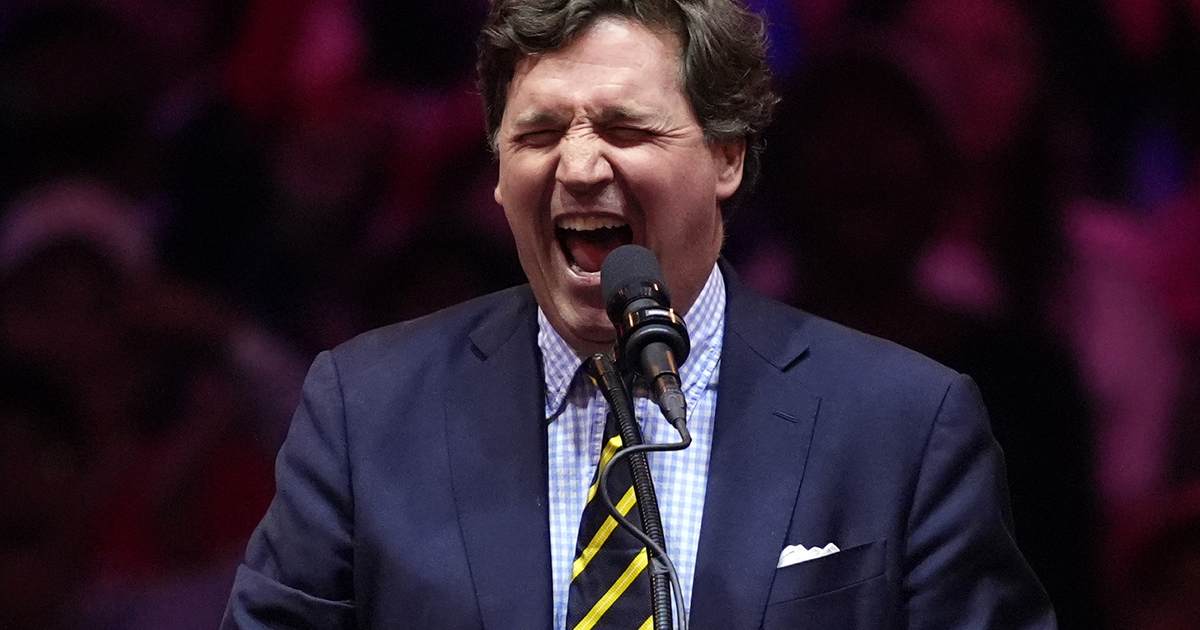
Tucker Carlson’s public shift and his recent endorsement of Abdul El-Sayed over Republican Mike Rogers has shaken parts of the conservative movement, highlighted sharp disagreements about Israel and national security, and forced Republicans to decide whether to tolerate a media figure who now backs a socialist challenger.
Tucker Carlson teaming up with Saagar Enjeti to favor Abdul El-Sayed marks a startling break with mainstream Republican choices in Michigan. For conservatives who prize national security, a clear pro-Israel stance, and steady leadership, this endorsement raises alarms about priorities and judgment. It also surfaces a debate over whether populist media figures can redefine party loyalty on their own terms.
The pair attacked Mike Rogers aggressively, with Carlson calling Rogers “He’s basically a tool of Israel in the Intel agency,” and asking rhetorically, “How would you run someone like that?” Those lines aim to paint Rogers as inside the establishment, but they also undercut a long-standing GOP commitment to standing with allies and opposing antisemitism. Carlson then capped the attack with the line, “I wouldn’t vote for Mike Rogers at gunpoint.”
Saagar Enjeti framed Abdul El-Sayed as an “America First” alternative in his critique, saying, “I watch his campaign now, America First,” he said. “The amount of times he says he doesn’t even when he talks about Israel. He says Israel is committing a genocide, but ultimately I want to make sure that you don’t pay more for health care. I don’t want your tax dollars going abroad to fund this barbaric military. He stands in front of a giant American flag. It’s almost Trumpian.” That claim tries to recast a progressive Democrat as a nationalist ally of conservatives, which is a stretch on policy and record.
https://x.com/JustinUSA/status/2095321352630636999
Carlson echoed that framing with, “It’s literally Trumpian,” but this rhetorical gymnastics doesn’t change basic realities. A candidate who has expressed harsh views about Israel and holds a left-leaning economic agenda is not the same as the Republican nominee who will defend conservative policy. Conservatives should be skeptical when media personalities blur those lines for attention.
There is a deeper problem beyond the endorsements: a redefinition of conservatism that substitutes centralized control for limited government. Carlson recently argued, “They got to get rid of the social liberalism if they get rid of that because that’s where the world is. Most people are not orthodox free market people,” Carlson said. “They just want the economy to serve their families, right? I think that’s fair. They want to be treated fairly I don’t think there’s anything wrong with that at all and they’re not for radical social change they think that there are two genders and each has a distinct role and Like it’s not good to sexualize children and drugs are bad and kind of want law and order I mean, these are not crazy right-wing goals. That’s what we would call the socially roughly speaking, socially conservative view”
That strand of thought sounds like a call for more government direction and less economic freedom, and it should worry small-government conservatives. Republican success depends on combining cultural clarity with economic liberty, not trading free markets for top-down solutions. If the movement embraces coercive policies to enforce cultural preferences, it risks alienating voters who value both family and freedom.
Another concern is the optics of a prominent conservative endorsing a candidate who has clashed with pro-Israel positions and who attracts criticism for ties to far-left groups. Republican voters remain strongly pro-Israel, and backing a candidate who questions that relationship does real damage in competitive races. The party needs leaders who can defend allies and protect American interests abroad while delivering conservative governance at home.
Mike Rogers has been painted as a neocon by Carlson and company, but the alternative on offer from these commentators is a left-wing figure with a hostile relationship to mainstream GOP foreign policy. Voters should weigh which candidate will actually keep America safe, defend allies, and deliver responsible economic stewardship. Endorsements from media hosts shouldn’t override those practical considerations.
Conservatives also have to reckon with the credibility of media personalities who pivot away from conservative principles when it suits them. Carlson’s praise for authoritarian figures in the past and his willingness to back an enemy of mainstream conservative policy suggests his brand no longer aligns cleanly with party priorities. The GOP must decide whether to follow media stars or to hold steady on core principles that win elections and preserve liberty.
At stake in Michigan and across the country is whether Republicans stick to policies that protect families, preserve markets, and defend allies. Republicans should evaluate candidates on records and principles, not on sensational media alliances. Voters deserve clarity and consistency, and the party’s future depends on choosing leaders who deliver both.