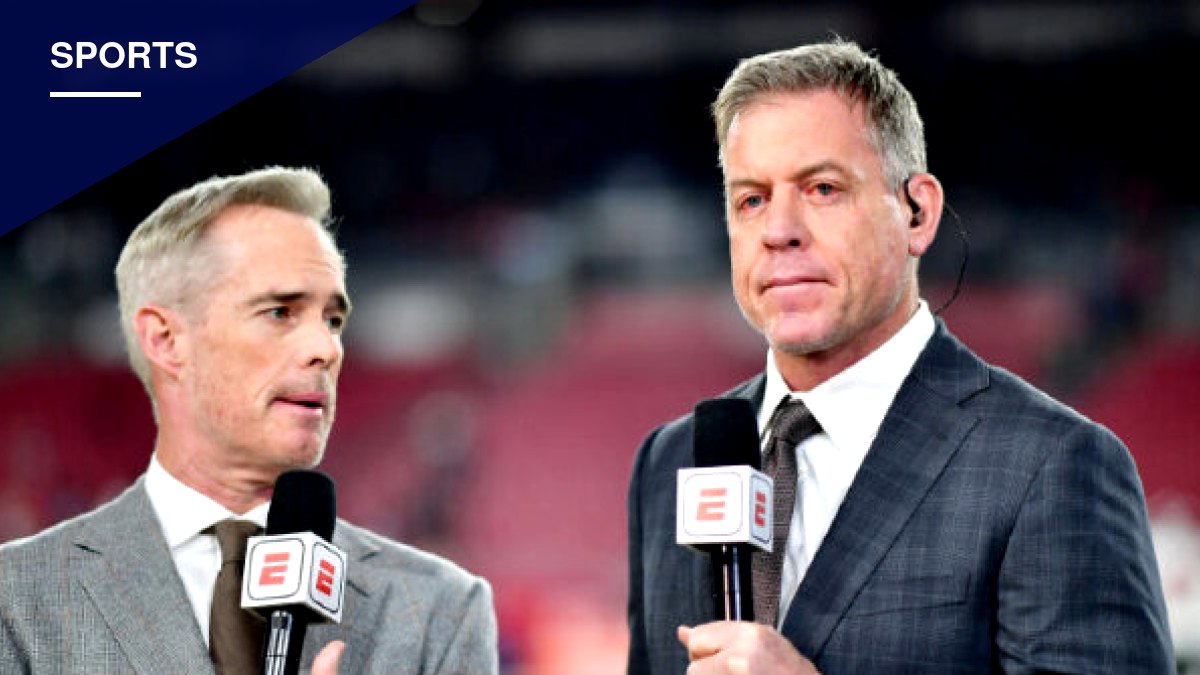
Radio host Dan LeBatard argued on Tuesday’s edition of The Dan LeBatard Show that the racial makeup of NFL broadcast booths does not match the racial makeup of the players on the field, and he said he believes the gap is deliberate.
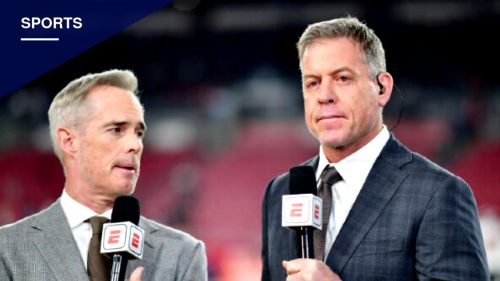
LeBatard pointed to former Panthers linebacker Luke Kuechly’s rise as a broadcaster to make his case. “Luke Kuechly is now the up-and-coming broadcasting star that people like. When they look at Tony Romo, and they put him on the bench for a while, they replace him with J.J. Watt. Gronk has a job, even though Gronk is a notoriously bad talker,” LeBatard said.
He went further, framing the pattern as intentional. “And I just wonder if you guys notice that the sport is disproportionately Black, and the broadcasters who get hired are disproportionately white, and it’s on purpose … it’s to make it palatable to the broadest section of people,” he said. “There aren’t that many white stars in football. There are plenty of Black stars. Why are the white ones the only ones who get the broadcasting jobs?”
The Booth Picture Is More Mixed Than That
LeBatard’s comments focused mainly on gameday broadcast crews, the play-by-play announcers and color analysts who call games from the booth, where the disparity he describes is real. But studio programming tells a different story. NBC recently hired former Steelers head coach Mike Tomlin for Sunday Night Football coverage. ESPN’s Monday Night Countdown features Jason McCourty and Marcus Spears. Fox NFL Sunday includes Curt Menefee and Michael Strahan.
Where the League’s White Stars Actually Are
LeBatard also singled out J.J. Watt and Kuechly as the go-to white names in broadcasting, asking why players like former linebacker Jonathan Vilma haven’t gotten similar opportunities. “It’s always J.J. Watt, it’s always Luke Kuechly, as if there aren’t a bunch of Jonathan Vilmas out there that are available,” LeBatard said.
His broader claim that there aren’t many white stars in the league is debatable when you look at current rosters. In Nevada, the Las Vegas Raiders have Maxx Crosby, a dominant force on the defensive line, and Brock Bowers, widely regarded as one of the best tight ends in football. In California, San Francisco’s Nick Bosa and Christian McCaffrey are star-caliber players when healthy, and teammate George Kittle belongs in that conversation too. In Michigan, Detroit’s Aidan Hutchinson has become one of the most feared pass rushers in the league. In Colorado, Denver’s Zach Allen and left tackle Garrett Bolles are both players opposing linemen dread facing. Rams wide receiver Puka Nacua, arguably the league’s best at his position right now, is neither white nor Black.
Whether more players like those become broadcasters over time remains an open question, and LeBatard’s comments have reignited a long-running debate over who gets hired to talk about football versus who plays it.