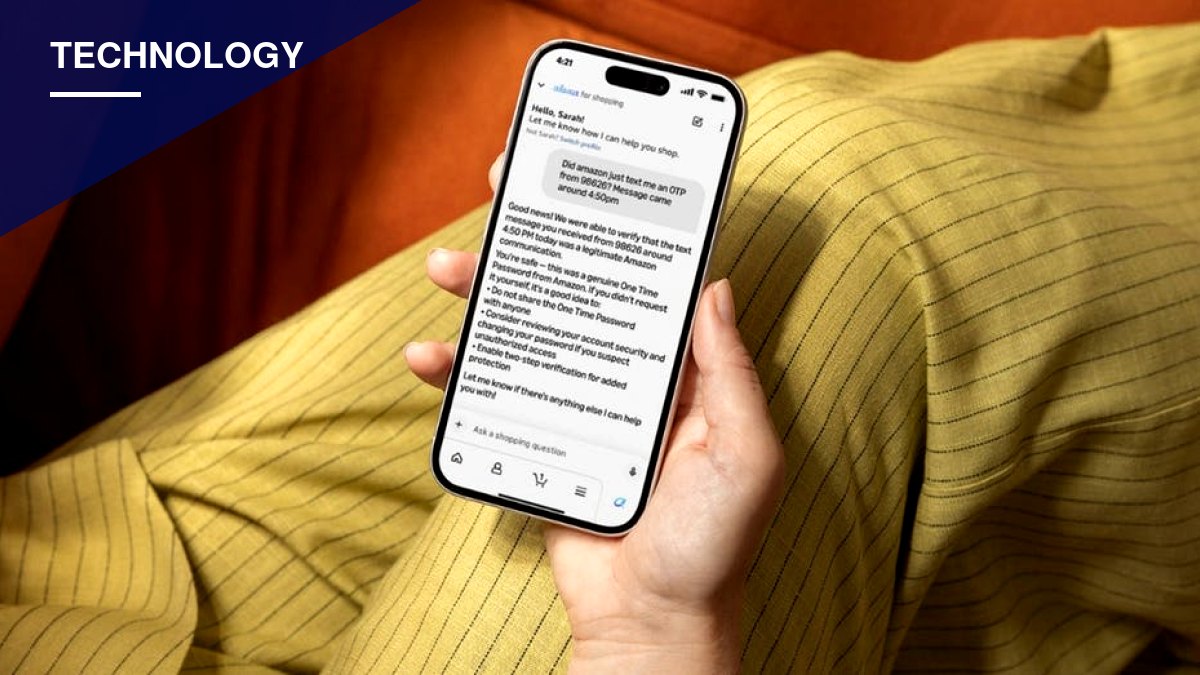
Amazon has added a new feature to its Alexa for Shopping assistant that lets customers ask, in plain language, whether an email, text or phone call claiming to be from Amazon actually came from the company.
Amazon says roughly 360,000 customers contact its customer service every year asking whether a message they received is genuine. The new tool, built into Alexa for Shopping, is meant to give people a faster way to check without guessing based on how a message looks.
Alexa for Shopping is Amazon’s AI-powered shopping assistant, which normally helps customers find and compare products and manage orders through conversation. A Prime membership is not required to use it. Now U.S. customers can also use it to verify suspicious communications.
How it works
To use the feature, a customer describes the suspicious message to Alexa for Shopping, including where it came from, when it arrived and what it said. Someone might ask, for example, whether Amazon sent a text about a delivery problem the day before, or whether a Prime membership email was legitimate. Details about a phone call, such as one claiming to offer a refund, can be checked the same way.
Amazon says the tool compares that information against its own communication records, looking at the sender, the content, the timing and the formatting. The company says it only confirms a message as legitimate when it has complete confidence in the match.
There are three possible outcomes. If the message matches Amazon’s records, Alexa for Shopping will say it came from Amazon and can offer security advice. If it doesn’t match, the tool will say the message doesn’t appear to correspond to an official Amazon communication, and Amazon recommends checking orders directly through the app or contacting its official support channels rather than clicking any links in the message. If Alexa can’t verify the message with certainty, Amazon offers additional steps, including submitting more details or using another verification option.
Amazon also says that when a customer asks Alexa to verify a communication, the submission is automatically reported to the company’s customer protection and enforcement team, which the company says can help it spot developing scam campaigns.
Other ways to check
The Alexa feature is not Amazon’s only verification tool. Earlier this year the company launched [email protected], an email address anyone in the world can forward a suspicious message to and get a response on whether it came from Amazon — no Amazon account or app required. Amazon also has a communication verification form on its customer service pages.
Amazon additionally points U.S. consumers to the Better Business Bureau’s Scam Tracker at bbb.org/scamtracker, where people can search reports tied to a suspicious email address or phone number. Amazon notes that a lack of reports doesn’t prove a message is safe, since new scams can circulate before anyone reports them.
Why scammers keep using Amazon’s name
Fake messages impersonating Amazon have circulated for years, including phony account-warning emails urging recipients to “Sign In to Verify” and bogus recruiting texts offering hundreds of dollars a day for remote work. Because so many people shop on Amazon regularly, a delivery alert or account warning can feel plausible, especially to someone already expecting a package.
Amazon says it will never ask customers to pay with gift cards to resolve an account issue, and it will never ask for a password or one-time passcode over the phone. Scammers can also fake caller ID information, so a call that appears to come from “Amazon” is not proof that Amazon is actually calling.
Security guidance generally recommends not clicking links in unexpected messages claiming to be from Amazon, and instead checking an account status by opening the Amazon app or website directly.