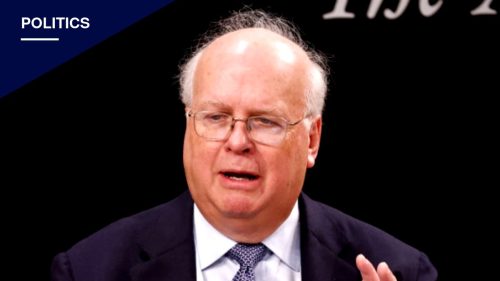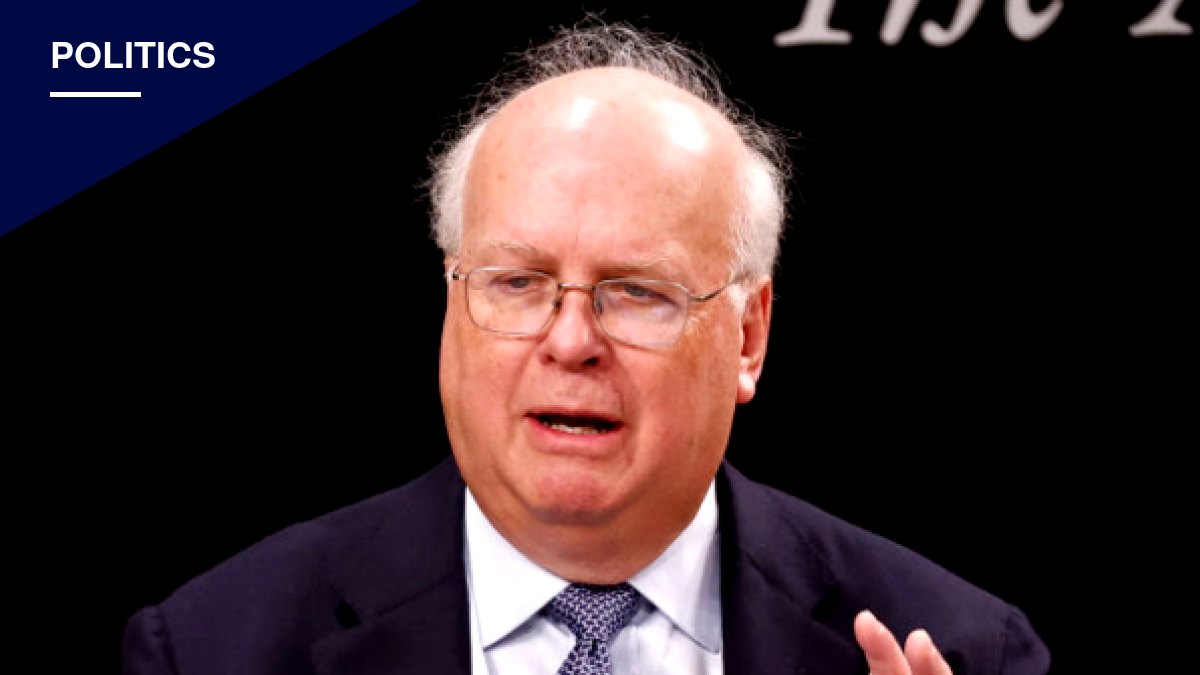
President Donald Trump used a Truth Social post on Monday to renew his long-running feud with Republican strategist Karl Rove, calling him a “stone cold loser” and blaming him for years of bad advice to the GOP.
“Karl Rove is so bad for the Republican Party, and completely wrong so often,” Trump wrote. “He suffers from a major case of Trump Derangement Syndrome primarily because, for almost 10 years, I beat back and won against so many of the people and things that he wanted and espoused. Why does Fox News and the WSJ keep his RINO Voice alive. The guy is a stone cold loser!”
The comment is the latest in a feud between Trump and Rove, the former George W. Bush adviser, that stretches back more than a decade and has played out repeatedly on Fox News and in the pages of the Wall Street Journal.
A Rivalry Dating to 2015
Trump first called Rove a “proven loser” in July 2015, after Rove argued that curbing gun violence would require repealing the Second Amendment. Trump also accused Rove of wasting hundreds of millions of dollars during the 2012 election cycle, calling the Second Amendment “a bedrock natural right of the individual to defend self, family, and property.”
Two days later, Trump told Breitbart News that Rove “spent $430 million dollars on various campaigns last cycle. Didn’t win one. Which is pretty hard to do.” Rove pushed back in a Wall Street Journal column, saying Crossroads-affiliated groups spent $103 million in the 2014 cycle and helped win 10 of 12 targeted Senate races and 10 of 13 competitive House races.
At a Dallas rally that September, Trump called Rove a “totally incompetent jerk,” repeating, “He’s terrible. He’s terrible. He’s terrible,” and warned that anyone donating to Rove’s operation was themselves “a loser.”
By early 2016, Trump was questioning why Fox News kept booking Rove, telling Sean Hannity that the network had “some bad people” along with “some great people,” and saying of Rove specifically, “He shouldn’t be on the air.”
When Rove wrote a Wall Street Journal column that April titled “Vanity Will Be The Donald’s Undoing,” Trump called him a “dishonorable guy” who “shouldn’t be allowed to write for the Wall Street Journal,” accusing him of inventing quotes. Trump added that he wanted “nothing to do with him” in a future administration because he did not “respect him.”
Criticism Continued Through Trump’s Presidency
Rove kept up his own criticism after Trump took office. During the 2017 dispute over NFL players kneeling for the national anthem, Rove said Trump risked “walking away from this a loser in the minds of the American people” rather than being an “aspirational figure.”
In August 2018, Rove said Trump’s use of “enemy of the people” to describe the press was “over the top,” comparing the phrase to language used by Stalin against Communist Party opponents. Later that month, Rove called it “unwise” and “unseemly” for a president to appear to push the Justice Department to investigate political opponents.
After the 2020 election, Rove warned that Trump was “on the edge of looking like a sore loser and probably will look like it after January 6.”
Trump revived the feud at CPAC in March 2023, telling the crowd the GOP would never go back to being “the party of Paul Ryan, Karl Rove and Jeb Bush.” In a May 2025 Truth Social post, Trump wrote, “I don’t need Karl Rove telling me what to do,” calling him “a Loser who’s been wrong about almost everything.”
Rove’s Role in the Texas Senate Race
The feud has taken on new significance in Texas, where Rove became a flashpoint in this year’s Republican Senate primary. Records highlighted by activist Laura Loomer showed Rove donated $7,000 to the Cornyn Lonestar Victory Fund and $3,500 to Texans for Senator John Cornyn Inc. Loomer accused Rove of backing candidates seeking to “Derail Trump.”
Attorney General Ken Paxton, who challenged Sen. John Cornyn for the nomination, had previously called Cornyn “a puppet of the Bush and Karl Rove team.” Cornyn narrowly led Paxton in the March primary, forcing a runoff that Paxton ultimately won, making him the Republican nominee for the U.S. Senate in Texas.