As Britain and other countries move toward sanctions tied to Israeli settlements, a network of rehabilitation centers across Israel says it is handling the largest wave of disabled veterans in the country’s history.
Last week the British government banned imports from Israeli settlements in the West Bank, with the foreign secretary telling Parliament that London should have acted sooner. Eleven other countries signaled they would follow Britain’s lead. Israel responded by barring a group of British lawmakers from entering the country and ordering the closure of the U.K. consulate in east Jerusalem.
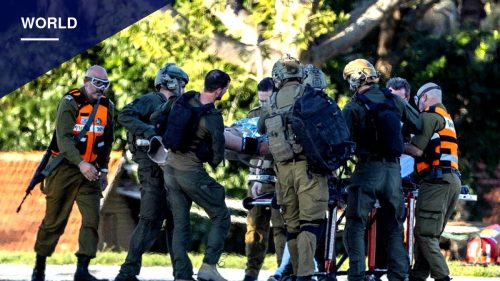
That diplomatic dispute is playing out against a separate, less-publicized story: the scale of Israel’s veteran rehabilitation effort since the war triggered by the Oct. 7 attacks and the subsequent military operation known as “Swords of Iron.” According to an account published by a leader of Beit Halochem, more than 90,000 IDF disabled veterans are now part of what is described as the largest rehabilitation effort in Israel’s history, with the number of wounded growing faster than at any point since 1948.
Many of those wounded were reservists called up while running businesses, finishing degrees or caring for infants at home. A significant share carry psychological injuries alongside physical ones, injuries the piece notes are often invisible to people who encounter them in daily life.
Centers in five cities
Beit Halochem operates rehabilitation centers in Tel Aviv, Jerusalem, Haifa, Beer Sheva and Ashdod. The centers offer swimming and physical rehabilitation, psychological support without what the organization describes as a two-year wait typical elsewhere, vocational training and scholarships, programs for spouses and children of veterans, and elite-level sport training that has produced a number of Israel’s Paralympic athletes.
The piece describes specific moments from the centers: a member who could not raise his arm in January placing a medal around his daughter’s neck by June, and a veteran living with PTSD speaking for the first time within a group of men who had experienced similar injuries.
The organization maintains an internal terminology guide it says it enforces in its own communications. Under that guide, injured service members are referred to as “Wounded Warriors,” “Zahal Disabled Veterans” or Beit Halochem members rather than “disabled soldiers.” Veterans are described as “coping with” or “living with” PTSD rather than “suffering from” it. The organization avoids the phrase “returning to normal life” in favor of “rebuilding their lives.”
After 75 years operating in the United States as Beit Halochem USA, the organization recently renamed its U.S. arm “Warriors of Israel,” a change it says reflects the people it serves rather than a marketing shift. Its stated commitment is summarized in four words: “their sacrifice, our responsibility.”
The author of the piece, describing reaction to the sanctions debate and to broader shifts in public sentiment toward Israel in Britain, France, Australia, American campuses and elsewhere, wrote that the more consequential story is the one unfolding inside the rehabilitation centers rather than in the sanctions debate itself.
“Boycotts are subtraction. A government can ban a crate of produce but no government on earth can ban a young man learning to swim again.”
The pool at the centers, the piece notes, opens at seven each morning and is full by the time it does.