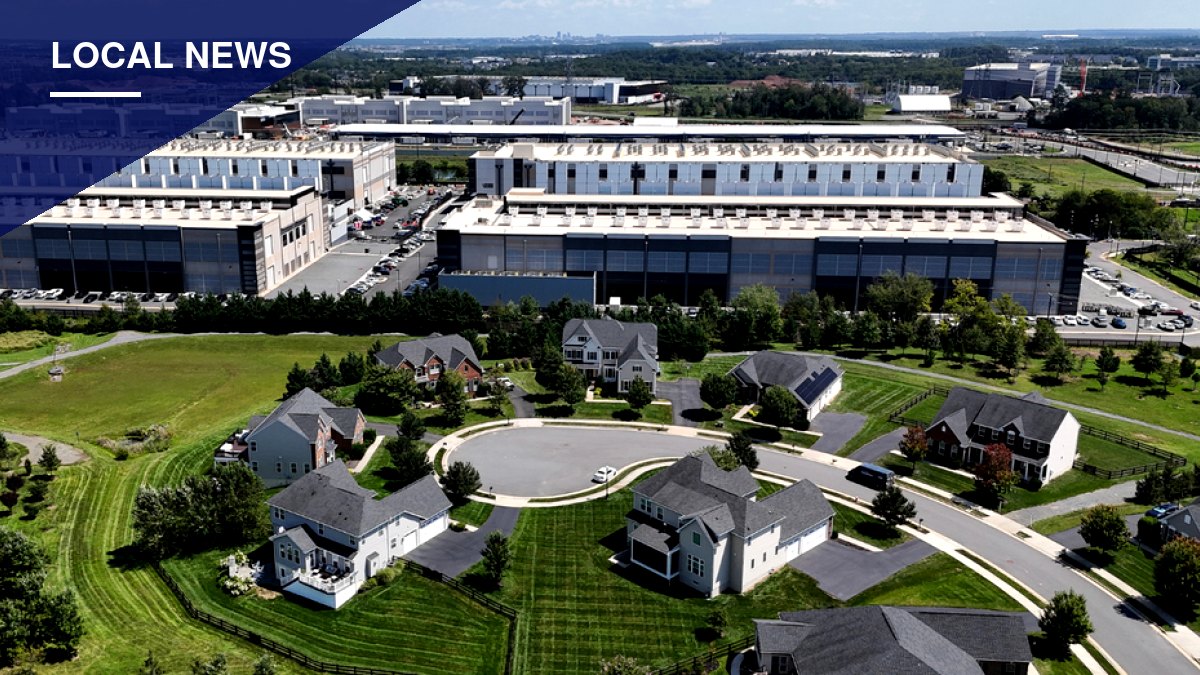
As data center construction sparks fights in communities nationwide over electricity costs, water use and land, homeowners in Loudoun County are seeing a different side of the industry’s footprint: lower property tax bills.
Loudoun County, home to the tech corridor known as “Data Center Alley,” has the highest concentration of data centers in the world. That development has reshaped the county’s landscape over decades and significantly widened its local tax base.
“Loudoun County has more data centers than anywhere else in the country. It’s been sort of the capital of data center development for decades,” said Jared Walczak, vice president of state projects at the Tax Foundation, in an interview with Fox News Digital.
“And because of that, Loudoun County property taxes are about half of what they would be without data centers. In fact, data centers provide about 45% of all local tax revenue to Loudoun County, not just property taxes, but all local tax revenue.”
According to Walczak, that translates into real dollars for individual households. “The average homeowner would pay $5,800 more a year in property taxes if you didn’t have data center development,” he said, noting that the facilities occupy only about 3% of the county’s land.
What About Electricity Costs?
The rapid growth of data centers nationally has raised worries that their heavy electricity demand could push up utility bills for nearby residents, potentially eating into any property tax savings.
Walczak said the property tax benefit for Loudoun homeowners is well established, even as the energy question draws more scrutiny elsewhere. “The property tax relief is real, measurable, and significant,” he said. “The energy costs are largely a solved problem.”
He explained that rising demand can require utilities to build new generation and transmission infrastructure, and that adding more customers and usage can spread the grid’s fixed costs across a larger base. The key issue, he said, is who covers the cost of that new infrastructure.
“You pay for the additional generation and transmission capacity. The data center pays for that,” Walczak said. “And then you actually see a slight reduction in energy costs for everyone.”
He pointed to Northern Virginia as evidence against the assumption that a heavy concentration of data centers automatically means higher electricity prices for residents. “If you look at the places with the largest data center development, you actually see declines in energy prices relative to the rest of the country,” Walczak said. “You look at Northern Virginia, it has lower energy prices.”
Data centers have become a flashpoint in the 2026 midterm elections nationally, with voters across the political spectrum raising concerns about electricity costs, water use, land development and infrastructure strain. But Walczak said Loudoun County’s experience shows what can happen when billions of dollars in new data center infrastructure become part of a community’s tax base.