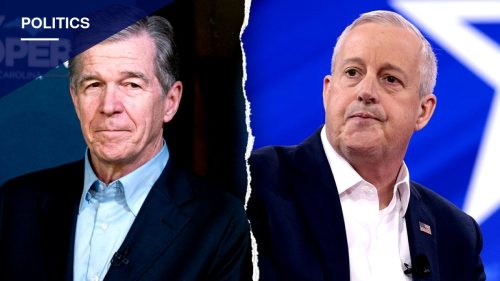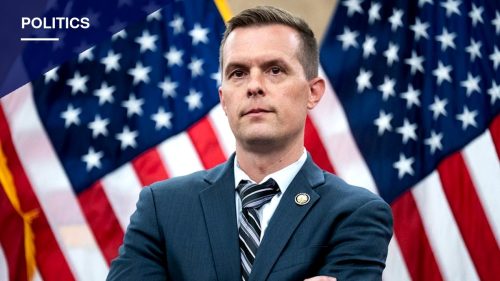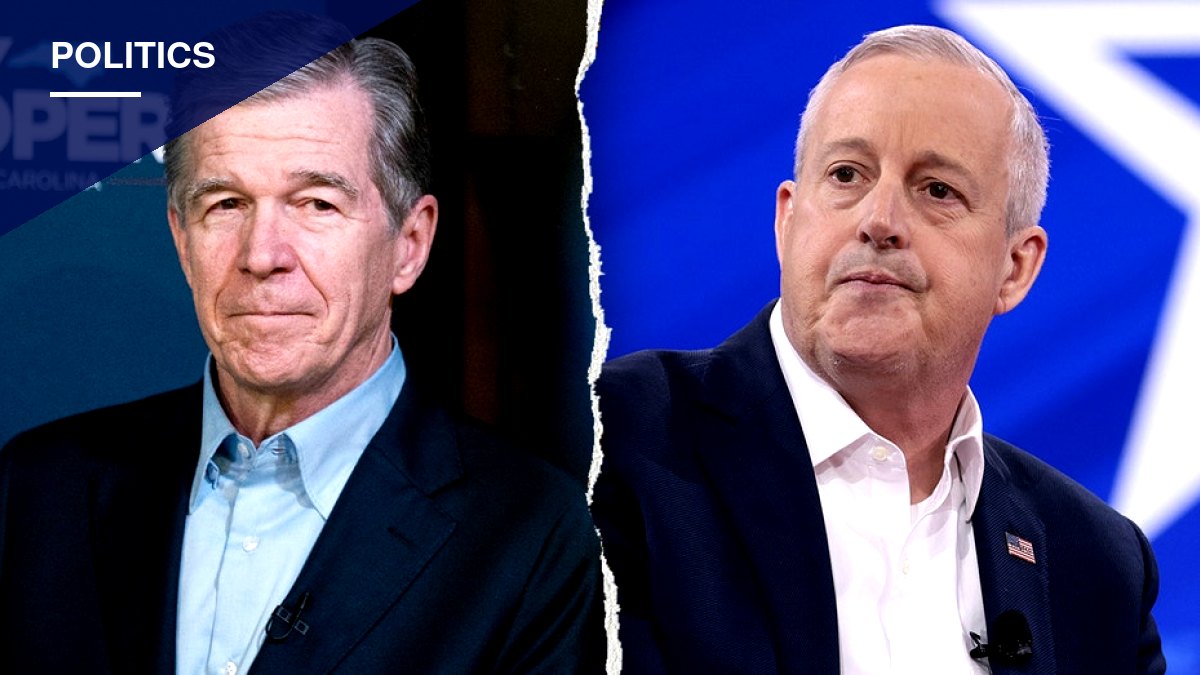
Susan B. Anthony Pro-Life America says a new study it commissioned shows that messages attacking Democratic Senate candidate Roy Cooper’s abortion record are moving support toward Republican candidate Michael Whatley, with the strongest effect coming from a message focused on federal abortion legislation.
The group says it has now reached more than 770,000 homes across North Carolina as part of a voter-contact push in a race widely seen as one of the most competitive Senate contests in the country. The seat is currently held by retiring Republican Sen. Thom Tillis, and control of it could help determine whether Republicans keep their Senate majority.
Canvassers working for the group are focusing on persuadable and low-turnout voters with messages about abortion and Cooper’s record on the issue. That includes his support for federal abortion legislation the group argues could override state limits, and his actions as governor vetoing state abortion restrictions.
Cooper vetoed North Carolina’s 2023 law banning most abortions after 12 weeks of pregnancy, saying it would harm women and families. The Republican-controlled General Assembly later overrode that veto, and the law took effect.
What the group’s leader says
SBA Pro-Life America President Marjorie Dannenfelser told Fox News Digital that Cooper’s veto of the 12-week limit is the strongest message the group has found in North Carolina.
“When it comes to the life issue, the issue that works best in North Carolina for the Senate race is that Gov. Cooper vetoed the 12 week limit, which is wildly popular in North Carolina and across the country, to stop abortion at the first trimester. He vetoed it and then his veto was overridden. It was a very unpopular move that really moves voters,” Dannenfelser said.
She also pointed to a separate veto involving care for infants born alive after an attempted abortion. “The other is that when he vetoed a bill that would give appropriate health care to a baby who was born alive after an attempted abortion. So those issues contrasted with Michael Whatley helped move voters in the direction of Whatley,” she said.
How the study was done
SBA Pro-Life America hired Evolving Strategies to run a randomized-controlled trial testing four different abortion-related messages about the North Carolina Senate candidates. Evolving Strategies recruited an online panel of 2,607 confirmed registered voters in the state, matching respondents to voter file and consumer data.
Respondents were randomly assigned one of four messages — labeled “Fed,” “Record,” “Soft Positive” and “Hard Positive” — or a placebo control message. The “Fed” message criticized Cooper’s support for federal legislation the group says could override state abortion laws. The “Record” message attacked his gubernatorial record on abortion. The “Soft Positive” and “Hard Positive” messages each highlighted Whatley’s anti-abortion positions.
The study measured how respondents’ stated candidate and policy support changed after reading the messages, and used predictive modeling to estimate effects among the most persuadable voters.
The results
According to the study, every message tested shifted the Republican vote margin in Whatley’s favor, by anywhere from a net 1.7 to nearly 5 percentage points.
The two messages attacking Cooper performed best: the “Fed” message moved the margin by 4.9 points, and the “Record” message by 3.2 points. Among the positive messages about Whatley, the “Hard Positive” version moved the margin by 3.9 points, compared with 1.7 points for the “Soft Positive” version.
Among voters the study identified as the best targets for persuasion, the estimated impact was far larger — a net shift of 12 points or more toward the Republican candidate.
Dannenfelser said the group targets voters based on how likely their vote is to move, not on party registration, geography or religious affiliation. “Our one goal when we are finding our targeted voters in any state is to find our best voters. They will end up being Democrats, they’ll end up being Republicans, they’ll end up being Independents,” she said. “What we’re looking for is our best voters, whether they’re inclined to vote or not, and then making sure that we communicate them with them at their doors through digital communications and every other form of communication that they receive.”
She said the messages are continuing to resonate with North Carolina voters heading into the race. “We’re finding that voters really feel left behind by the Democratic Party, either ones that were leaning Democrat or were thinking about Cooper. We’re finding that it really resonates and that it still is a top performing issue in North Carolina and makes a big difference,” she said.