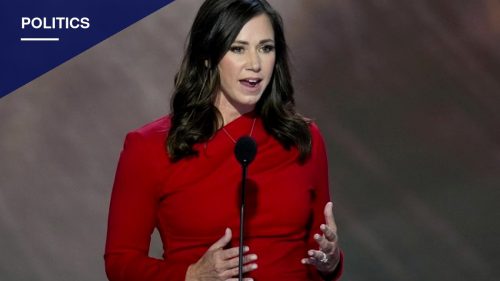
Two years before running for U.S. Senate, then-North Carolina Gov. Roy Cooper traveled to New York City on September 25, 2024, to speak at the New York Times Climate Forward event, as Hurricane Helene strengthened and moved toward the southeastern United States. Cooper, a two-term Democratic governor, left the state without notifying then-Lieutenant Governor Mark Robinson of his travel plans.
At the New York event, Cooper discussed North Carolina’s clean energy policies and predicted that Kamala Harris would win the state, citing its “college-educated people” and comparing the mood to Barack Obama’s 2008 victory. Harris ultimately lost North Carolina to President Donald Trump by more than 183,000 votes — his widest margin in the state across three campaigns.
Cooper also spoke in support of federal climate policy, including the Inflation Reduction Act and American Rescue Plan, and defended the state’s $1 billion commitment to VinFast, a Vietnamese electric vehicle manufacturer whose planned North Carolina factory has been delayed.
“We know that climate change is an existential threat to our planet and to our people, but we also know that the move to clean energy is providing a significant economic boost that’s putting money in the pockets of American families,” Cooper said at the event.
Storm Timeline
On September 24, the day before Cooper traveled to New York, the Associated Press reported that then-Tropical Storm Helene could strengthen into a major hurricane as it moved toward the U.S. Federal officials began positioning generators, food, water and search-and-rescue teams, and President Joe Biden declared an emergency in Florida. Florida Gov. Ron DeSantis declared a state of emergency for most of the state’s counties, and Georgia Gov. Brian Kemp issued a similar declaration.
On September 25 — the day Cooper departed for New York — his office issued a state of emergency for North Carolina but did not hold a public briefing that day. Cooper held briefings in Raleigh on subsequent days.
Helene made landfall and struck western North Carolina with heavy wind and rain beginning in the early morning hours of September 27. According to an after-action report from the National Oceanic and Atmospheric Administration, the storm was “the most devastating natural disaster in western North Carolina’s history,” with some areas receiving up to 30 inches of rainfall and sustained tropical-storm-force winds. The storm killed 107 people in the region.
Aftermath and Recovery Criticism
In the weeks after the storm, Cooper’s office was unable to provide a confirmed death toll. One resident quoted by Axios said: “It’s frustration that these numbers are inaccurate, and [you can’t] tell us that they are [accurate]. And frustration that we’re also 22 days without water. And then the third part of it is … feeling like we’ve been forgotten, and most people [outside of the area] don’t really understand the extent.”
A March 2025 Washington Post report examining the Trump administration’s role in the federal recovery also noted that Cooper never appointed a “disaster recovery coordinator” — a position long recommended by FEMA to coordinate with federal agencies. William Ray, whom Cooper appointed as the state’s emergency management director in 2021, confirmed to the Post that no individual was designated to fill that role, saying officials “decided to take a different approach.”
Natalie Simpson, an emergency management expert at the University at Buffalo, told the Post she was surprised the state did not name a disaster response coordinator, saying it could help explain inconsistencies in the response.
“If there were genuine problems with FEMA’s response, like not penetrating fast enough into the affected areas, somebody that the state appointed as czar would have been sounding the alarm earlier,” Simpson said. “If FEMA was guilty of anything, the state of North Carolina is equally guilty of it.”