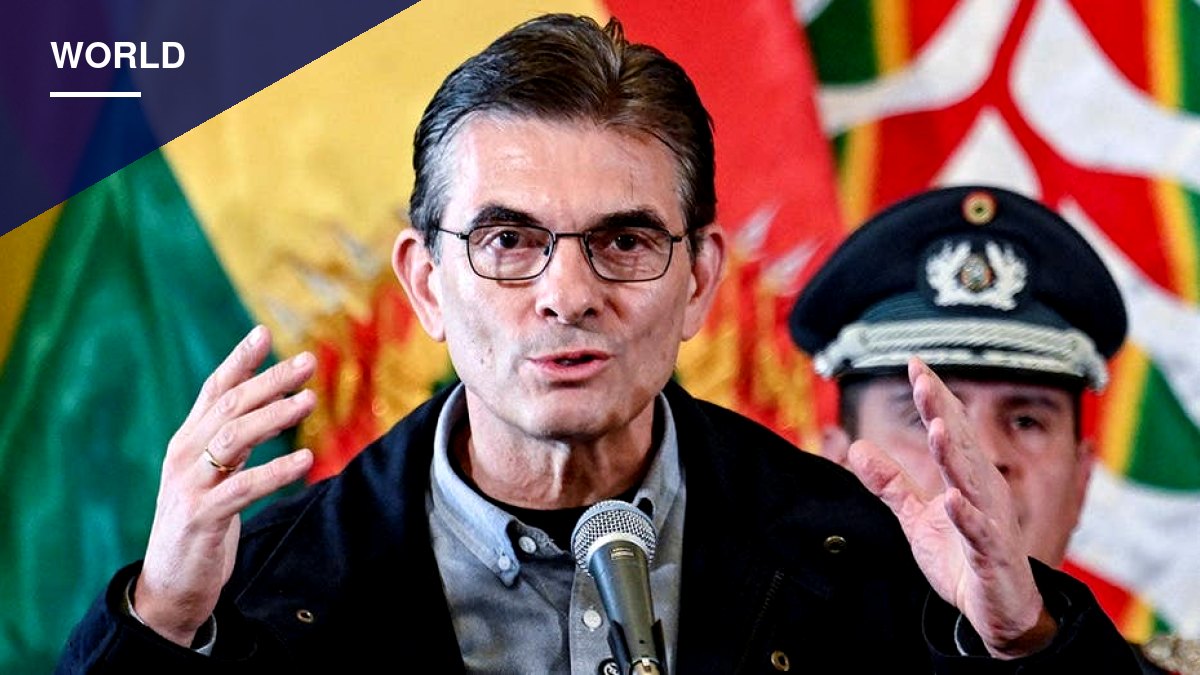
Bolivia’s president is declaring an end to nearly two decades of governance under the Movement Toward Socialism, saying his government is now working to rebuild the country’s institutions, restore investor confidence and open the economy to private enterprise.
In a written statement, President Paz said Bolivia’s Central Bank held only $51 million in reserves when he took office. Ten months later, he said, reserves have climbed to close to $1.2 billion, though he acknowledged inflation remains high and fuel shortages continue to strain households.
“Bolivia is putting its economic house in order,” Paz said, while cautioning that “not everything has been resolved” and that the country is “only beginning.”
Paz described his economic approach as “capitalism for everyone,” meaning broader access to capital, the freedom to start businesses, and job creation through investment and production rather than ideology.
Warmer Ties With Washington
The president pointed to recent talks in New York with U.S. Secretary of State Marco Rubio as evidence of a shift in relations between Bolivia and the United States. He said Bolivia is seeking cooperation with Washington built on “mutual respect, economic opportunity, security, investment, and shared interests,” as the Trump administration has stepped up its focus on the Western Hemisphere.
Resources, But Not for Sale
Paz emphasized that opening Bolivia’s economy does not mean giving away its natural wealth. The country holds significant reserves of natural gas, agricultural land, forests, and strategic minerals including lithium, copper and tin — resources increasingly sought after globally.
He said Bolivia does not want to repeat a pattern seen in other resource-rich nations that exported raw materials for decades while remaining poor. Instead, he said, Bolivia is seeking long-term partnerships with investors built around local employment, training, technology transfer, infrastructure and added value produced inside the country.
“Bolivia welcomes investment, capital, technology, and expertise,” Paz said, adding that he wants companies willing to “build, produce, employ, train, and grow alongside Bolivian workers and businesses.”
Paz said any economic growth must also translate into tangible benefits for Bolivians, including better jobs, stronger institutions, improved education and greater security, while protecting the country’s forests, the Amazon, and Indigenous communities. He said the country’s young people in particular need opportunities to build a future at home rather than seek it elsewhere.
“Bolivia will not remain on its knees,” Paz said. “We will stand up, move forward, and build again.”