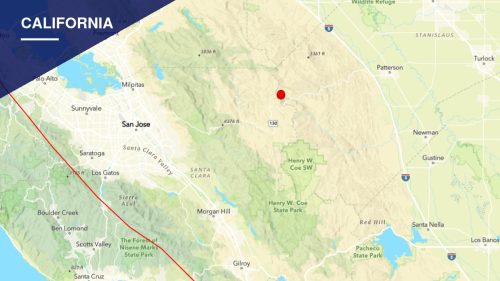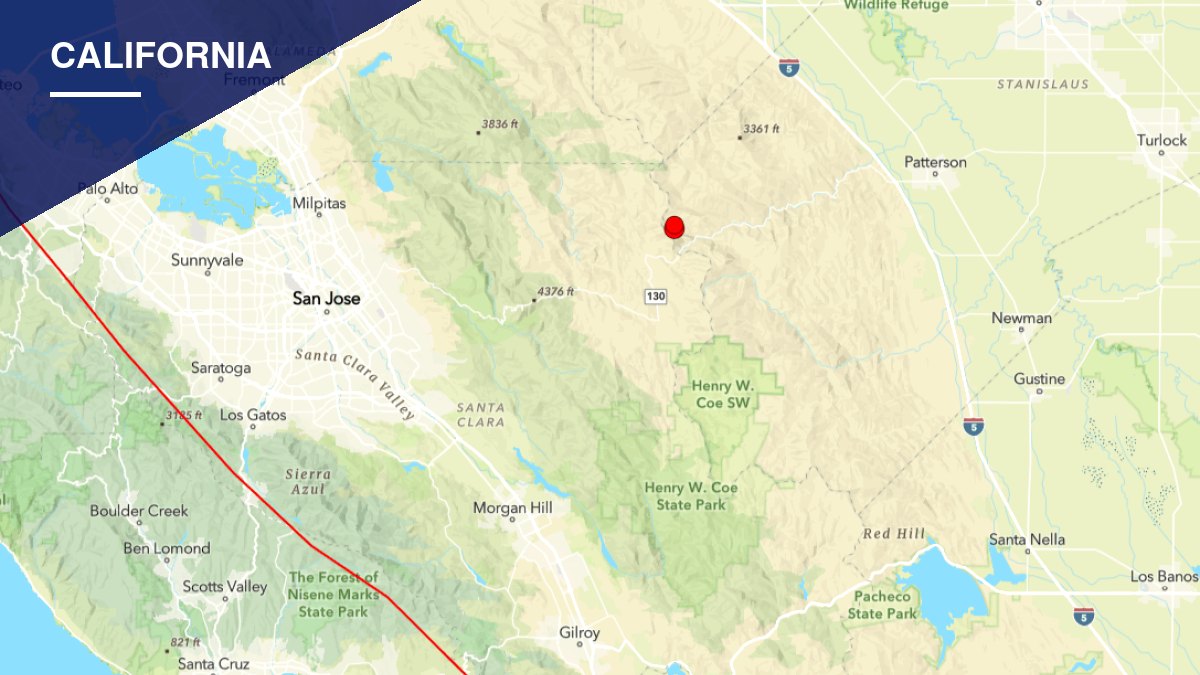
Two earthquakes struck Northern California early Sunday morning, with shaking felt as far apart as San Jose and Walnut Creek, according to the United States Geological Survey.
A magnitude-3.5 quake hit shortly after 7:20 a.m., followed roughly 20 minutes later by a magnitude-2.6 tremor. Neither caused reported damage, but both were widely felt across the South Bay region.
The pair of quakes adds to what has been a busier-than-usual stretch of seismic activity across the state. On one recent Saturday, the USGS recorded more than 60 low-magnitude earthquakes across California, most below magnitude 2.0.
Southern California has seen its own cluster of smaller quakes in recent weeks. A magnitude-3.1 earthquake struck near Compton on Sept. 17, with shaking felt in Long Beach, Downey and Paramount. That followed an earlier magnitude-3.2 quake near Compton earlier in the month. Farther offshore, a pair of quakes struck southeast of Catalina Island within minutes of each other.
A separate magnitude-3.4 earthquake also hit the San Francisco Bay Area the same weekend as the Compton-area shaking.
Scientists point to bigger risks
None of the recent quakes have been large, but they arrive as seismologists continue to warn about California’s long-term earthquake risk. Caltech seismologist Dr. Lucy Jones has said the San Andreas Fault remains capable of producing a catastrophic major earthquake, though she has stressed that scientists cannot predict when such an event might occur.
Jones has previously modeled a magnitude-7.8 rupture along the southern San Andreas Fault — a scenario that researchers say could cause prolonged, destructive shaking across Southern California and severely disrupt transportation, water systems and other infrastructure.
Separately, researchers at the University of Bern have been studying seismic stress near the Cajon Pass, where the San Andreas and San Jacinto faults intersect. They have described the area as a potential “earthquake gate,” and are examining whether a future rupture there could spread across both fault systems.
For now, residents across San Jose, Walnut Creek, Los Angeles, Long Beach, Compton, Downey and Paramount are simply dealing with the latest round of minor tremors — a reminder, seismologists say, of the ongoing background activity along the state’s fault networks.