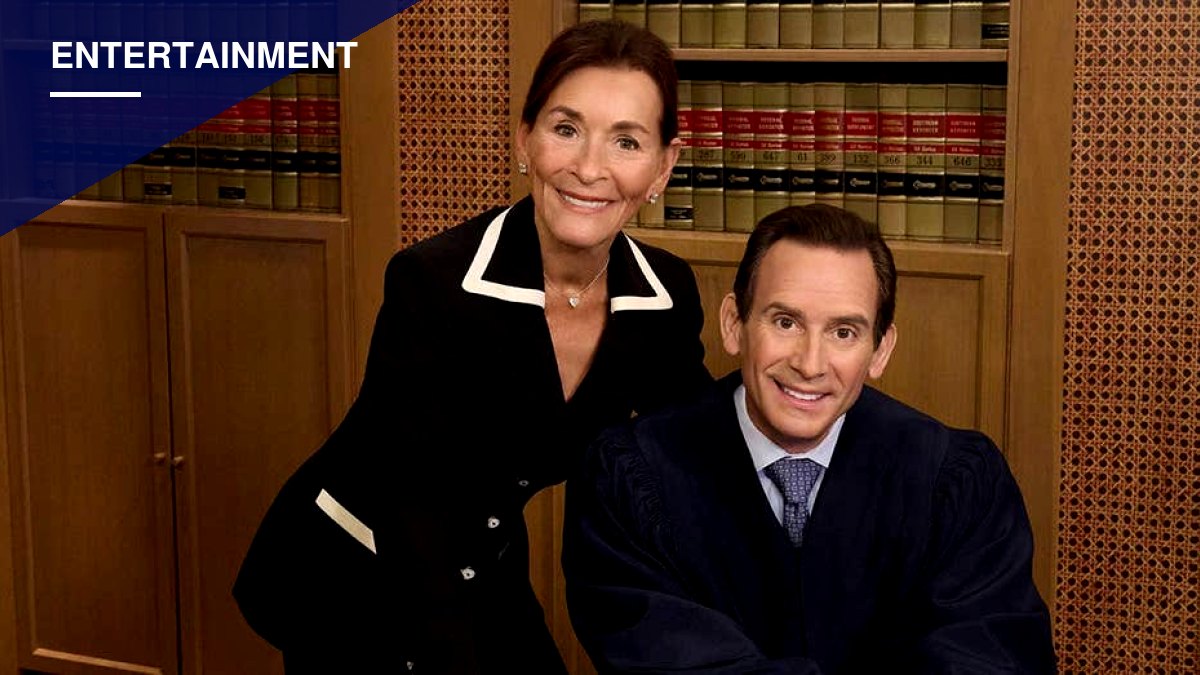
Adam Levy, a former two-term Putnam County District Attorney and the son of television’s Judge Judy Sheindlin, has taken on his own courtroom series, “Adam’s Law,” which began airing weekdays in national syndication on Sept. 14.
Levy, 57, is the presiding judge on the show, which was created by his mother, 83, who also serves as an executive producer through her company Queen Bee Productions. The program is produced and distributed nationally by CBS Media Ventures.
In an interview with Fox News Digital, Levy said Sheindlin gave him a characteristically direct send-off before he stepped into his own courtroom role.
“She said, ‘You’ve got this. I know you’ve got this. Have fun, do what you do, don’t let people lead you to places where you don’t feel comfortable, be true to yourself, and don’t screw this up,'” Levy said. “That’s what she said.”
From Putnam County to the TV Bench
Before his television work, Levy practiced law for 25 years, including two terms as the elected District Attorney of Putnam County, New York. He is the son of Sheindlin and her ex-husband Ronald Levy, and has a brother, Jamie Levy.
Levy’s path to television began with appearances as a presiding judge on Prime Video’s “Tribunal Justice” and “Justice on Trial,” both created by his mother, ahead of “Adam’s Law.”
Sheindlin built her reputation as a New York Family Court judge, appointed to the New York Criminal Court in 1982 and named supervising judge of Manhattan Family Court in 1986. A 1993 “60 Minutes” segment introduced her outspoken courtroom style to a national audience, and she went on to host the syndicated hit “Judge Judy” for 25 seasons, from 1996 to 2021. After that show ended, she moved to the Amazon streaming series “Judy Justice” in November 2021. Earlier this month, Sheindlin announced that the October finale of “Judy Justice” would mark her retirement from on-camera work, as she passed the torch to her son.
Living Up to the Name
Levy told Fox News Digital he was anxious before his television debut on “Tribunal Justice,” worried about being dismissed as a “nepo baby” despite his own legal career.
“I was nervous,” he said. “Not doing what I was doing, that was in my wheelhouse. I didn’t want to disappoint her. And I knew that there were a lot of other people, a lot of other lawyers and judges that were just as qualified, if not more so, to be in the seat I was in.”
He added that he understood why some might question a relative of a famous figure stepping into the same field. “I get this whole nepo baby stuff. I do,” he said. “And I can understand why people sometimes are disappointed and angry and upset at the offspring of famous people. But at the same time, I just wanted people to give me a fair shot, a chance.”
Levy said he felt relief after Sheindlin watched his performance on “Tribunal Justice” and told him he was “a natural.” “When she saw me for the first time, she said, ‘There, now you know. Now you’ve got nothing to worry about,'” he recalled.
An Active Mentor, Not a Retiree
Levy said his mother continues to discuss his cases with him regularly, even though she is no longer on camera. “She’s hands-on,” he said. “She’s not retired. She is rewired. So, while she may not be in front of the camera anymore, that does not mean that she has removed herself from the courtroom genre.”
He said the two go over the facts, legal questions and background research on cases before they are taped, a practice he traced to a family tradition among relatives who work as prosecutors and defense attorneys.
“Whenever we had cases, we would go out to dinner as a family,” he said. “And we would — whoever was on trial, we would bring our case file, and we would throw it in the middle of the table. Everyone would take a piece, and we’d review it.”
A Different Style, and a Format Change
Levy said his approach on the bench differs somewhat from his mother’s. “It is still about taking personal responsibility for yourself, doing the right thing, telling the truth when you’re in court — all of those things are the same,” he said. “The way that I go about it though is my own style. It’s a little more understanding at times, I think, but when someone comes in to court and misrepresents their case or lies, that’s when you’ll see the DNA come out.”
Unlike “Judge Judy,” where litigants generally presented evidence live on camera, Levy said he changed the format for “Adam’s Law” so that litigants must submit their evidence before appearing, giving him time to review it and, if needed, conduct a background check. He said reviewing a single case that airs as 17 minutes of television can take him a full day, sometimes up to 48 hours.
“I didn’t want to accuse someone of being a liar, where they were really telling the truth,” he said.
Levy said his willingness to hear people out stems partly from his own childhood, when he said his mother sometimes did not believe him even when he was telling the truth. Asked whether he or his mother would be more likely to show mercy hearing the same case, Levy did not hesitate.
“I would,” Levy said. “Because she has never been on the other end of her takedown. I have. I needed mercy from her, so I’m probably more likely to give it than she is.”
“Adam’s Law” airs weekdays in syndication, with local listings available on the show’s official website.