A senior United Arab Emirates official on Friday called the attempted hijacking of a Flydubai passenger jet a “terrorist act” for the first time, as Israeli investigators work to determine whether the Omani co-pilot accused of trying to down the plane was acting under someone else’s direction.
The Wall Street Journal reported Friday that the co-pilot had previously been banned by Oman from flying over concerns he had adopted radical ideological views, citing people familiar with the matter. Despite that ban, Flydubai later hired him and put him on the sensitive route connecting Dubai and Tel Aviv. It is not known whether Oman passed on its concerns to other countries or airlines, and the nature of his reported radicalization has not been determined. Flydubai and the Omani government did not respond to requests for comment, and a UAE spokesperson declined to address the co-pilot’s history in Oman, saying doing so could “prejudge the outcome of the investigation or interfere with its course.”
Anwar Gargash, a senior diplomatic adviser to UAE President Mohammed bin Zayed, wrote on X that the pilot who was stabbed during the attack, Capt. Smit Machchhar, “deserves full appreciation.”
“Faced with a dangerous terrorist act and a possible disaster, he embodied the true meaning of courage and responsibility. The professionalism and moral integrity he demonstrated under the most challenging circumstances make him a true hero.”
Gargash’s comments were the first time a senior Emirati official had publicly described the incident as terrorism, a day after authorities in the UAE opened a formal investigation into whether the attack was linked to terrorist activity, planning or outside direction. He also cautioned against getting ahead of the facts. “While avoiding interpretations or promoting conspiracy theories, vigilance and caution remain essential in confronting the dangers of extremism and terrorism,” he wrote.
Netanyahu: ‘We are clarifying right now if he was sent’
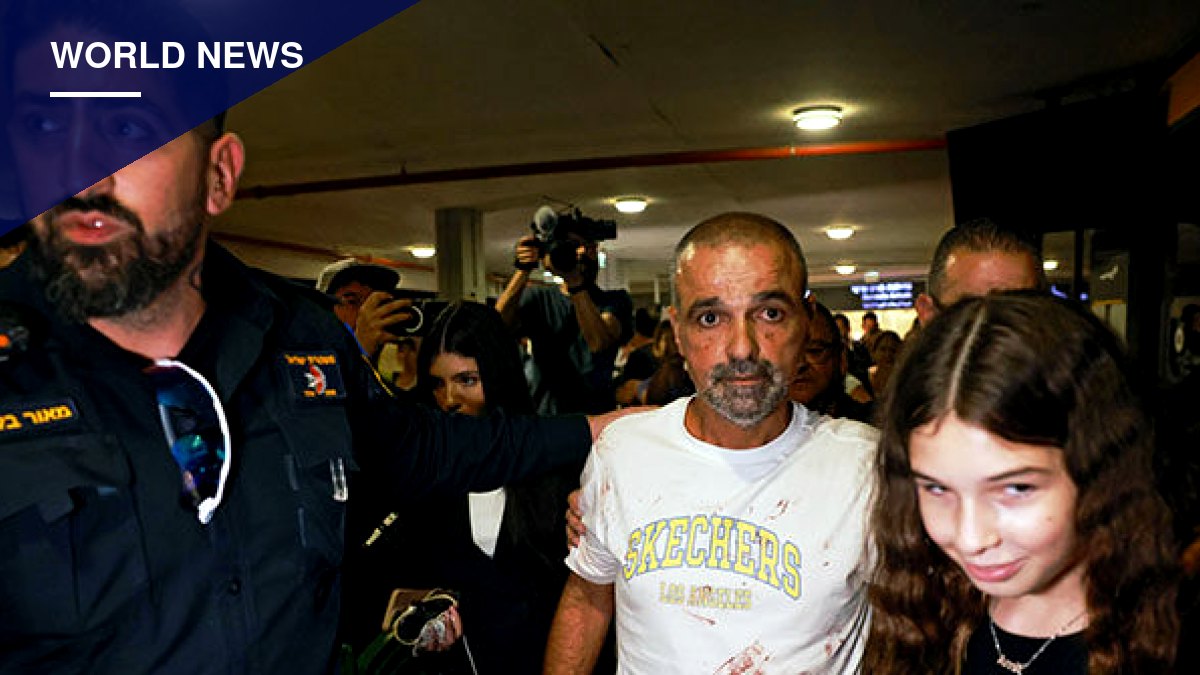
Israeli Prime Minister Benjamin Netanyahu said Friday that investigators are trying to establish whether the co-pilot “was sent,” without naming who might have directed him. In a video statement, he credited Israeli passenger Yaniv Hayun and others aboard the flight with stopping the attack. “As time passes, the picture becomes clearer,” Netanyahu said. “Yaniv and his brave friends averted another 9/11.”
Netanyahu said the co-pilot had undergone “Islamist radicalization” and “came to crash the plane along with its passengers,” but stressed investigators had not yet established whether he was acting on someone else’s orders. “We are clarifying right now if he was sent,” he said. “And whoever sent him will pay a heavy price.”
He did not name Iran or any other country Friday. A day earlier, asked directly whether Tehran could be involved, Netanyahu said investigators had no specific information tying Iran to the attack and that it was “too early to say.” “We will get to the bottom of this attacker, whether he had accomplices and whether Iran was behind him,” he said Thursday. “I think we will find out very soon.”
Co-pilot transferred from Saudi Arabia to the UAE
The investigation shifted to the UAE on Thursday after Saudi Arabia transferred the co-pilot there following his detention in Tabuk. A source briefed on the probe told Reuters that Israeli officials are expected to question him, and an Israeli government official confirmed Israeli investigators would take part alongside Emirati authorities in examining both what happened and the co-pilot’s motives and background. Emirati authorities said the inquiry will determine whether the incident was “linked to any terrorist activity or purpose, or involved prior planning or direction.”
Flydubai CEO Ghaith Al Ghaith addressed the attack publicly for the first time Friday, describing it as a “safety incident” in the cockpit and saying the airline is cooperating with the official investigation. “It is important that we allow this process to establish the facts,” he said, adding that “many questions” remain about what happened aboard Flight FZ1073.
A struggle in the cockpit over Saudi Arabia
The investigation follows Wednesday’s attack aboard FZ1073, when the Omani co-pilot repeatedly stabbed Capt. Machchhar and seized control of the Boeing 737 as it flew over Saudi Arabia with roughly 174 passengers and crew aboard. The aircraft dropped more than 16,000 feet in just over 30 seconds, according to Flightradar24 data, before the wounded Machchhar managed to open the cockpit door. Passengers rushed in and overpowered the co-pilot, and a reserve Flydubai crew traveling on the flight took control and landed the plane safely in Tabuk.
Machchhar spoke publicly for the first time Friday from his hospital room in the UAE, telling Indian Prime Minister Narendra Modi that he could feel the plane diving as he lay wounded on the cockpit floor. “When I fell, I felt the plane descending, the nose going down, and I knew these were the final seconds,” he said. “I tried to crawl. I opened the door, and everything else happened immediately after that.” Modi praised his “courage, composure and calm” and told him India was waiting to welcome him home; Machchhar, visibly emotional, called Modi his “idol.”
The co-pilot has not been publicly identified beyond his Omani nationality, and neither Emirati nor Israeli authorities have said they have established that he acted on anyone else’s direction. The UAE-led investigation into whether the attack involved outside planning or direction is continuing.