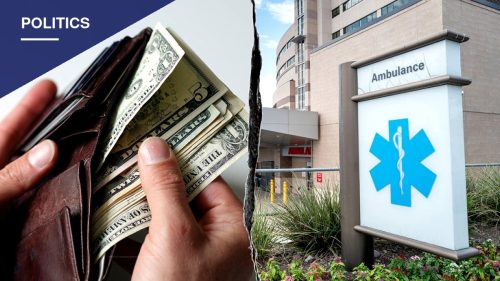
A House committee report has detailed a string of Medicaid and Medicare fraud cases across the country, including a Colorado transportation provider accused of billing the state for rides taken by a patient after that patient had already died.
The report, from the House Energy and Commerce Committee, examined vulnerabilities in taxpayer-funded health programs at the local, state and federal level. “Medicare and Medicaid fraud occurs nationwide and costs American taxpayers billions of dollars a year,” the report said, adding that fraud is “especially egregious” in programs meant to serve the elderly, disabled, children and pregnant women.
Colorado: Millions in questionable rides
In Colorado, a man named Wesam Yassin was charged in February 2026 along with another non-emergency medical transportation provider for fraudulent billing. Non-emergency medical transportation is a Medicaid benefit that helps patients get to doctor’s appointments.
Yassin is accused of charging Colorado Medicaid $3.3 million in questionable bills through a company called Sama Limo. Among those charges, he allegedly billed $283,000 for 64 rides for a single person — more than $4,000 per ride. Roughly $165,000 of those charges were submitted after the patient had already died, according to the report.
A federal release on the charges said proceeds from the scheme were allegedly used for “personal gain, including the purchase of a home, furnishings, luxury vehicles, jewelry, and cosmetic surgery.”
A second Colorado defendant, Ashley Marie Stevens, is accused of trying to bilk the state for more than $1 million, including roughly $400,000 billed for non-medical rides for herself and her family, along with so-called “ghost rides” that never took place.
Los Angeles County: Hundreds of hospices on one street
The report also flagged the hospice industry in Los Angeles County as a source of concern. Investigators found nearly 500 hospices operating within a three-mile radius of the county, including 137 hospices on Van Nuys Boulevard alone and 89 companies registered to a single address in Van Nuys.
House lawmakers had previously pressed the Department of Health and Human Services about a surge in home health and hospice providers that raised red flags about possible fraud tied to foreign criminal groups. The report cited a March 2022 California State Auditor report and HHS ownership data showing Los Angeles County accounted for more than 31% of all hospice agencies in the country in 2022.
California’s Department of Public Health froze new hospice licenses in January 2022. Even so, the report found that 15 new hospices — all located in a single Los Angeles County building — received Medicare certification in 2023.
A national pattern
The committee said it is concerned that international criminal organizations are exploiting more than just hospice care. It pointed to a 2024 scheme in which members of Russian organized crime groups bought 30 small medical supply companies that were already receiving federal payments, then billed Medicare nearly $11 billion for urinary catheters. More than 99% of that money reportedly never left the system. Similar medical equipment fraud schemes involved bad actors in Estonia, Pakistan, Georgia and Hong Kong, according to the report.
In Minnesota, where fraud in state social programs has been the subject of repeated state and federal investigations, the report highlighted the case of Abdinajib Hassan Yussuf. Yussuf pleaded guilty to trying to defraud $6 million from a Minnesota autism therapy program funded by state Medicaid dollars. He and his co-defendants are accused of hiring unqualified people as behavior counselors and enrolling children by bribing their parents. According to the report, Yussuf admitted during his plea hearing that he did not actually know anyone with autism.
House Energy and Commerce Committee Chairman Brett Guthrie said the problem spans the entire country. “Combating fraud is a coast-to-coast battle,” Guthrie said. “Every instance of fraud we uncover represents money stolen from taxpayers and care taken away from the patients who depend on it most.”