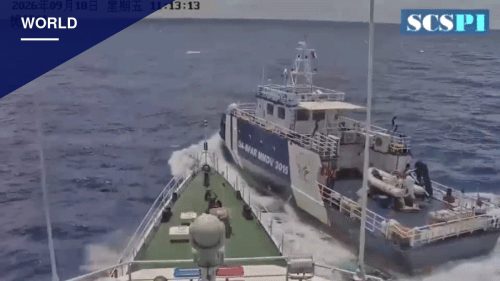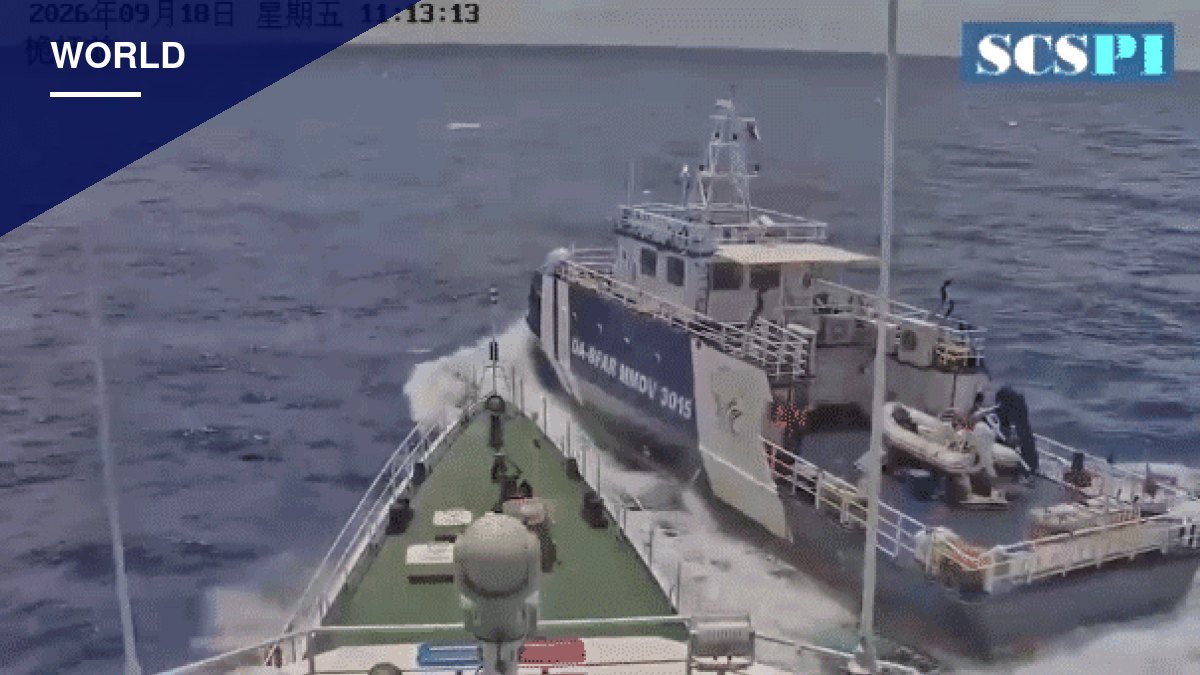
China sent nearly twice as many navy and coast guard ships into contested waters near the Philippines last month compared with August, according to figures released by Manila’s military, as encounters between the two countries’ forces grow more frequent and more dangerous.
The Armed Forces of the Philippines tracked 101 Chinese navy and coast guard vessels around four disputed areas in September, up from 56 in August and 48 in July.
Scarborough Shoal saw the heaviest activity, with 39 Chinese coast guard and People’s Liberation Army Navy ships observed there during the month. Another 28 were tracked around Thitu Island, called Pag-asa by the Philippines, 23 around Second Thomas Shoal, and 11 around Sabina Shoal.
Rear Adm. Roy Vincent Trinidad, the Armed Forces of the Philippines spokesperson for the West Philippine Sea, said the numbers reflected China’s continued “illegal, coercive, aggressive and deceptive” activities in the region. Asked why the figure had nearly doubled from August, Trinidad said the military wanted to watch the trend over a longer period before drawing firm conclusions about a shift in Chinese strategy.
A Dangerous Encounter in the Air
The rise in ship numbers comes alongside increasingly tense face-offs at sea and in the air. On Saturday, a Philippine C-208 maritime patrol aircraft flying near Scarborough Shoal encountered two Chinese military aircraft. The Philippine military said one of them, a J-16 fighter, repeatedly approached the unarmed patrol plane and maneuvered in front of and behind it at what it called an unsafe distance.
“This incident is part of a recurring pattern of unsafe and coercive behavior against Philippine government vessels and aircraft conducting lawful operations,” the Philippine military said.
The Philippine aircraft completed its mission and returned safely to base. Beijing gave a different account, saying the Philippine plane had entered airspace over what it calls Huangyan Dao without permission and that Chinese forces took “necessary measures” in response.
Scarborough Shoal lies about 120 miles west of the Philippine island of Luzon and has long been one of the most contested points between the two countries. China has effectively controlled access to the shoal since a standoff in 2012, while the Philippines maintains it falls within its exclusive economic zone. An international tribunal ruled in 2016 that China’s broad historic-rights claims across the South China Sea had no legal basis — a ruling Beijing rejects.
A Second Flashpoint
Days before the air incident, Chinese coast guard and naval vessels moved to block a Philippine resupply mission to Second Thomas Shoal, another longstanding flashpoint. The Philippines deliberately grounded the aging BRP Sierra Madre there in 1999 and keeps a small contingent of troops aboard to maintain its presence. Chinese vessels have repeatedly tried to block missions delivering food, water and other supplies to those troops.
The confrontations have continued despite a recent easing of tensions between Washington and Beijing, including a meeting between President Donald Trump and Chinese President Xi Jinping during Xi’s state visit to Washington, where both leaders emphasized stability in the broader relationship.
What It Means for Washington
The Philippines is bound to the United States by a Mutual Defense Treaty dating to 1951, and Washington has repeatedly said the treaty applies to armed attacks on Philippine armed forces, public vessels and aircraft anywhere in the South China Sea. The latest incidents have renewed attention on that commitment, given the frequency and intensity of the confrontations between Chinese and Philippine forces in the disputed waters.