A new opinion piece is drawing attention to California’s public pension system, pointing to a $153 billion shortfall in assets needed to cover promises made to retirees through the California Public Employees’ Retirement System, known as CalPERS.
The commentary, written by longtime California political strategist Jon Fleischman and published by the New York Post, cites reporting from the California Post finding more than 63,000 CalPERS retirees currently receive six-figure annual pensions. One retired government employee collected nearly half a million dollars in pension payments last year, according to the piece.
Fleischman argues the roots of the shortfall trace back to 1999, when then-Gov. Gray Davis signed Senate Bill 400, expanding retirement benefits for state employees. Local governments followed with their own enhancements, and benefits were sweetened retroactively, increasing compensation for work already completed. At the time, the expectation was that investment returns would cover the added costs without significant new burdens on taxpayers.
When markets later crashed, those enhanced promises were not scaled back, and taxpayers have been absorbing the difference since, the piece says.
A Local Angle from Orange County
Fleischman, who previously handled media relations for the Orange County Sheriff’s Department, writes that he regularly saw able-bodied deputies retire at age 50 and then take jobs with other law enforcement agencies or private security firms — collecting a pension and a paycheck simultaneously. He describes this practice, sometimes called double-dipping, as a rational response to rules set by elected officials rather than a problem created by the retirees themselves.
The piece notes that pension spiking and double-dipping remain more common among employees hired before reforms enacted in 2013, which primarily applied to new hires and did not change the underlying negotiating structure between unions and elected officials.
The Union-Politician Relationship
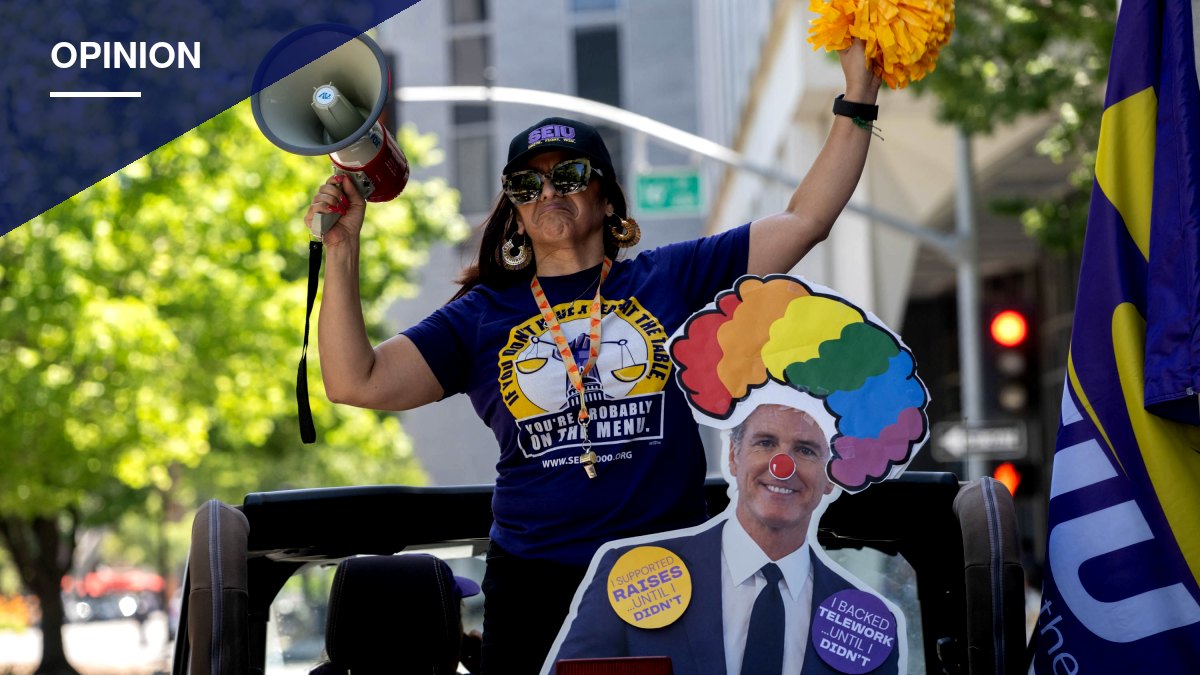
Central to Fleischman’s argument is the relationship between public employee unions and the officials who negotiate contracts with them. He writes that unions help elect the same politicians who later approve the pay and benefits taxpayers must fund — recruiting candidates, supplying volunteers, funding advertising and turning out voters.
He contrasts this with private-sector labor relations, noting that unions such as the United Auto Workers or the Teamsters do not help elect the corporate executives they bargain against. Private companies, he writes, must negotiate contracts they can actually afford or risk failure, while government has other options — raising taxes, cutting services, or pushing costs into the future — that make unaffordable promises politically convenient in the short term.
The piece points to Stockton as an example of the consequences, noting the city had already cut roughly a quarter of its police force before entering bankruptcy in 2012 as retirement costs continued to climb.
Recent Developments
Fleischman credits Gov. Gavin Newsom with vetoing a proposed pension expansion for police officers and firefighters last month, while noting that the fact lawmakers sent the bill to him at all shows the underlying incentives in Sacramento have not changed.
He also references a 1937 warning from President Franklin Roosevelt, who cautioned that collective bargaining as practiced in the private sector could not simply be transplanted into public service, since in government the employer is ultimately the public itself.
Fleischman’s proposed solution is to end public-sector collective bargaining in California while still honoring benefits already earned and protecting employees’ rights to organize and engage politically. He argues that both unions and politicians benefit too heavily from spending taxpayer money under the current arrangement.
Most CalPERS-covered employees contribute to their own pensions, and investment earnings help fund the system, the piece notes. However, for many employees hired before the 2013 reforms, government employers still cover some or all of that contribution, with taxpayers covering any shortfalls beyond that.