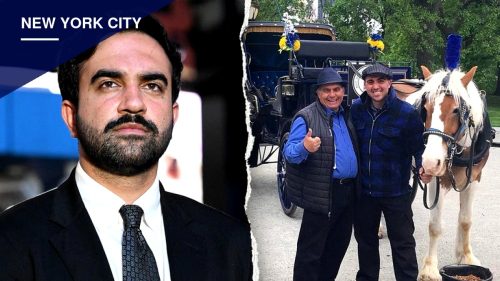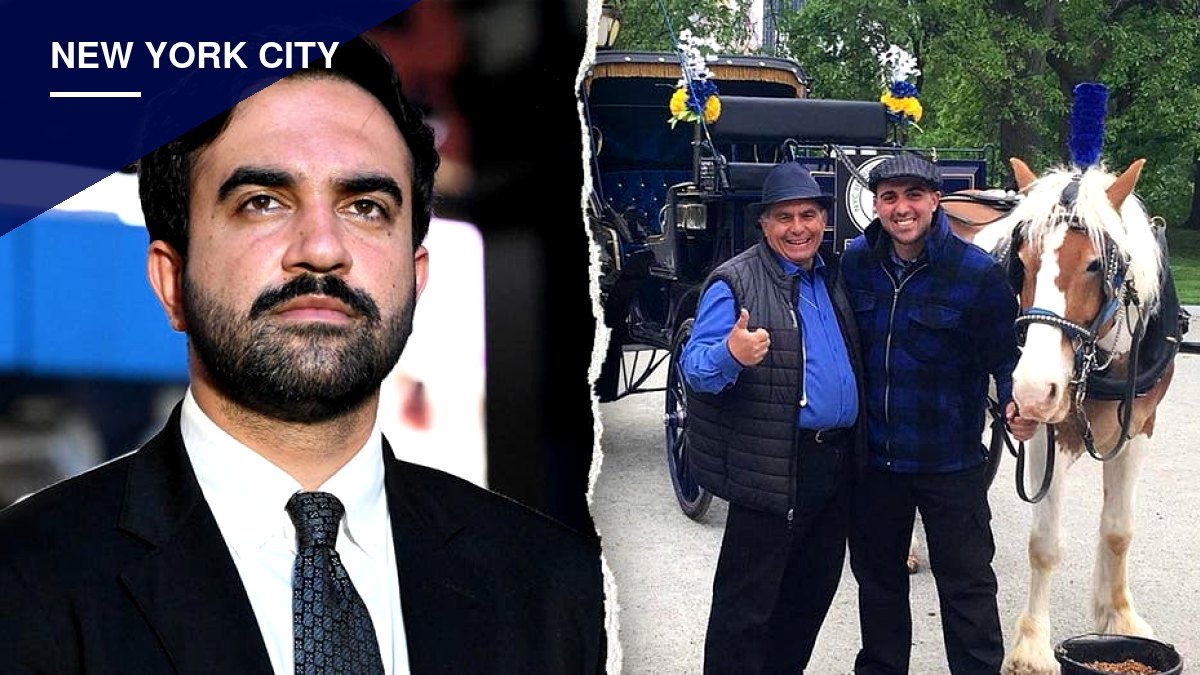
Mayor Zohran Mamdani and City Council Speaker Julie Menin announced Tuesday that they have reached a deal to phase out New York City’s horse-drawn carriage industry, setting up a council vote next week on legislation that would end carriage operations starting in June 2028.
The bill has been named “Romanch’s Law” after 18-year-old Romanch Mahajan, who was killed in June after falling from a horse-drawn carriage. The accident reignited a long-running debate over the safety of the carriages that line up near Central Park to carry tourists and families through the city.
Animal rights advocates have pushed for years to end the industry, pointing to viral videos showing horses collapsing or bolting into traffic, and accusing operators of mistreating the animals. Under the bill, owners could keep, sell or transfer their horses, but could not send them to slaughter, to another carriage business, or to what the legislation describes as “inhumane purposes.”
Carriage drivers and owners say the proposal unfairly targets a tradition that stretches back 168 years and threatens their livelihoods without adequate compensation. Frank Riccobono, owner and manager of NYC Horse Carriage Rides, told Fox News Digital he owns 12 horses and three carriages and has spent more than two decades in the business, following in the footsteps of his father, who worked in the industry for 47 years.
“You have pedicabs flying around, so why are they permitted to have a business?” Riccobono said. “And now a 168-year-old tradition, attraction is being forced to surrender, which is very taboo. I want my investment to stay there for the next 20 years, 50 years, 100.”
Riccobono said he purchased a medallion — the license required to operate a carriage in the city — for nearly $400,000, and that the bill offers no reimbursement for that investment. “I am going to take a very, very big loss here and there’s no reimbursement in this bill,” he said.
He also disputed claims that his animals are mistreated, saying they see certified veterinarians regularly and live “the most perfect lifestyle.” He described the criticism of the industry as “brainwashing” and said the bill effectively “criminalize[s] us because a horse is working.”
His wife, Natalie Riccobono, said the loss of income would hit the family hard. “By taking away these businesses from us, they are literally taking food off of our table and possibly a shelter from over our heads,” she said.
City pledges transition help
Roughly 200 carriage drivers work in the city, and Mamdani and Menin have said they intend to help those workers move into new jobs. “I think that we have a civic responsibility to ensure that we are not leaving anybody out to dry,” Mamdani told reporters Wednesday. “They should not be ones that are simply left as an afterthought of what comes after this.”
A spokesperson for Menin said she will stay involved in the transition process, which “must include meaningful protections for the workers,” and said she has invited the Transport Workers Union and the Mamdani administration to join a new working group. “Through thoughtful conversations with labor and other stakeholders, the Council developed a framework to ensure better economic opportunities for these New Yorkers,” the spokesperson said.
Christina Hansen, a veteran carriage driver and TWU Local 100 shop steward, said drivers have not heard directly from the mayor and feel dismissed. “The only cruelty in the New York City carriage industry has always been the way that the people in it, the way the carriage drivers and carriage owners and stable owners are treated,” she said.
Hansen also raised concerns about what happens to the horses once the industry winds down. The city expects many of the animals will go to rescues or sanctuaries, but Hansen said those facilities already struggle with limited donations and resources. “There’s no funding from the city or anything like that to say, we’re going to make sure that, you know, the city pays for the horse’s retirement,” she said. She said she has invited Mamdani to meet with drivers or their horses directly, but added, “He hasn’t and he probably won’t, because he’d get so much blowback on social media or whatever.”
Past attempts to end the industry have failed, including a 2014 push by then-Mayor Bill de Blasio, who proposed replacing carriages with vintage-style electric cars. Riccobono said he intends to keep fighting the current bill, which he called unconstitutional. “We’re gonna fight for our rights, number one, we’re gonna fight for our horses, and we’re gonna fight for fairness and justice,” he said.
Mamdani’s office did not immediately respond to a request for comment.