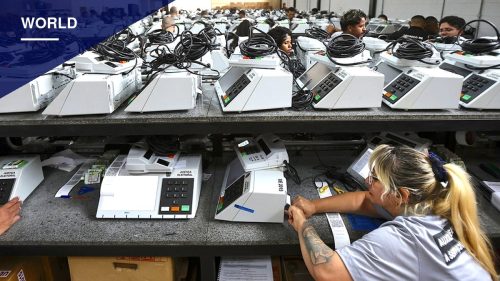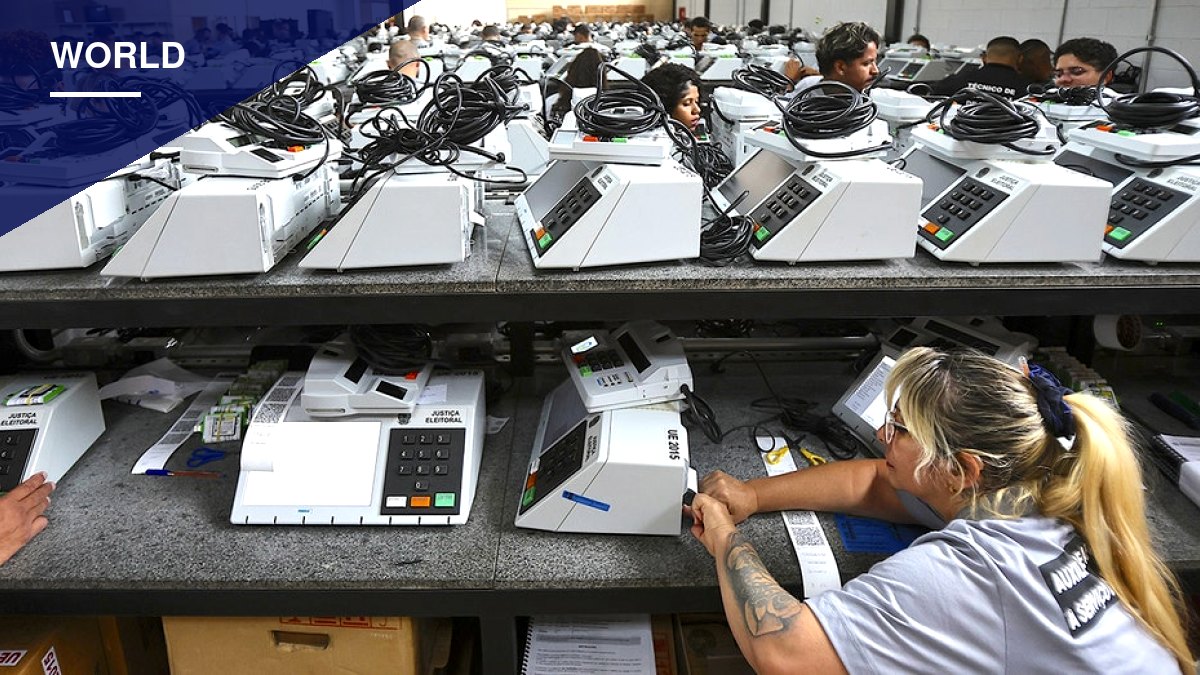
When Brazilians went to the polls on Oct. 4, roughly 125 million people cast ballots on electronic voting machines that print no paper record. Less than four hours after voting ended, the country already knew the presidential race was headed to a runoff between conservative challenger Flavio Bolsonaro and leftist President Luiz Inacio Lula da Silva.
That speed is nothing new for Brazil. The country’s electronic voting system has been in place for more than three decades, and it has become routine, fast and, according to election officials and outside analysts, highly secure. It is also the largest digital voting system in use anywhere in the world, entirely disconnected from the internet.
With the U.S. midterms just 11 days away, some analysts say Brazil’s approach offers a useful comparison point for American voters and officials thinking about election security — even though the system runs partly on the kind of paperless machines President Donald Trump has said he wants eliminated. Trump’s 2025 executive order on elections specifically cited Brazil’s use of biometric voter identification as a model.
How the system works
Brazil has merged its federal, state and municipal records into a single digital voter database. Voter identity, eligibility and the one-vote-per-person rule are typically verified biometrically — nearly 9 in 10 voters unlock the machines with a fingerprint.
Brazil’s Superior Electoral Court, known as the TSE, designs the machines and runs the elections. The court says there has been no proven case of fraud since the machines debuted in 1996. All 499,248 machines used on Oct. 4 never connected to the internet. Their software was open to inspection by political parties, universities and independent watchdogs for 11 months before being digitally signed and sealed in a public ceremony. Last December, the government invited a record 149 outside testers to try to break into the system; none found a way to alter results or expose how anyone voted.
On election day, randomly selected machines are fed paper test ballots on camera while federal auditors and foreign observers watch. When polls close, every machine prints its own tally, which is posted outside the polling place along with a QR code so anyone can check it against the national results. The TSE told Fox News Digital that each file’s digital signature