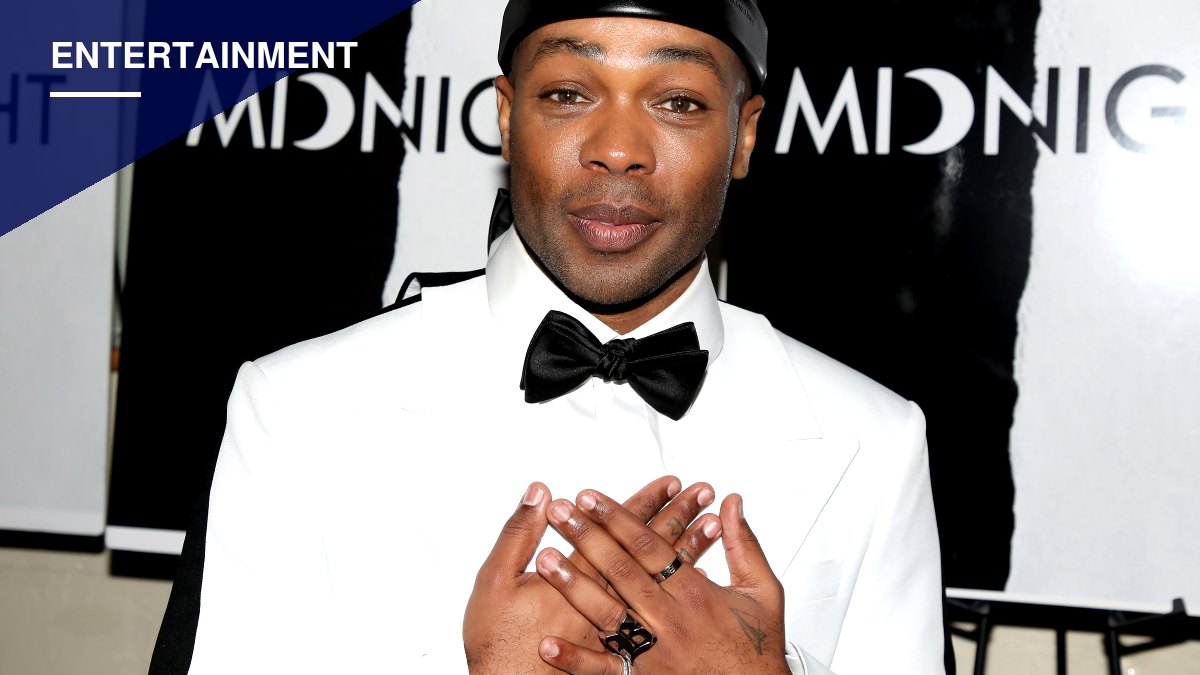
Todrick Hall says he expected his new off-Broadway musical, “Midnight,” to stir up some controversy — but not the specific backlash it has generated since opening at New York’s Daryl Roth Theatre.
Hall wrote, directed and stars in the show, which is set in the 19th-century American South. He plays Rail, an enslaved man who falls in love with his next-door neighbor, a white plantation owner named Richard. The production has been drawing strong ticket sales, but critics have accused Hall of leaning on revisionist history and exploiting “black trauma,” and of turning the horrors of slavery into fantasy for the sake of entertainment.
In an exclusive interview with Page Six, Hall said he welcomes the debate the show has triggered.
“I’m grateful that it has sparked any conversation. I’ve gone to see so many musicals. My partner and I saw like 178 musicals together in the few years that we were together … It didn’t make us sit down and have like thought-provoking conversations as human beings. It didn’t challenge us, and there’s a space for that.”
Hall said the idea for “Midnight” came to him during the pandemic, as he followed the Black Lives Matter movement. He said it was important to set the story during slavery because he wanted to examine the roots of present-day division.
“It is the place where we were at the most divided … we’ve ever been. And the seeds that were planted then, are still in existence today.”
He added: “There were so many factors, but I think in order to understand where we are now, it’s always best to, like Maria says in ‘Sound of Music,’ let’s start at the very beginning.”
Hall has used social media to respond directly to critics, saying he wants to “protect [my art] with everything in me.”
“I think this show deserves to be heard, and so, when I heard criticisms, I was like … I’m gonna stand up and respectfully try to give my opinion … But I’m not OK with someone going on social media and declaring on behalf of everyone who exists on the planet that’s black, that a musical is not for them.”
He said the audiences he’s seeing in person tell a different story than the one circulating online.
“I’m watching in real life, every night, black people, brown people, white people, Asian people, old people, young people, queer people, straight people, all types of people, coming [to this show].”
Asked how he hopes black and queer theatergoers in particular will receive “Midnight,” Hall said he doesn’t want the show reduced to a single reaction.
“I don’t know that I want them to receive it in any other way than just to say, ‘Look at the sheer amount of work that has been put into the show.’ To minimize something that has such intricate melodies and story arcs and characters, and twists and turns … I don’t want it to be put into a box.”