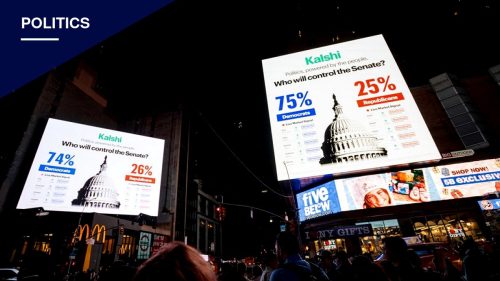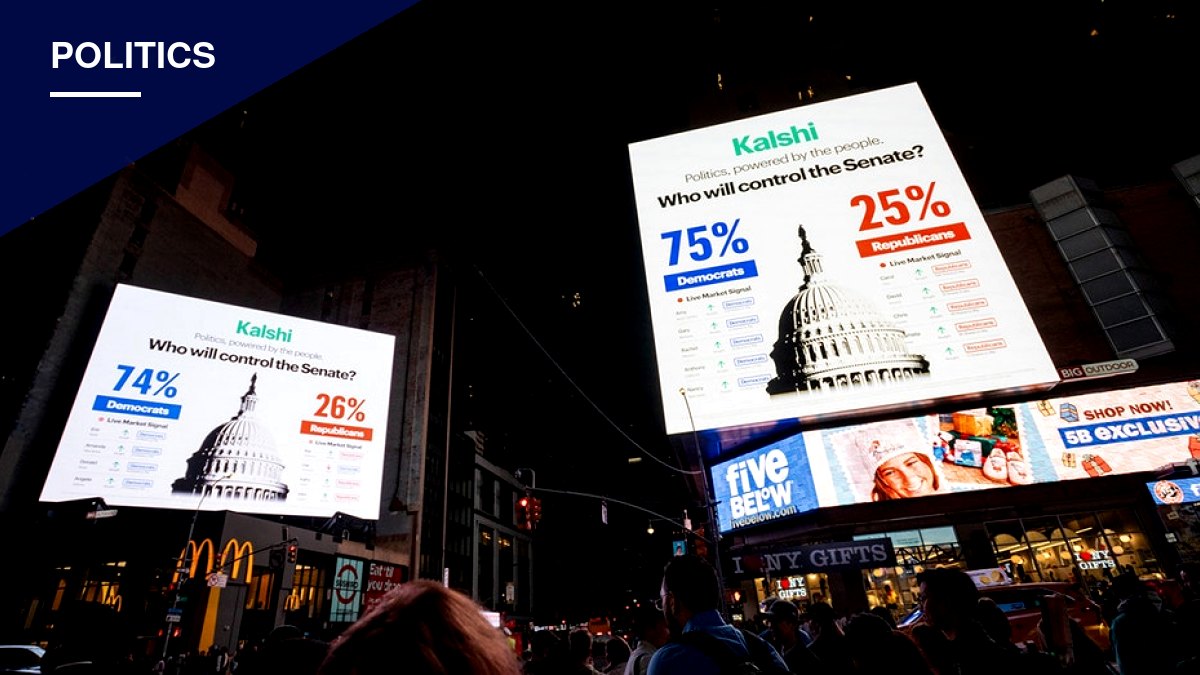
The 2026 midterms were the most expensive election cycle in American history, with more than $12.8 billion spent on political advertising nationwide. In Texas, the Senate race alone drew preliminary spending estimates of nearly $573 million, ranking it among the costliest non-presidential contests ever recorded.
Amid that spending, prediction markets emerged as one of the more accurate tools for forecasting outcomes. According to data from Kalshi, the eventual winner was the market favorite in 98% of tracked federal contests on Election Day, correctly reflecting both lopsided incumbent races and tight battlegrounds.
Kalshi says the pattern isn’t limited to this cycle. The company reviewed 2,243,741 of its resolved markets dating back to its 2021 launch through mid-2026 and found prices grew increasingly accurate as events neared. Markets priced at 30 cents resolved in that direction about 30% of the time; those priced at 90 cents did so about 90% of the time.
Independent analysts have reported similar findings. Brier.fyi, a site that tracks prediction-market accuracy, found comparable calibration across nearly 74,000 Kalshi markets. A study published last month in the Proceedings of the National Academy of Sciences examined more than 1 million resolved forecasts across four platforms and found outcomes matched market prices at roughly the rates predicted. A Washington Post review of this year’s primary races reached a similar conclusion.
Not every race broke the way the markets favored. In South Carolina, Democrat Annie Andrews defeated Republican Sen. Darline Graham, an outcome the markets had priced as roughly a 1-in-3 chance heading into Election Day. Analysts note that such results don’t undermine the markets’ track record — a 1-in-3 probability is expected to happen about a third of the time.
Prediction markets have faced pushback as they’ve grown. Some U.S. senators have raised concerns in writing about election-related betting contracts, and several states have moved to restrict or ban them. Critics argue the markets could be manipulated or give outsized influence to wealthy traders.
Supporters counter that the markets add a layer of accountability missing from campaign messaging, polling and media coverage. Because traders risk money on their predictions, the argument goes, the resulting prices reflect genuine assessments of a race’s likely outcome rather than spin from campaigns or pundits.
The trend has also been credited with sustaining demand for detailed local reporting — the kind of precinct-level data, including coverage down to the county level in places like Hinds County, Mississippi, that traders use to refine their positions. Supporters say that as information becomes more directly valuable to traders, it creates new incentive for newsrooms to fund the kind of granular data journalism that has often been cut in recent years.