Rick Reichmuth spent 19 years forecasting the weather as a Fox meteorologist, but he still couldn’t find an umbrella that held up against it. That frustration led him to found Weatherman, an umbrella company that launched in 2017 and has since expanded into a broader lineup of weather gear.
Reichmuth says the idea came from noticing how, unlike categories such as bandages or tissues that have trusted household-name brands, buying an umbrella on the streets of New York City was essentially a gamble. After searching for a standout brand and not finding one, he decided to build his own.
He started by taking apart hundreds of umbrellas in his New York City apartment, trying to figure out how they worked and why they kept failing. Using that research, he partnered with an industrial designer friend to develop a sturdier, more durable model.
Despite his meteorology background, Reichmuth says nothing prepared him for the realities of running a business. He recalled looking at Weatherman’s first prototype and thinking the hard part was over — only to realize the real work was just starting.
Weatherman debuted with just two designs, a collapsible model and a stick umbrella. Both have since been discontinued as the company revised its engineering over the past nine years.
“Early on, a failure or setback could really knock me down,” Reichmuth said. “Sometimes I’d spend weeks feeling stuck, second-guessing decisions or worrying about what went wrong. That paralysis often became a bigger problem than the original mistake.”
He said learning to absorb those setbacks became central to the company’s growth. Now, he said, he limits his frustration over mistakes to a few hours before moving back to solving the problem.
“Admitting what you don’t know is actually one of the most valuable things you can do,” he said. “Once you accept that failure is normal — not something to be ashamed of — it becomes a whole lot easier to keep moving forward.”
For Reichmuth, the real sign that the business was working didn’t come from television ratings — it came from seeing strangers carrying Weatherman umbrellas around the city.
“I’d be walking around and suddenly see someone carrying one of our umbrellas,” he said. “That never gets old.”
He said it means the most when customers who have no idea he’s a TV meteorologist still vouch for the product. “They hadn’t bought it because they’d seen me on television,” he said. “They bought it because a friend recommended it, or they discovered it online, or they’d heard it was a great umbrella.”
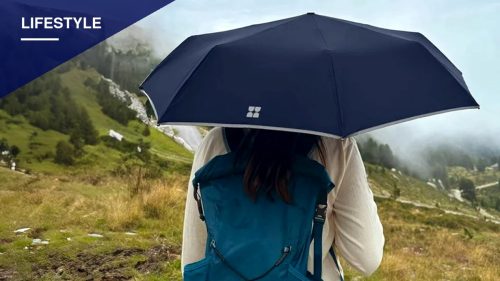
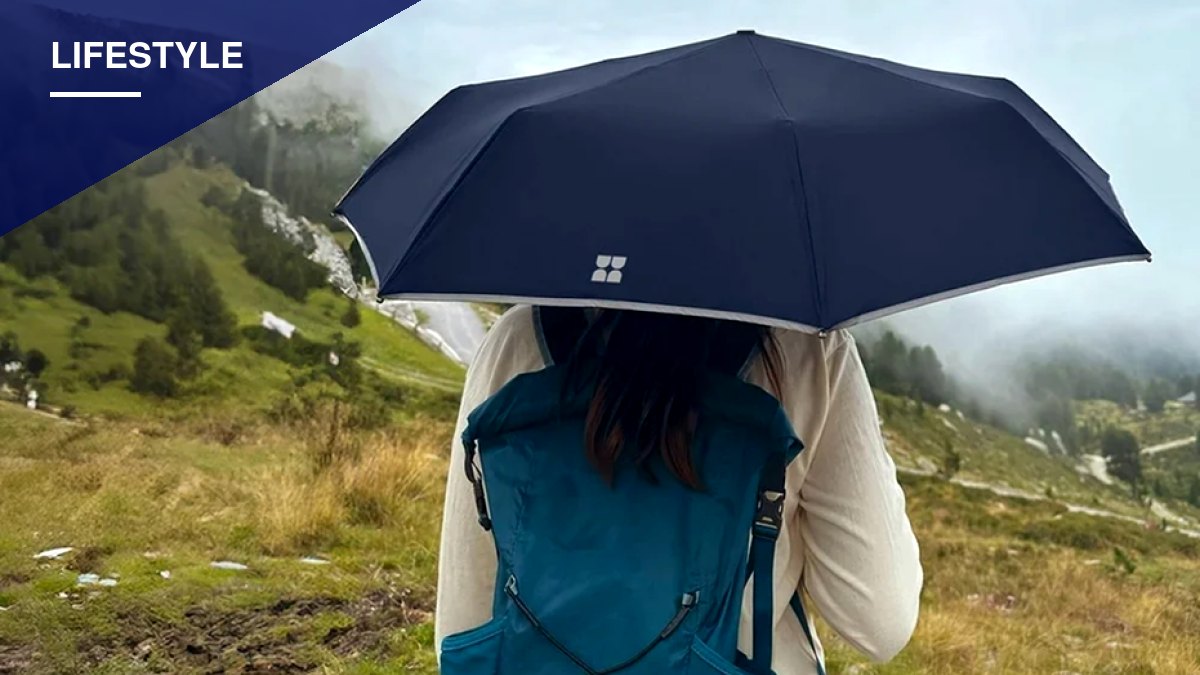
Weatherman has been profitable in recent years. Its umbrellas use heavy-duty fiberglass frames and water-repellent recycled fabric, and the canopies are wind-tunnel tested to withstand gusts up to 55 mph. They also offer UPF 50+ sun protection and auto-open mechanisms.
The company organizes its lineup by use case, with categories such as Walk, Trek, Travel, Golf and Kids, each with features tailored to how people actually use them, like reflective trim or compact, pocket-friendly sizes.
Weatherman has since expanded into sun shirts and ponchos for adults, kids and pets. Reichmuth and his team are also developing a more affordable sister brand aimed at budget-conscious shoppers, which is set to launch in 2027.