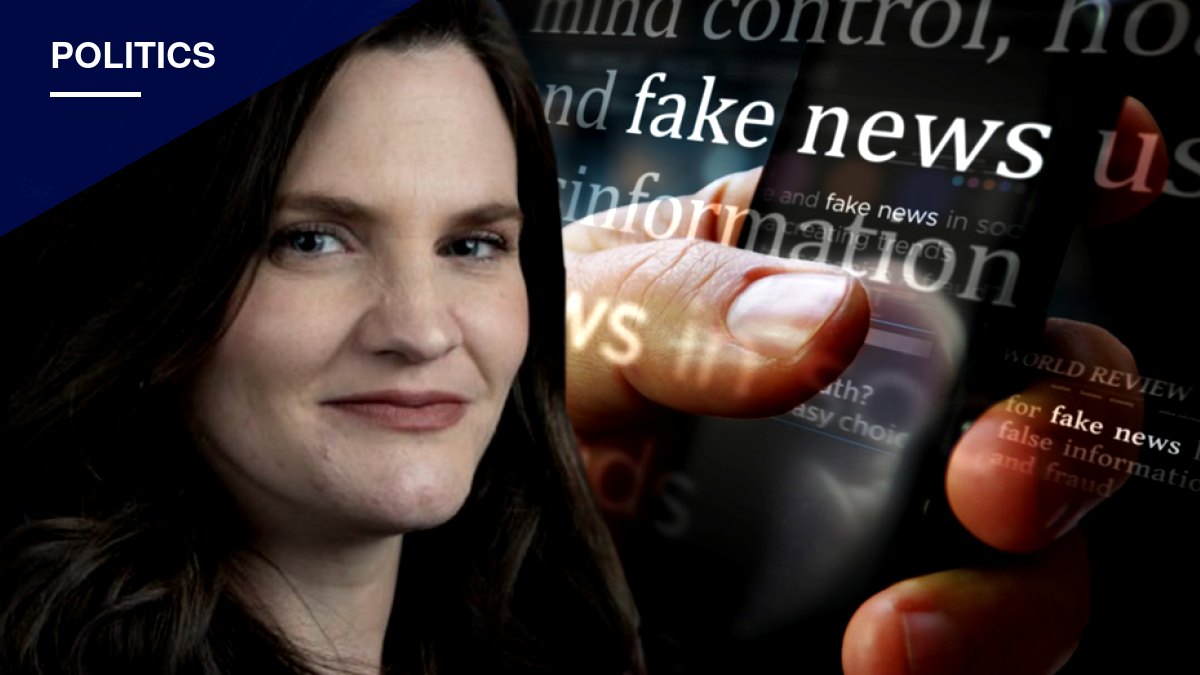
A newly released staff report from the Privacy and Civil Liberties Oversight Board (PCLOB) says a four-year investigation turned up no evidence supporting the government’s past claims that online disinformation was fueling domestic terrorism.
The report examines a federal effort, launched under a 2021 White House national strategy, that described “a crisis of disinformation and misinformation often channeled through social media platforms” as a driver of “extreme polarization” that could lead to domestic terrorism. As part of that effort, White House personnel sent messages to social media platforms suggesting that failing to remove or limit certain speech could lead to violence.
Public attention to these efforts grew in 2022 when the Department of Homeland Security launched its Disinformation Governance Board, which was short-lived.
PCLOB, which is tasked with ensuring that federal counterterrorism efforts are balanced against Americans’ privacy and civil liberties, set out to evaluate whether disinformation was actually linked to domestic terrorism and what safeguards existed to prevent speech suppression. According to the report, investigators found no evidence to support the claim that disinformation fueled domestic terrorism.
Despite that, the report says, government actors encouraged social media companies to label certain content as false, limit users’ ability to find it, and in some cases remove the content or the accounts posting it entirely.
How the communications came to light
According to the report, these efforts largely took place through private communications between government officials and social media platforms. The public became aware of the scope of these communications mainly through lawsuits that forced their disclosure, rather than through any voluntary government transparency.
Documents reviewed for the report indicate that officials pushed platforms to suppress broad categories of speech without distinguishing between foreign and domestic speakers, and without determining whether the speech in question was protected under the First Amendment — for instance, whether it constituted a “true threat” or incited what the Supreme Court has called “imminent lawless action.”
After the lawsuits exposed these communications, government lawyers issued guidance intended to keep future communications lawful, primarily by instructing agencies not to be “coercive” when raising concerns with platforms.
Executive order and open questions
In January 2025, President Donald Trump issued an executive order aimed at ending the practice of government pressure on platforms to suppress speech.
However, the report notes that prohibitions on government attempts to suppress Americans’ lawful speech are not clearly codified into law or firmly established in current agency policy, leaving open the possibility that a future administration could resume similar efforts.
PCLOB’s creation traces back to a recommendation from the 9/11 Commission, which warned that the need to fight terrorism could be used to justify curtailing civil liberties. The commission argued that the government bears the burden of proving that any power it seeks to retain actually improves security and is subject to adequate oversight.
In this case, the report concludes, it was not established that disinformation fueled domestic terrorism on any significant scale, nor that government efforts to suppress such speech improved national security.