Kansas City readers: this piece examines Kamala Harris’s push to lower the voting age to 16, her stated reasons, and why critics say the idea is flawed. It covers her recent public appearances, her claims about Gen Z and the climate, and the political context behind the proposal. Quotations from Harris are preserved exactly where she made them. The article argues from a Republican viewpoint that the proposal misunderstands youth readiness and political incentives.
Kamala Harris has been visible on a book tour and in interviews since last year, and she keeps floating bold ideas to stay relevant. Her proposal to reduce the voting age to 16 is getting attention because it would reshape the electorate and shift political calculations. This piece looks at the claims she used to justify the change and pushes back on the logic behind them.
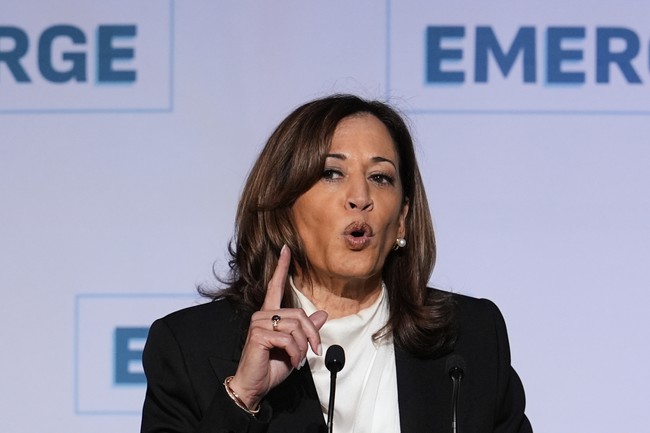
Harris tied her argument to generational experience and anxiety about long-term problems, arguing that younger people will bear the costs of current policies. “I think we should reduce the voting age to 16. I’ll tell you why,” Harris said. “So, Gen Z, they’re age about 13 through 27. They’ve only known the climate crisis.”
There is no “climate crisis,” of course. That sentence in the original reporting frames a skeptical reaction to the language Harris used, and critics say alarmist phrasing has been used for years to steer young voters toward one political camp. If the goal is to empower young people with information, the better path is education, not lowering age thresholds when brain development and life experience are still in progress.
Kamala says the voting age should be lowered to 16 because young people "fear they'll be wiped out by extreme weather & they fear having children." 🧐
— Breaking911 (@Breaking911) October 31, 2025
Harris went on to point to pandemic disruptions and economic worries as reasons to enfranchise teenagers. “They missed substantial parts of their education because of the pandemic. If they’re in high school and college, especially in college, it is very likely that whatever they’ve chosen as their major of study may not result in an affordable wage.” That argument assumes a uniform experience for an entire generation and conflates temporary disruption with permanent disqualification from voting later in life.
Many critics note that the pandemic hit different age groups and communities in different ways, and that older members of Gen Z were already adults when schools shut down. Pointing fingers at teachers’ unions or school closures misses the broader point: civic maturity usually follows life experience, work history, and financial responsibility. Voting is a serious civic duty, and lowering the age for political advantage risks making it a tactical move rather than a civic milestone.
Harris also invoked the phrase “climate anxiety” as a factor shaping young voters’ priorities. “They’ve coined the term ‘climate anxiety’ to describe fear of not only being able to buy a home, but that fear that’ll be wiped out by extreme weather, but fear of having children,” Harris said. Critics reply that decades of doom-laden messaging from high-profile activists and politicians have manufactured a lot of that anxiety, and that using fear to recruit voters is bad for democracy.
She added a demographic and workforce argument for lowering the age, claiming youth will face a very different job market and will therefore need a political voice earlier. “It is expected that Gen Z will have ten to 12 jobs in their lifetimes,” Harris said. “They are a larger number than Boomers. They’re a specific generation of people who are going to impact our nation and the world. And I think we must invest in them, but I think that they are rightly impatient with a lot of what is the tradition of leadership right now.”
There are factual problems with parts of that pitch. Gen Z in the U.S. does not outnumber Boomers, and Millennials are larger than both groups combined in many counts. Studies also show that the human brain does not fully mature until the mid-20s, which raises questions about whether 16-year-olds possess the judgement needed for complex policy choices. Those are not partisan opinions but findings cited by researchers across the political spectrum.
Harris described how she thinks youth voters would shift the conversation toward her priorities if granted the ballot early. “And if they were able to vote, because they know everything that’s happening right now is going to impact them more than anybody older than them for the most part in terms of how these systems work. If they’re voting right now at 16 and up? They’re going to be talking about the importance of climate, they’re going to be talking about the importance of how AI is going to affect the future of the workforce. They’re going to be focused on what are we really doing about affordable housing,” Harris said.
Her critics see a clear political incentive: younger, less experienced voters are easier to motivate with single-issue messaging and emotion. “Basically, in politics, here’s the hard truth about this: there are two centers of power that tend to influence how politicians think. Groups that vote the most, and people who write the most checks. And I’m going to go every day with the people. The people, and thinking about how do we strengthen people actually going to polls and voting,” Harris added. The irony, opponents point out, is that Harris spent heavily in her own run and courted celebrity endorsements and big donors.
Harris’s own record shows she accepted celebrity support and spent heavily in her campaign, including a high-dollar five-week ad blitz that drew attention and criticism. The argument that lowering the voting age is about empowering youth rings hollow to some observers when balanced against the reality of political fundraising and influence. For those who favor stable, considered civic participation, the case for a rushed expansion of the electorate remains unconvincing.