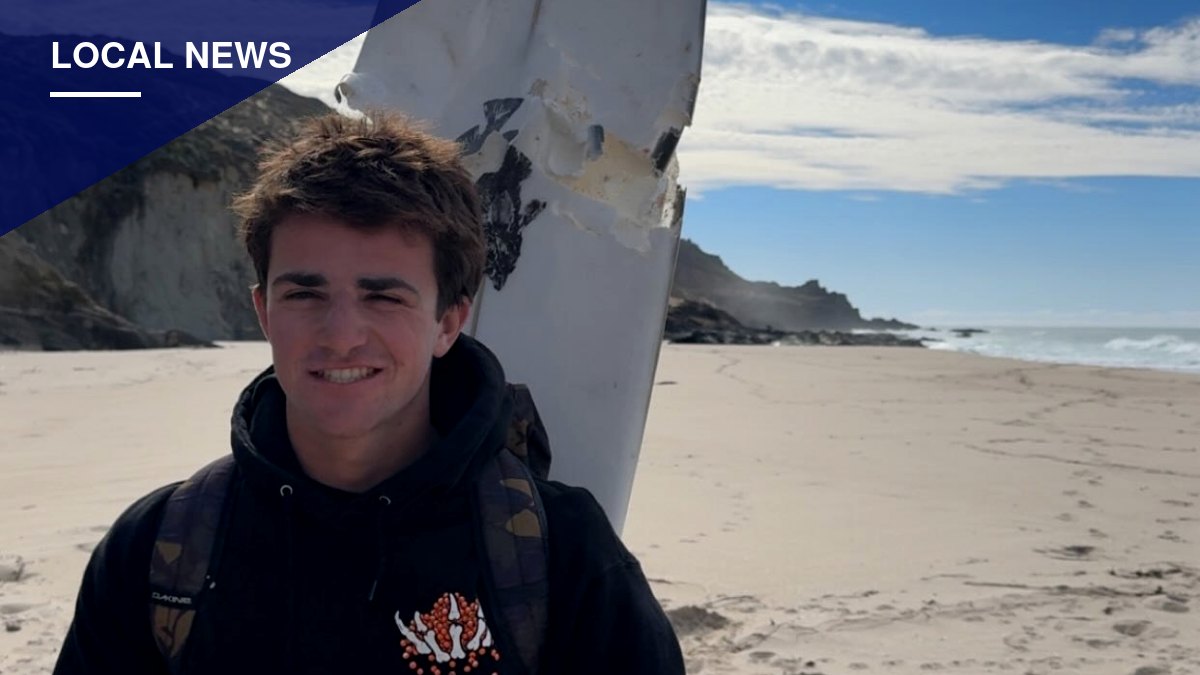
A 21-year-old surfer is uninjured after a great white shark estimated at 15 to 20 feet bit into his board while he was surfing off North Santa Barbara County.
Jack Canigiula described the encounter in an Instagram post, saying he was sitting in the water when “a huge dark shape bolted under me and blew up on the back half of my board from underneath.” He said he managed to kick his legs away before the shark’s jaws reached him.
“Welp, pretty rattled,” Canigiula wrote. “Got smoked this morning by an about 15-20ft Great White surfing North SB County.”
Photos he shared show large chunks torn out of the back half of his surfboard. Canigiula said the shark lifted him about two feet out of the water with the board still in its mouth before he kicked free.
“It let go pretty quickly and I was able to get back on my board and paddle to the beach. Super grateful to walk away without a scratch.”
Fellow surfer Dylan Stolley reportedly witnessed the encounter.
The post drew reaction from well-known names in surfing. Eleven-time world champion Kelly Slater commented, “Oh my…,” while Kalani Robb wrote, “glad ur ok dude.” Big-wave surfer Ken “Skindog” Collins told Canigiula, “No scratch or anything? So lucky. Buy a few lottery tickets.”
A known gathering area for sharks
The waters off Santa Barbara County are a recognized spot for white shark activity. Experts say young sharks use near-shore nursery areas along the Central Coast, particularly around Santa Barbara, while larger adults switch to feeding on seals and sea lions and often strike from below, much as Canigiula described.
Great whites are the ocean’s largest predatory fish, with females growing larger than males. The biggest adults can reach roughly 20 feet and weigh several thousand pounds, though most sharks spotted near Southern and Central California beaches in recent years have been juveniles under 10 feet that feed mainly on fish and rays.
Surf Beach near Lompoc, in the northern part of the county, has a history of shark incidents, including a fatal attack in 2010 that killed a UC Santa Barbara student who was bitten in the leg.
Incidents remain rare but are rising
The California Department of Fish and Wildlife says the state has recorded fewer than 250 shark incidents since 1950 across all species, with the large majority involving white sharks. The agency uses the term “incidents” rather than “attacks,” noting that most bites on humans are believed to be exploratory rather than predatory, often directed at objects like surfboards.
Even so, the numbers have been climbing. A CDFW spokesman said the state recorded 10 shark incidents in 2025, the most ever logged in a single year. Officials point to unusually strong El Niño conditions warming waters in the eastern Pacific, which appears to be shifting where white sharks congregate.