Federal judge tossed the indictment against James Comey, prompting a public statement from Comey and renewed debate over process, authority, and political targeting; the ruling hinged on questions about an interim prosecutor’s appointment and grand jury procedure, and the case now faces an uncertain path forward.
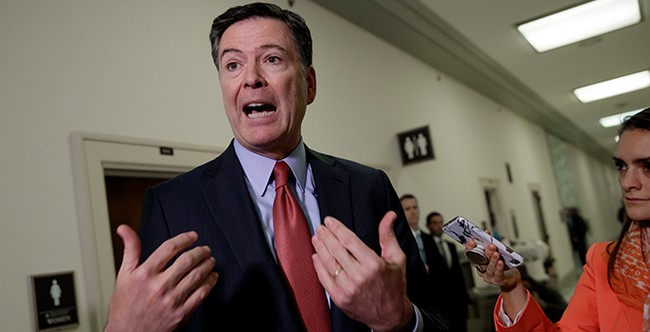
James Comey issued a public response after a federal judge threw out the indictment against him, framing the dismissal as vindication and a rebuke of what he called politicized prosecutions. His statement praised career DOJ employees who refused to take part in the case and thanked private lawyers who represented him. The tone mixes relief, gratitude, and a stern warning about weaponizing the Department of Justice.
I’m grateful that the court ended the case against me, which was a prosecution based on malevolence and incompetence and a reflection of what the Department of Justice has become under Donald Trump, which is heartbreaking. But I was also inspired by the example of the career people who refused to be part of this travesty. It cost some of them their jobs, which is painful. But it preserved their integrity, which is beyond price, and I know they will serve again. I was very lucky that some of the best lawyers in America stepped forward to represent me. I hope they serve as an example to more and more lawyers, especially in some of the big firms, to participate in protecting our liberty, protecting the rule of law.
That statement drew immediate reaction. Critics pointed out that Comey himself played a major role in shaping modern DOJ practices and investigations during his time as FBI director, and they argued his rhetoric rings hollow coming from someone who helped define those precedents. Supporters counter that an unlawful prosecution should be rejected wherever it appears, and they applauded the court for enforcing procedural limits.
And my family and friends were always with me. And luckily for me, that includes some of those great lawyers. This case mattered to me personally, obviously, but it matters most because the message has to be sent that the President of the United States cannot use the Department of Justice to target his political enemies. I don’t care what your politics are; you have to see that as fundamentally un-American and a threat to the rule of law that keeps all of us free. I know that Donald Trump will probably come after me again, and my attitude is going to be the same. I’m innocent, I am not afraid, and I believe in an independent federal judiciary. The gift from our Founders that protects us from a would-be tyrant…
🚨 BREAKING: Disgraced former FBI Director James Comey responds a judge tossing out his indictment
Don’t celebrate too hard, Comey. You’ll be indicted again in short order 🤣
COMEY: “I’m grateful that the court ended the case against me, which was a prosecution based on… pic.twitter.com/Z7wzdZdYh6
— Nick Sortor (@nicksortor) November 24, 2025
Senior U.S. District Judge Cameron McGowan Currie dismissed the indictments against Comey and New York Attorney General Letitia James on Monday, concluding that the appointment of Interim U.S. Attorney Lindsey Halligan was unlawful. The judge found that because Halligan lacked authority at the time of the indictments, the charges could not stand as issued. That ruling turned on statutory appointment rules rather than a merits-based finding about the underlying allegations.
Because the dismissal was driven by procedural defects, it leaves room for the case to be revived if prosecutors correct those flaws. Observers noted the two main problems: the unlawful appointment of the prosecutor who filed the charges and a key error involving the grand jury process. Fixing those procedural gaps would let the question of alleged misconduct return to the courtroom, and Comey should expect the lawsuit to be revived if prosecutors choose that route.
From a Republican perspective, this episode highlights two separate concerns. First, accountability matters and the rule of law should be enforced according to statute and process, not bent to fit political aims. Second, however, there is a broader point about consistency: public officials who helped expand investigatory tools should not be surprised when those same tools are used in politically charged matters.
Many Republicans see the ruling as proof that institutions and procedures must be respected, even when the accused is a high-profile Democrat. They argue the court did its job by policing appointments and grand jury rules, and they warn that any attempt to relabel process failures as partisan victories will only deepen distrust. At the same time, critics insist Comey has to reckon with his own record and the precedents set while he held power.
An editorial voice from the site captures the partisan frame surrounding the reaction to the decision. Editor’s Note: Unelected federal judges are hijacking President Trump’s agenda and insulting the will of the people.