President Trump says tariff revenue could translate into direct dividend payments for Americans, with checks projected as early as 2026 and detailed figures showing tariff receipts have surged under his administration.
President Trump announced that Americans could see $2,000 tariff dividend checks as soon as next year, tying tangible relief to the tariffs he has pursued. He framed the plan as one that would return “hundreds of millions of dollars in tariff money” to citizens while using any leftover funds to help shrink the national debt. The promise positions tariffs not just as a trade tool but as a source of direct economic benefit for voters. That message is straightforward and aimed at making the administration’s trade policies feel personal and immediate.
The proposal is to take revenue from what the administration calls “Liberation Day” tariffs and cut checks to households, an idea that has moved from concept toward possible implementation. Officials have described the dividend plan as both a reward for standing up to unfair trade practices and a fiscal tool to reduce borrowing once immediate obligations are met. Treasury officials and White House aides have been coordinating on the mechanics, and public comments suggest momentum is building. At the same time, the administration is signaling fiscal responsibility by proposing to apply surplus tariff proceeds against the national debt.
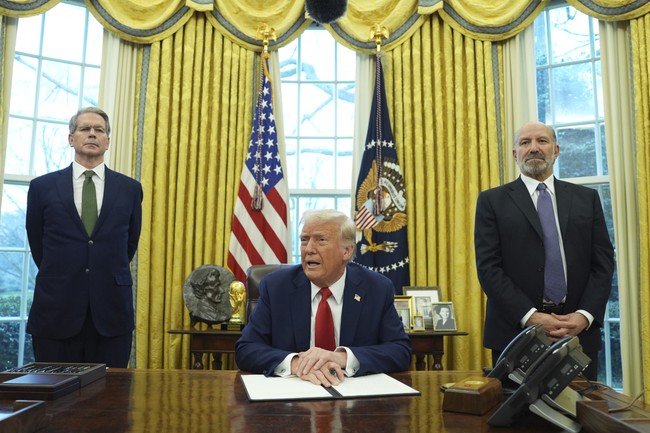
“We’ve taken in hundreds of millions of dollars in tariff money. We’re going to be issuing dividends probably by the middle of next year, maybe a little bit later than that,” Trump told reporters in the Oval Office.
🚨 BREAKING: Democrats are terrified to hear that President Trump's tariff dividend check to the middle and lower class is likely to go out before the 2026 MIDTERMS…
"We're gonna be issuing dividends later on, somewhere prior to – the middle of next year, a little bit later… pic.twitter.com/esPNdfCQI7
— Eric Daugherty (@EricLDaugh) November 17, 2025
Those remarks have fueled headlines and shifted the policy debate, because the plan ties a popular, voter-facing payout to a broader trade strategy. Secretary of the Treasury Scott Bessent has cautioned that the notion is still under discussion, but the president’s public commitment has raised expectations. If implemented, the checks would arrive in a political window that could influence midterm dynamics and public perceptions of the administration’s economic performance. For conservative voters, the idea packages protectionist measures with direct returns to households, a contrast to abstract economic statistics.
Tariff revenue has climbed sharply under the current policy. Through October 2025, the U.S. government reportedly collected roughly $309 billion in tariff receipts, more than double the previous year’s total of about $144 billion. Those figures give the dividend proposal a concrete fiscal basis and make the payout seem achievable without new taxes. Still, tariff revenue remains a small share of total federal receipts, and the administration must balance visible payouts against long-term budget priorities.
To put tariffs in perspective, individual income taxes brought in over $2.6 trillion in fiscal 2025, while tariffs accounted for $195 billion and corporate income taxes totaled $452 billion, according to Treasury data cited by officials. Those comparisons show tariffs are impactful but not dominant, which is why the administration frames dividend checks as targeted, symbolic relief rather than a permanent restructuring of federal revenue. The numbers also suggest any widespread dividend program would need careful targeting and an exit strategy to avoid becoming a recurring entitlement. Conservative policymakers will likely push for one-time or limited distributions tied to specific revenue surges rather than open-ended commitments.
The plan faces legal and political tests beyond the practical paperwork. The Supreme Court is weighing a case about the legality of reciprocal tariffs, and a decision is expected before the end of the year. That ruling could shape how broadly the administration can wield tariff authority and whether courts will permit the kind of revenue-driven payouts the White House envisions. Meanwhile, Democrats and trade skeptics are already debating the economic consequences for businesses and consumers, which will shape how Congress and the public react.
Politically, the dividend pitch serves multiple goals: it rewards voters, reinforces the administration’s stance on foreign trade, and reframes tariffs as a source of domestic benefit. For Republicans focused on results, the narrative is simple—stand up to unfair trade practices and return the gains to American families. That direct, results-oriented message plays well with voters who want to see policies produce measurable benefits at home. The administration’s challenge will be turning pledge into payment while navigating legal reviews, Treasury caveats, and the inevitable political pushback.
Editor’s Note: Thanks to President Trump’s leadership and bold policies, America’s economy is back on track.
Help us continue to report on the president’s economic successes and combat the lies of the Democrats. Join Townhall VIP and use promo code FIGHT to get 60% off your membership.